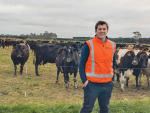
New Dairy Holdings CEO Backs Self-Contained Model
Running a tight and self-contained ship is the key to the success of the country's largest dairy farmer, says Blair Robinson, the new man at the helm of Dairy Holdings.




 increase font size
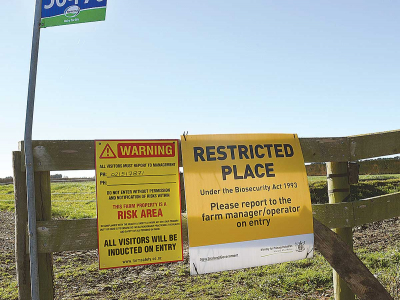 To date 4% of NZ farms have been under restrictions.
A positive report reiterates that Mycoplasma bovis eradication is feasible.
The independent Technical Advisory Group (TAG) for the Mycoplasma bovis eradication programme has produced an upbeat progress report reiterating its belief that eradication is feasible.
The October 18 report supports the findings of earlier reviews, and acknowledges substantial changes made to the programme, including improvements to information management systems, resourcing, management, and communications.
It notes positive signs, including a downward trend in infected places, shorter times for risk movements to be dealt with, and a decreasing conversion rate of high-risk farms being confirmed as infected.
MPI director-general Ray Smith says the report provides assurance that the programme is working, and that the right changes have been made to improve the programme and support affected farmers.
“M. bovis is one of the greatest biosecurity challenges we have faced in New Zealand, and both Government and our industry partners remain committed to achieving eradication, while reducing the impact of that process on affected farmers as much as possible.
“The battle isn’t won yet. We still have hard work to do and there will be more farms placed under restrictions while testing is conducted. We also know that there are areas, like compensation, where we need to continue to improve.
“Over $100 million in compensation has been paid out, and for most people the process is effective. However we know that some complex claims are still taking too long and we are working on reducing that wait.”
DairyNZ chief executive Tim Mackle says the report builds on important information for the programme going forward. “Speed and efficiency is key, as the [sooner] infected properties are found and placed under restrictions, the sooner we win this battle for New Zealand farmers.
“We are nearly 18 months into working to get rid of this disease, and it is positive to see a decline in the number of infected dairy farms. However, there are still 61 dairy farms under movement restrictions. We understand the stress and worry involved for those farmers and our priority remains supporting them.
“We believe maintaining a collaborative approach is the best option for all farmers. By sitting at the table we can ensure that dairy farmers are getting value for money, performance is monitored, processes are improved, costs are scrutinised and dairy farmers’ views are represented to the Government.
“We want to thank every farmer that has been affected by M. bovis for their strength and resilience in the face of the uncertainty they’re facing. Being involved brings enormous pressure and challenge: being put under restrictions, undergoing testing, and for the worst affected, depopulation of their herds.”
Beef + Lamb NZ chief executive Sam McIvor noted that more beef farmers -- overwhelmingly bull-beef -- are coming under restrictions.
However, he said they are generally risk movements from cattle that have come out of the dairy herd and are terminal because the affected animals are finished and processed.
“Also, disease tracing shows us that once infected, drystock herds do not readily transmit disease to other herds, increasing the chances of successful eradication over the longer term.
“We will continue to sit at the table with the Government and DairyNZ to ensure this programme has the greatest chance of success, and that farmers are represented every step of the way.”
Eradication possible
Biosecurity Minister Damien O’Connor said the report showed that good steps had been taken to improve the programme since June, and eradication remains feasible.
“Those improvements include better data and information management, better communication with farmers, placing more responsibility for decision making in the regions and adding more staff with technical skills and agricultural experience.
“At present we are seeing fewer infected farms, which is heartening. Biosecurity NZ is working more closely than ever with our M. bovis partners Dairy NZ and Beef + Lamb NZ to refine the testing regime, compensation system and to help farmers,” said O’Connor.
“The TAG, as would be expected, makes recommendations for where work is required, including ongoing refinement of the ELISA test and beef surveillance.
“The 10-year programme is a world-first attempt and we expect to make adjustments. I’ve asked that the next focus should be mapping out what we expect over the next two years.
“I want to thank our industry partners and all those working in the programme who’ve done the hard work in recent months to ensure we stay on track.
“I know this is tough for farmers caught up in the response. No-one wants to be placed under controls and have their animals taken away, but we’re committed, with our partners, to eradicating M. bovis for the good of all farmers.
“The Government recently boosted funding for rural support trusts and we’re making improvements to key farmer tools such as the national animal tracing system. All farmers should be registering animal movements. Doing so is vital to the eradication effort.”
Highest priority
The tag made 10 recommendations, which the programme has accepted, including four with the highest priority:
• Surveillance options for defining and declaring biological freedom need to be assessed and the appropriate options selected.
• Scoping, development and implementation of the next phase of the information systems should be fast tracked.
• Proposed surveillance systems for non-dairy systems including cow-calf operations, calf-rearing enterprises and replacement dairy groups be implemented as soon as possible.
• The impact of the surge should be evaluated and feasibility of achieving biological freedom re-evaluated when the information management systems are fully functional and enough data has been accrued.
To date, 4% of farms in New Zealand have been under restrictions and required testing due to Mycoplasma bovis, and just under 0.8% of farms have been confirmed as infected.
The latest MPI update shows 201 confirmed properties, 186 of them cleared and 15 still active. 110 of the confirmed properties are classed as beef, 49 dairy and 42 “other”.
Meanwhile, 279 properties are currently under a Notice of Direction and 281 are under Active Surveillance.
Running a tight and self-contained ship is the key to the success of the country's largest dairy farmer, says Blair Robinson, the new man at the helm of Dairy Holdings.
OPINION: It's no surprise that "world-class biosecurity" continues to dominate as the top priority for agribusiness leaders, holding the number one spot for the 16th consecutive year in KPMG's latest agribusiness report.
Compensation assistance for farmers impacted by Mycoplama bovis is being wound up.
New Zealand's world-first Mycoplasma bovis eradication programme is making great strides but this isn't the time for complacency, says Ospri.
A national pest management plan to eradicate Mycoplasma bovis (M. bovis) will come into effect by the end of this year.


Federated Farmers has welcomed new rural policies released by ACT, saying they align closely with its own election priorities.

Rural Contractors NZ says proposed changes to land transport rules for agricultural vehicles are a welcome response by the Government to out of date regulations which have seen members hit with huge fines.
Alliance is calling for final applications for its 2027 Graduate Programme, with applications closing on Sunday 25 October.
Decades piloting planes has ensured vet and farmer David Hayes is focused on safety. So, after a serious accident while welding on farm, he is sharing his experience so others can learn from it.
Canterbury milk processor, Synlait Milk has confirmed Leon Fung as its chief executive officer.
OPINION: Making it easier to collect rainwater and use it to grow crops and livestock is a no brainer.




OPINION: It seems Canterbury processor Synlait is still in the doldrums.
OPINION: Get offside with New Zealand First leader Winston Peters at your own peril.




