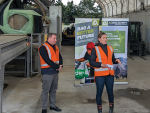
New Rural Recycling Scheme to Replace Voluntary Farm Plastics Programmes by 2027
Environment Minister Nicola Grigg has announced details of a new rural plastics recycling scheme.




 increase font size

It's not only the rural sector coming under pressure to clean up its environmental footprint.
Also busy at it is the tyre manufacturer Trelleborg, working on its factories to meet the challenges of climate change.
For example, it is completely re-engineering its Sri Lanka factory’s steam raising plant by installing an advanced biomass boiler. Steam is essential in tyre curing, but the traditional oil-fired boiler burns 3.5 million litres of oil annually and emits 11,000 tonnes of CO2 equivalents.
Trelleborg’s biomass-fired boiler will cut the plant’s CO2 emission to 1000t of CO2 . It will be commissioned next month.
The plant near Colombo employs 850 people and makes solid tyres for the materials handling and port industries, and pneumatic tyres for light farming applications.
Biomass for the boiler will be supplied by local producers, so shortening the supply line, further reducing the carbon footprint and supporting the local economy.
The work is an aspect of Trelleborg’s Blue Dimension approach to sustainability, combining environmental benefits with benefits for the customers such as higher efficiency and productivity.
Environment Minister Nicola Grigg has announced details of a new rural plastics recycling scheme.

For the first time in a quarter of a century, Federated Farmers has something positive to say about the Labour Party’s climate change policy leading into a general election.
The Ballance Farm Environment Awards are coming to the West Coast of the South Island.
Climate, nature and animal wellbeing make up Fonterra's refreshed sustainability roadmap released last week.
There's been widespread support from the primary sector for the Government's announcement on changes to freshwater farm plans that come under the Natural Environment Bill, which is now set to replace the existing RMA.


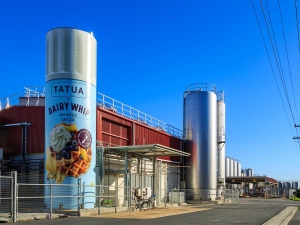
Waikato milk processor Tatua has again declared a record milk payout to farmer shareholders, leaving other processors in the dust.
A Labour-led Government won’t be bringing back the controversial freshwater rules of 2020.
National’s much-touted free trade deal with India featured in the Rural Issues Debate at Mystery Creek, Hamilton on Wednesday night.
New Zealand's 2026-27 freshwater fishing season has opened, with anglers encouraged to head to rivers and lakes over the coming days as conditions look favourable across much of the country.
Central Otago District Council (CODC) has voted against a plan to spread treated sewage sludge from Cromwell and Alexandra on farmland near Lauder, a decision Federated Farmers says reflects strong opposition from rural residents.
Pāmu has released its FY26 Integrated Annual Report, reporting a Net Operating Profit of $113 million, more than double the $49 million recorded in FY25.

OPINION: It seems Canterbury processor Synlait is still in the doldrums.
OPINION: Get offside with New Zealand First leader Winston Peters at your own peril.