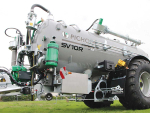
Pichon Adds SV10R and SV14 to SV Slurry Tanker Range
French manufacturer Pichon has expanded its SV slurry tanker range with the launch of two new models.




 increase font size
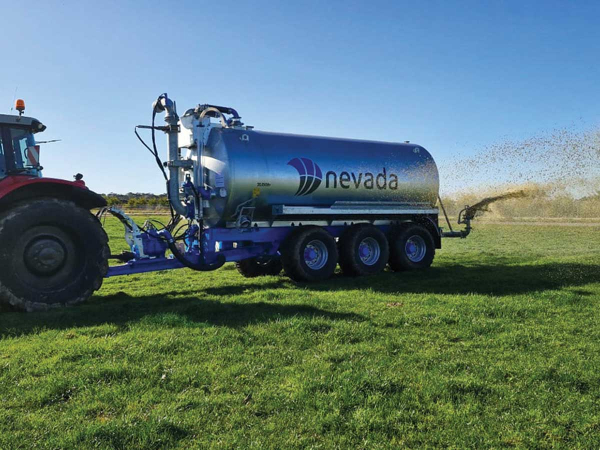 One of the best ways to spread effluent evenly across your farm is with a slurry tanker.
Imagine transforming your dairy farm’s waste into a goldmine of savings and productivity.
Sounds too good to be true…it’s not. By changing how you view and use farm dairy effluent (FDE), you can boost your farm’s profits and improve soil health.
Soil biology: the hidden gem beneath your feet
Let’s dive into soil biology – the fascinating world beneath your boots. Your soil is teeming with life, from bacteria and fungi to earthworms and arthropods. These tiny workers play a vital role in maintaining soil health and fertility. When you apply effluent to your pasture, you’re feeding these organisms, enhancing their activity, and, in turn, boosting your soil’s health and productivity.
The power of effluent
Think of effluent not as a waste product but as a liquid treasure chest. It’s packed with nutrients that can significantly improve your soil’s biology. Healthier soil means better pasture production now and for years to come. Plus, spreading effluent across your entire farm amplifies these benefits, ensuring all your paddocks get a share of this natural fertiliser.
Breaking old habits
In New Zealand, it’s common for farmers to spread effluent close to the cowshed due to pump capacity, power availability, or the length of the irrigation mainline. But over-irrigating nearby paddocks can harm animal health and miss out on the full benefits of effluent. By spreading it across your entire farm, you can reduce or even eliminate the need for synthetic fertilisers.
Real savings, real results
Here’s where it gets exciting: One large dairy farmer in the Hawke’s Bay has slashed over $200,000 per year on fertiliser costs by spreading effluent using a slurry tanker. Utilising FDE effectively is not just an environmentally sound choice – it’s a smart financial move.
The slurry tanker advantage
One of the best ways to spread effluent evenly across your farm is with a slurry tanker. These versatile machines can handle everything from heavy slurry to more liquid effluent. They allow for low application rates and provide proof of placement, ensuring you’re applying nutrients precisely where they’re needed.
Transform your farm's future
It’s time to shift your mindset: Effluent isn’t waste – it’s a valuable resource. By leveraging this natural fertiliser, you can enhance your soil, cut costs, and boost your farm’s sustainability. Healthier soils lead to more productive pastures and, ultimately, a more profitable farm.
Ready to see these benefits on your farm? Have a chat with our team to discuss how we can help improve your farm’s profitability. Call us today on 0800 464 393 and start transforming your effluent into gold.
Article supplied by Nevada
French manufacturer Pichon has expanded its SV slurry tanker range with the launch of two new models.
Recently revealed, Krone’s new Series Six, BiG Pack Plus and Pro balers are designed to use standardised components, interfaces, and control concepts, including pick-up, knotter systems and user interfaces.
Consuming around six years and more than 35,000 hours of physical and digital testing, the new sixth-generation Valtra T Series is being described as the most significant new release in the company’s history.
Strautmann has introduced a new Hay Edition auger for its Verti-Mix feed mixer wagons, aimed at operators using rations with larger proportions of hay or other long-fibre materials.
Twin rotor swathers have become the ‘go-to’ for forming swaths to feed hungry harvesters and balers, however, the design layout often means that crop located between the two rotors is not picked up, turned over or incorporated into the swath formed for subsequent harvesting.


Decades piloting planes has ensured vet and farmer David Hayes is focused on safety. So, after a serious accident while welding on farm, he is sharing his experience so others can learn from it.

Canterbury milk processor, Synlait Milk has confirmed Leon Fung as its chief executive officer.
OPINION: Making it easier to collect rainwater and use it to grow crops and livestock is a no brainer.
As part of its Election 2026 coverage, Rural News asked political parties how they would help pull the arable sector out of the doldrums. Here's what they said:
Farmers are being encouraged to rethink how they manage waste on farm with the launch of ruralwastesorted.co.nz, a new website bringing together practical tips, real farmer experiences and resources.
New Zealand Winegrowers (NZW) is celebrating the India-New Zealand Free Trade Agreement (FTA) coming into force today, bringing New Zealand wine improved access to one of the world’s fastest-growing economies.


OPINION: It seems Canterbury processor Synlait is still in the doldrums.
OPINION: Get offside with New Zealand First leader Winston Peters at your own peril.




