Robotic Rotary Milking: Inside a $6M Investment Paying Off Faster Than Expected
The Dairy ProQ robotic rotary, the first of its kind in the Southern Hemisphere, has proven to be an impressive addition for Victorian farmers Paul and Marsha Smith.
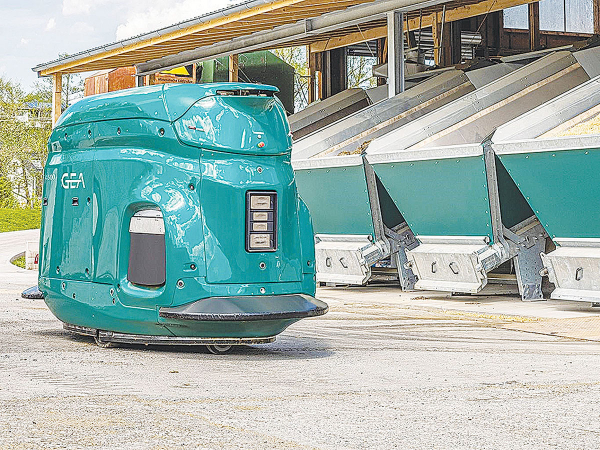
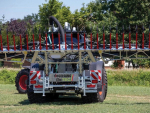
The self-driving DairyFeed F4500 is an electrically powered unit with a single vertical mixing auger.
Dairy specialists GEA has announced the arrival of an autonomous robotic feeder to its already extensive range.
Scheduled to appear at the German EuroTier Event in November, the self-driving DairyFeed F4500 is an electrically powered unit with a single vertical mixing auger.
Unlike mixer wagons fitted with milling heads, the machine is designed to be filled from feed bunkers, using a 2.2m³ tub to take care of weighing the main ingredients and additives for individual groups of animals. The robot mixes the contents and navigates around the farm using laser scanners and is fitted with obstacle detection sensors to ensure safety is maintained in all situations.
Configured with four wheels, two rigidly mounted mid-point assemblies carry the machine, while front and rear wheel take care of steering, with the machine capable of travelling up inclines of up to 10%.
Rations can be delivered to both the left and right sides of the machine, with any residual feed automatically pushed up to the feed fence by a deflector plate as the machine passes along the feed area. Linked to the company’s DairyNet herd management system, the robot can be monitored and controlled from a mobile device.
Initially available in key European markets from Q4 2022, Dairy- Feed F4500 will be available globally from 2023, with GEA noting that no major on-farm changes will be needed to install the system.
The avocado sector is entering the new season with a larger crop and positive market opportunities.
New Zealand growers have always adapted to changing conditions, but one challenge is steadily gaining ground across the horticulture sector: resistance.
Blueberries have the potential to become a major horticultural export, earning up to $150 million within the next three to five years.
Twenty five secondary school students from around New Zealand recently completed a three day residential programme designed to explore career opportunities across the food and fibre production supply chain.
Conversions of sheep and beef farms to forestry have slowed, however new research from Beef + Lamb New Zealand (B+LNZ) suggests land of value for food production remains at risk.
OPINION: A simpler, clearer, more effective Recognised Seasonal Employer (RSE) scheme.
OPINION: The Irish dairy sector is facing a new dilemma - maintaining year-round fresh milk supplies.
OPINION: Could beef cows play an increasingly important role in improving profitability and resilience on hill country farms?