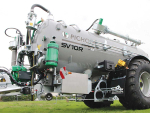
Pichon Adds SV10R and SV14 to SV Slurry Tanker Range
French manufacturer Pichon has expanded its SV slurry tanker range with the launch of two new models.




 increase font size
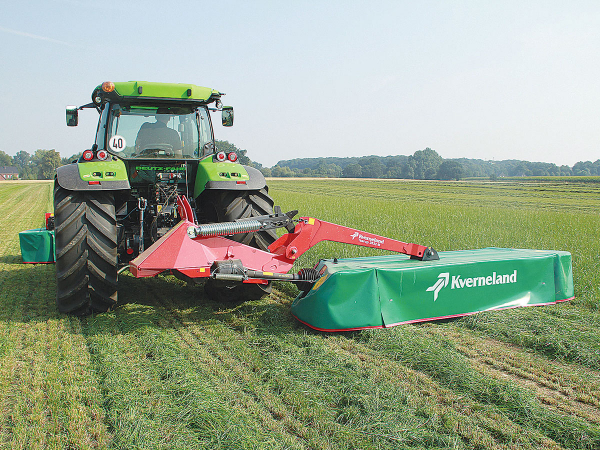 New features to the mower make a real difference to cutting performance and the cost of ownership, says the manufacturer.
With spring upon us, thoughts turn towards shutting up paddocks for conservation and maybe the purchase of new machinery to get the job done. The latest 28 Series disc mowers from Kverneland offer several features that the manufacturer says make a real difference to cutting performance and the cost of ownership.
At the heart of the machine, KV's own cutter-bar takes the form of two C-shaped steel profiles that are brought together with a single welded seam. This creates a torsional-rigid cutter-bar with massive strenght, no leaks, a high oil capacity, no maintenance and an extended service life. The unique round cutting discs also ensure there are no "pinch" points for stones or matted crop, while quick change blades make it easy to ensure cutting quality.
Available in 3.2m (8-disc), 3.6m (9-disc) and 4.0m (10-disc) set ups, the 2832, 2836 and 2840 models feature a heavy-duty headstock and frame, using a centre pivot layout to support the mowing element. Ground adaption and suspension is taken care of by HD coil spring system that responds quickly to changing conditions and is easy to adjust.
Offering a shaft-drive layout, overload protection is taken care of by a slip clutch and a breakaway device is incorporated into the lower link position, meaning that if an obstacle is encountered, the mower unit can break back, then reset after the obstruction is cleared.
Requiring only one single-acting hydraulic connection, the mower folds vertically up to 125 degrees from horizontal, pulling the cutter-bar inside the line of the tractor’s offside rear fender for transport, while also increasing stability at road transport speeds.
Product manager for distributor Power Farming Group, Shane Cox, says “the 28 Series machines are very heavyduty machines, so are ideally suited to larger scale farms or in contracting operations”.
Likewise, for those wishing to push moisture out of mown crops, the Kverneland Proline 8500 Series tedders take on many of the same attributes.
Available in 5.5 or 7.6 metre working widths, the 8555 and 8576 models are 4 or 6-rotor machines, featuring a heavy-duty box section main beam, to which permanent oil-bath gearboxes are bolted, thereby eliminating and stress loadings passed through the machine. Internally, the rotor gearboxes feature pinion shafts that are supported by twin bearing assemblies, said to eliminate distortion extreme loadings, while ensuring that gear engagement remains constant, so extending the service life of the machine.
Each rotor assembly is equipped with seven flat steel tine arms, which in turn carry Super-C tines, with equal-length arms to promote even spread over the full working width. Each tine, manufactured from 10mm diameter, shot-peened spring steel, is fitted with twin 80mm diameter coil springs, so are suited to heavy crop conditions.
Tine angle can be adjusted to offer aggressive angles depending on crop, while a border spreading function reduces spreading width to keep material under control on headlands or alongside drains.
During folding to a 2.95m transport width, maintenance free rollers ensure correct alignment of the wing sections, while double universal joints help reduce shocks or torsional loading being transmitted through the driveline.
French manufacturer Pichon has expanded its SV slurry tanker range with the launch of two new models.
Recently revealed, Krone’s new Series Six, BiG Pack Plus and Pro balers are designed to use standardised components, interfaces, and control concepts, including pick-up, knotter systems and user interfaces.
Consuming around six years and more than 35,000 hours of physical and digital testing, the new sixth-generation Valtra T Series is being described as the most significant new release in the company’s history.
Strautmann has introduced a new Hay Edition auger for its Verti-Mix feed mixer wagons, aimed at operators using rations with larger proportions of hay or other long-fibre materials.
Twin rotor swathers have become the ‘go-to’ for forming swaths to feed hungry harvesters and balers, however, the design layout often means that crop located between the two rotors is not picked up, turned over or incorporated into the swath formed for subsequent harvesting.


National’s pledge to introduce 19 new national standards shows the party is serious about getting Wellington out of farming, Federated Farmers says.
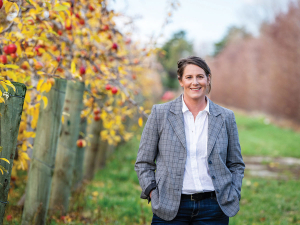
The National Party’s policies to make it easier to grow fresh vegetables, secure reliable water and energy and simplify farm planning are practical changes that will give growers the confidence to invest, according to Horticulture New Zealand (HortNZ).
Fonterra Co-operative Group chief financial officer Andrew Murray has resigned to take up a role outside the dairy giant.
A major move is about to get underway to improve the quality and viability of dairy beef and cattle in NZ.
Veterinarians say changes to the code of welfare for dairy cattle provides a positive foundation for improved cattle welfare across the country.
Today, 15 October, is the International Day of Rural Women, which recognises rural women’s contribution to farming, communities and the environment.


OPINION: It seems Canterbury processor Synlait is still in the doldrums.
OPINION: Get offside with New Zealand First leader Winston Peters at your own peril.




