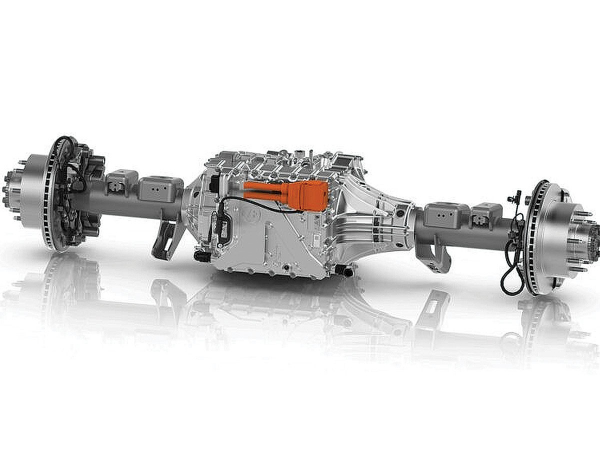
German gearbox and transaxle manufacturers ZF has developed an electronic axle said to be capable of converting any conventionally powered vehicle with a solid axle into a battery electric vehicle.
The ZF eBeam Axle features a centrally mounted electric motor, transmission and inverter, located where you would normally find the differential casing, essentially turning a solid axle into its own driveline.
Said to be intended for use on light to medium-duty utility vehicles, the axle would appear to offer manufacturers an off-the-shelf solution to electrifying their current range of pickups and trucks at a fraction of the cost typically needed to develop their own electric powertrain.
Scheduled to enter production in 2025, engines would likely be substituted for battery packs, as recently demonstrated on a production Chevrolet Silverado 2500 pick-up truck in the US. In that case, using the eBeam axle, the Silverado produced 300kW and 1,020Nm torque, although the company says outputs can be supplied between 180 and 350kW. Of course, range will be determined by application, says ZF.
Other points for consideration will likely centre around the addition of batteries, meaning tare weight will increase, meaning manufacturers would probably need to introduce suspension component upgrades to deal with the added load.
Looking forwards, it appears that eBeam could solve a problem facing many kiwis with any impending combustion engine bans, allowing utes to be retrofitted with, or delivered from new, with a viable electric-powered alternative.