As agriculture moves rapidly into the technological age, the advancement of Irishmade autonomous farm machinery is being enhanced by researchers at Lero, the Science Foundation Ireland Research Centre for Software and Tipperary-based Abbey Machinery, who recently announced a new research partnership agreement.
Led by Professor Joseph Walsh from the Munster Technological University’s Kerry campus, the partnership says global food production will need to increase by nearly 70% to feed a growing population, meaning the agricultural industry has to become more innovative by using technology to add value to our food supply chains.
“The farmers leading the way in adopting the new technologies will ultimately accelerate the movement that transforms the global agri-food system into one which will efficiently feed nine billion people by 2050,” says Walsh.
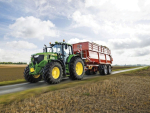
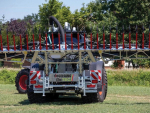
The partnership with Abbey would leverage MUT’s innovative Agri- Tech research in IoT, AI and manufacturing to develop the next generation of intelligent, connected tankers and feeders.
“These machines will be designed to allow remote operation and monitoring by employing state-of-the-art technologies and techniques in sensor networks, communications, and data analytics,” he says.
Abbey Machinery managing director Clodagh Kavanagh says that as an export-orientated company with 60% of sales coming from overseas, their goal is to research and develop the next generation of smart, connected, and automated tankers and feeders.
designed to allow remote operation and monitoring by employing state-of-the-art technologies and techniques in the fields of telematics, sensor networks and communications, and data analytics to meet the needs of our customers in Ireland, Britain, France, UAE, Saudi Arabia, Australia, New Zealand and Iceland,” says Kavanagh.
“The research has two strands, namely nextgeneration smart electronic architecture for agriculture machinery and software systems for telematics monitoring and remote operation.
“The necessary deliverables for Abbey Machinery will be a prototype of the full-stack software platform that monitors the telematics, automates service reminders, and also remote operations that have the potential to lead to the development of new products and services for us globally.”