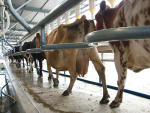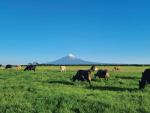
Southerly Winds Hit Taranaki Dairy Pasture Growth
A spate of southerly winds bringing cold temperatures has presented challenges for Taranaki dairy farmers.




 increase font size
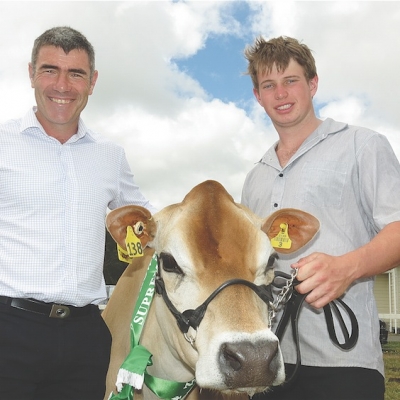 Nathan Guy presents the ribbon to Mitchell Vanner, son of the owners.
Lochraven Ace Rylee, from Kaponga in Taranaki, is the top cow in the Horowhenua.
The 4-year-old pure bred Jersey took out the supreme champion award for the best cow at the Horowhenua A&P show much to the delight of its owners Paul and Christine Vanner and their family.
The Vanners are Jersey stud breeders and run 180 cows and produce about 67,000kgMS on their 54ha hectare property. The Vanner family have owned the farm for 54 years.
Paul Vanner says Lochraven Ace Rylee was bed from a cow they bought some years ago.
“This is the 4th or 5th supreme winner we’ve had,” he says. “The cow’s mother has won three or four shows and we bred out of her and got this one. We do our own local A&P show at Hawera and the Stratford A&P show and we are a member of the pure breds association and then we have come down to this show at Levin. It’s a big family effort but we all enjoy it.”
Vanner says Taranaki has had good spring and early summer but it has started to get dry in the last two weeks.
Primary Industries Minister Nathan Guy says A&P shows are hugely important because they provide an opportunity for rural and urban communities to connect.
The Horowhenua A&P show decided to hold its event on Wellington Anniversary weekend in a bid to attract people from the city.
“It’s the closest agricultural event to the capital city of New Zealand,” he says. “We have seen there is an opportunity to connect rural and urban together. For example the animal nursery is fantastic because children can hold a young chicken in their hands, have an opportunity pat calves and other animals. The A&P shows like Horowhenua bring our urban cousins closer to what happens on a farm.”
The Horowhenua show has been running for 109 years and Guy says three or four generations of families have been competing in various ways over these years. In some cases it’s for the best pikelets or fudge or showing farm animals.
Guy says the show has been a big part of his life and he’s missed very few over the years. For young people it can be pretty demanding. As a youngster he recalls the long busy weekend at the show and then back to school on Monday. As a young lad he competed at the show with some success and the occasional mishap.
“The most embarrassing moment I had was when I was calling my pet lamb and it wouldn’t come because it saw a bit of clover in the paddock and started eating it. Then I had one pet lamb that bolted, jumped the scrim fence and took off,” he says.
Events such as the vintage machinery parade demonstrate how much progress the farming sector has made over the years, he says. The Horowhenua has some of the most fertile soils and productive land in the country.
“Horowhenua commercial growers supply 20% of all the lettuces, broccoli and cabbages produced in the country. As well it provides 1400 jobs for local people,” he says.
A spate of southerly winds bringing cold temperatures has presented challenges for Taranaki dairy farmers.
With forecasters advising El Niño conditions will develop through winter and strengthen into spring and summer, Ballance Agri-Nutrients is encouraging farmers and growers to think ahead about nutrient planning and be prepared to work around challenging weather conditions.
Halter has announced the six winners of its 2026 One Year Free competition, marking the biggest year yet for the annual award and the first time the company has expanded the field beyond its usual line-up.
On a farm in Tikorangi, North Taranaki, Brent Stevenson is sharemilking 1,400 cows.


Farmer-owned fertiliser company, Ballance Agri Nutrients is welcoming National’s plan to negotiate security agreements with key supplier countries to protect New Zealand-bound products from export restrictions and greater supply chain certainty.

Carrfields has announced the appointment of Stu Hall to the newly created role of chief operating officer, Carrfields Ltd, reflecting the continued growth of their agribusinesses and the need to ensure the company has the leadership capacity and support in place as it pursues the emerging opportunities ahead.
New Zealand's role is not to compete with Indian growers, according to NZ Apples and Pears.
The potato industry is celebrating the success of two rising stars - James Blair, the 2026 Young Grower of the Year and runner-up and innovation award winner, Amber Davy.
Twenty-eight emerging leaders from across the horticulture sector spent two days last month learning valuable skills and connecting with industry experts.
There are five entrants in this year’s Young Horticulturist of the Year, competing in a series of technical, practical, business and leadership challenges.
OPINION: It seems Canterbury processor Synlait is still in the doldrums.
OPINION: Get offside with New Zealand First leader Winston Peters at your own peril.