
Leon Fung confirmed as Synlait CEO
Canterbury milk processor, Synlait Milk has confirmed Leon Fung as its chief executive officer.




 increase font size
 John Penno, managing director and CEO of Synlait.
Synlait has had its strongest year yet, tripling after-tax profit to $34.4 million for the year to July 31.
This resulted mainly from a 400% increase in canned infant formula volumes and higher powder and cream product volumes.
Chairman Graeme Milne says the full year result shows the company’s progress since its sharemarket listing in 2013, and its strategy of making more from milk.
Its 2016-2017 forecast milk price is up from $4.50/kgMS to $5/kgMS following recent rises in dairy commodity prices.
It also confirmed a total milk price of $4.02/kgMS for the 2015-2016 season – a $3.91/kgMS base milk price and an average of $0.11/kgMS for special milk and seasonal premiums.
Year-on-year revenue increased $98.8m this year from $448.1m in 2015 to $546.9m and underlying NPAT – which mitigates unrealised foreign exchange gains or losses on USD inventory financing – is $32.7m ($12.2m in 2015).
“Operating cashflow of $103.9m in FY2016 allowed us to reduce net debt by 18% to $213.9m. As a result, our [debt] ratio has improved to two and a half times,” says managing director and chief executive John Penno.
“Our record profit is a clear highlight for FY16, but all year we also spent on improving our business, developing customer partnerships, supporting our milk suppliers and… becoming a world leader in infant formula.”
Synlait works with four of the world’s five large infant formula companies. It agreed a deal with The a2 Milk Company in August 2016 to supply a2 Platinum infant formula for the next five years.
It commissioned a third large spray dryer in early FY16, increasing production capacity and canned infant formula volumes.
“Formula is a value added product and generates a strong margin, which improves our product mix and overall gross profit per metric tonne (MT). As a result, our gross profit per MT increased 51% from $567/MT last year to $859/MT,” says Penno.
Synlait will install a second wet mix kitchen in FY17, doubling infant formula capacity to 80,000 MT/year, to meet forecast growth in demand.
With an accredited quality testing laboratory and in-house technical capability, Synlait will comply with Chinese infant formula regulations taking effect from January 2018.
“We are working through our strategy with infant formula customers exporting into China, including The a2 Milk Company and Munchkin Inc,” says Penno.
“It’s likely the Chinese regulations will moderate canned infant formula growth in FY17 as the market deals with the changing landscape, but we expect the market to normalise in the longer term.”
“We’re aware that low dairy commodity prices in FY16 impacted our Canterbury milk suppliers. For the second consecutive year our milk price is below the breakeven price for most of our milk suppliers, but our updated forecast of $5/kgMS for the 2016-2017 season is encouraging,” says Penno.
“We are paying our suppliers higher than normal advanced payments…. And we’re promoting opportunities to earn premiums, which totalled $5.7m in FY16.”
Canterbury milk processor, Synlait Milk has confirmed Leon Fung as its chief executive officer.
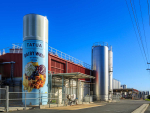
Waikato milk processor Tatua has again declared a record milk payout to farmer shareholders, leaving other processors in the dust.
Synlait has swung to second-half profit as operations stabilise, but the dairy processor still posted a $75.4m annual loss.
OPINION: It seems Canterbury processor Synlait is still in the doldrums.
Speculation of a possible joint move by Fonterra and a2 Milk to buy Synlait raises a much bigger strategic question, says agribusiness expert Dr Nic Lees.


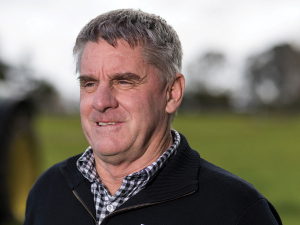
Federated Farmers has welcomed new rural policies released by ACT, saying they align closely with its own election priorities.
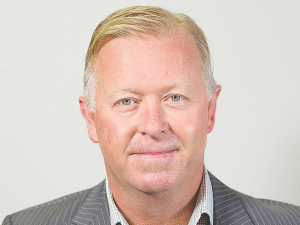
Rural Contractors NZ says proposed changes to land transport rules for agricultural vehicles are a welcome response by the Government to out of date regulations which have seen members hit with huge fines.
Alliance is calling for final applications for its 2027 Graduate Programme, with applications closing on Sunday 25 October.
Decades piloting planes has ensured vet and farmer David Hayes is focused on safety. So, after a serious accident while welding on farm, he is sharing his experience so others can learn from it.
Canterbury milk processor, Synlait Milk has confirmed Leon Fung as its chief executive officer.
OPINION: Making it easier to collect rainwater and use it to grow crops and livestock is a no brainer.

OPINION: It seems Canterbury processor Synlait is still in the doldrums.
OPINION: Get offside with New Zealand First leader Winston Peters at your own peril.




