
Feds Back National’s 19 Farming National Standards
National’s pledge to introduce 19 new national standards shows the party is serious about getting Wellington out of farming, Federated Farmers says.




 increase font size
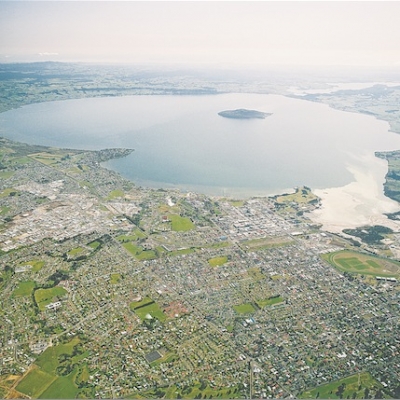 Rotorua Farmers bracing for rule changes.
PASTORAL FARMERS in the Lake Rotorua catchment await with trepidation the outcome of new rules on the amount of nitrogen they will be able to leach from their land.
Federated Farmers President for Rotorua/Taupo Alan Wills says dairy farmers in the catchment tell him they expect to have to farm differently when the rules take effect next year.
Bay of Plenty Regional Council has a set of rules out for consultation, on which submissions will close shortly, leading to a final version next March or April.
Wills says the many lifestyle farmers living in the catchment weren’t aware the proposed rules would affect them. Under the proposed rules dairy farmers are allocated a nitrogen discharge allowance of 35 units, dry-stock farmers 13 and lifestylers (2-40ha) 10 units. Lifestylers are getting a shock as they discover the changes they will have to make to meet the new requirements.
Says Wills, “This issue has been going on for a long time and even into the late 1960s when an American named Dr Fish described Lake Rotorua as ‘an unflushed toilet’. For many reasons it is a complicated catchment where 2.5m of rain falls and this combined with free draining pumice soils and the rolling contour of the land add to the problem.
Most of the dairy farmers have made changes to reduce their nutrient loss since 2007 when rule 11 was implemented and there has been a reduction of stocking rates and feed pads have gone in.”
Wills says dairy farmers are well aware of the issue and recognise the need to ‘farm within limits’. He hopes the issue with lifestyle farmers can be settled amicably but accepts there is tension between them and the dairy farmers.
The regional council will have to take into account the effects of the rules on the ‘economic and social fabric’ on the region around Lake Rotorua and the city itself.
National’s pledge to introduce 19 new national standards shows the party is serious about getting Wellington out of farming, Federated Farmers says.
Mobile phone coverage and reliability are deteriorating in rural areas, and farming families are bearing the cost, according to a Federated Farmers survey.
Central Otago District Council (CODC) has voted against a plan to spread treated sewage sludge from Cromwell and Alexandra on farmland near Lauder, a decision Federated Farmers says reflects strong opposition from rural residents.
Federated Farmers has called on Central Otago District Council (CODC) to drop or vote down a plan to truck sludge from Alexandra and Cromwell to farmland near Lauder, warning it would compound an "outrageous" situation created by a separate council's decision weeks earlier.
Federated Farmers says new legislation replacing the Resource Management Act will cut red tape, unlock investment and help grow New Zealand's export-led economy, after the Planning Bill and Natural Environment Bill passed their third reading in Parliament yesterday.


National’s pledge to introduce 19 new national standards shows the party is serious about getting Wellington out of farming, Federated Farmers says.
The National Party’s policies to make it easier to grow fresh vegetables, secure reliable water and energy and simplify farm planning are practical changes that will give growers the confidence to invest, according to Horticulture New Zealand (HortNZ).
Fonterra Co-operative Group chief financial officer Andrew Murray has resigned to take up a role outside the dairy giant.
A major move is about to get underway to improve the quality and viability of dairy beef and cattle in NZ.
Veterinarians say changes to the code of welfare for dairy cattle provides a positive foundation for improved cattle welfare across the country.
Today, 15 October, is the International Day of Rural Women, which recognises rural women’s contribution to farming, communities and the environment.




OPINION: It seems Canterbury processor Synlait is still in the doldrums.
OPINION: Get offside with New Zealand First leader Winston Peters at your own peril.




