LIC chief executive David Chin says meeting the revised methane reduction targets will rely on practical science, smart technology, and genuine collaboration across the sector.
He says that the Government is investing over $400 million to speed up the rollout of methane cutting tools and LIC is deeply committed to that same goal as the country’s farmer-owned herd improvement cooperative.
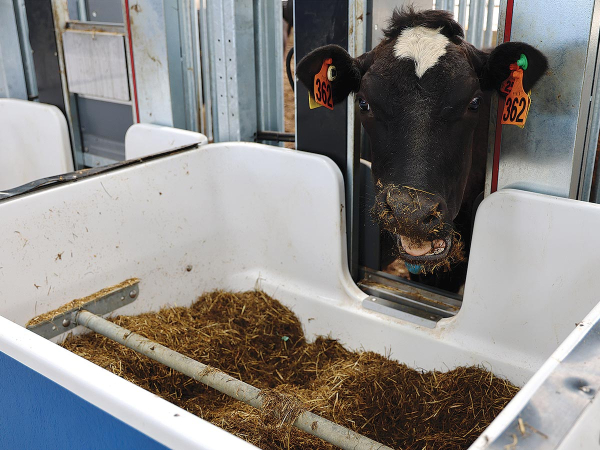
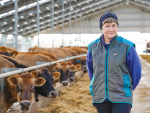
Speaking at the opening of the new methane research on LIC’s innovation farm in Waikato, Chin says the facility stands as a clear demonstration of LIC’s long-term commitment and long-term investment to help Kiwi farmers lead the way in highly efficient low-emissions dairying.
Chin says the new facility is another example of LIC investing today to ensure farmers have the tools they need for the future.
“New Zealand farmers are already global leaders in emissions efficiency but face increasing pressure to produce more with less.
“Our role is to help them meet this challenge head-on,” says Chin.
“By breeding cows that are both highly efficient and lower-emitting, we can offer farmers a practical on-farm solution that doesn’t compromise productivity. Our investment in this research is focused on achieving exactly that.”
He adds that there is strong collaboration between LIC and its partners.
“Together we’re proving that what can be achieved when government, industry and science align behind a shared purpose – to help New Zealand farmers remain the most sustainable producers of milk in the world.”
Chin thanked LIC’s partners, researchers and farm staff who have been involved in this project so far.
He says the results have been incredibly encouraging.
“We know that our elite bulls can produce between 18 and 28 grams of methane/kgDM eaten and we also know that that trait is heritable, it’s passed from sire to daughter.
“The next phase of this research and what this barn is involved in is observing these cows as they milk.
“These cows will confirm whether that low methane advantage carries through into production.
“If it does, we’ll have the science and the data to breed dairy animals that are both highly productive and naturally lower emitting.”
Genetics Set To Play Its Part
LIC chief scientist Richard Spelman says genetics is one of the many mitigators that could be put forward to meet the revised methane reduction targets.
He estimates that potentially genetics can deliver 5% of methane reduction of the 2050 target.
“So, that’s about a third to a fifth of the range the Government’s put out recently and that comes from permanent cumulative gain that we’ll get from genetics.
“So, this barn will see a lot of science over the next four to five years and that science will really underpin the low methane genetics that we want to be delivering to our dairy farmers.”
Early research shows that bulls with low methane emissions can sire daughters that produce less methane per kilogram of feed consumed. This finding was validated last year after the highest- and lowest-methane emitting sires were selected to produce a herd of daughters at Pamu’s Wairakei Estate farm in the Central Plateau.
Spelman says this confirms that genetic variation plays a role in methane emissions, and that low-emitting bulls can pass this trait to their daughters.
“This new facility will allow us to advance the next critical step in our research - measuring emissions from these daughters during their first milking season this year.”
The first cohort of Pamu cows have since been introduced to the purpose-built barn where their methane measurements will be collected to validate heritability and provide crucial data to bring farmers one step closer to breeding cows with lower methane emissions.