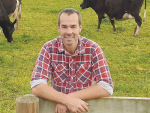
Cameron Henderson Reappointed Unopposed as DairyNZ Deputy Chair
DairyNZ deputy chair Cameron Henderson has been re-appointed unopposed for another term.




 increase font size
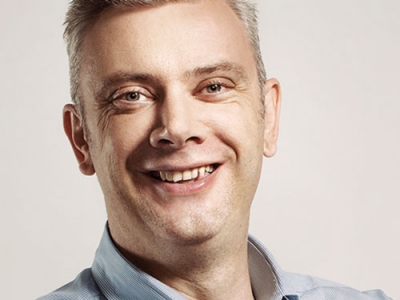 Ian Proudfoot.
New Zealand has had its head in the sand over the potential of the European dairy industry, according to KPMG’s international head of agri, Ian Proudfoot.
He says the removal of quota regimes on EU farmers from April 1 is a highly disruptive event for the global premium food markets New Zealand supplies. New Zealand has had a very laissez faire approach to this issue over the years, he says.
“I have heard many comments about limited expectation of production growth and most of any increase being consumed within the European ‘domestic’ market. While these views may prove correct over time, they will only describe the average outcomes for the European industry.
“We miss opportunities and overlook risks by allowing our focus to be on the average outcome. We need to recognise that our production in New Zealand is not average, we produce a tiny percentage of the total food produced globally and our product is sold in the main to premium, high value markets.”
Proudfoot says the Europeans have invested large sums in market capability and increasing production capacity. He says using the term ‘average’ is naïve.
“We don’t play in an average market, we play in specific parts of the market. We are only a relatively small player in the total global picture and therefore the niches we play in are the same niches that the increases in production out of Europe are going to be sent to. We could end up finding ourselves challenged in our key markets far faster than we believed would happen.”
Proudfoot says a huge market will be unlocked in Asia, with India likely to be a big mover. He also notes that there are big plays in Africa which he says the Europeans are much more across than New Zealand. Proudfoot says more niches will open up but he says there will be strong competition from Europe.
“There are probably four countries most likely to realise potential quickly – Ireland, Denmark, Netherlands and France. Ireland has an unusually small farm structure and unusually long tenure on farms. In Ireland the one thing they won’t do is sell out to their neighbours because that is seen as admission of defeat. So consolidation of farms will take time, [as will getting] up to New Zealand’s level of productivity, but it is conceivable this could be done.
“The Dutch and Danish have much more intensive farm systems so for them to increase production is just a matter of how much feed they put into the animals, so it’s quite easy for them to scale up quite quickly.”
The other problem for New Zealand is its lack of any strong dairy brands, Proudfoot says. Some people hold up brands such as Anchor and Anlene as ‘blockbuster’ brands, but they are known in a handful of markets at best. New Zealand is not recognised globally as the home of dairy products as are France and the Netherlands. In fact, New Zealand has few high profile internationally recognised brands, he says.
“The All Blacks are a strong brand internationally, so is Air New Zealand, but we don’t have many primary sector brands that are globally recognised. Villa Maria may be heading in that direction but our best brand is Zespri.”
DairyNZ deputy chair Cameron Henderson has been re-appointed unopposed for another term.
Tatua Co-operative Dairy Company has confirmed that chair and director Stephen Allen will retire at the co-operative's annual general meeting (AGM) on 3 December 2026, ending 30 years of service, including more than 20 years as Chair.
A new company set up to cultivate and supply seaweed for animal methane mitigation studies believes it could be a game changer for the dairy industry.
Wayne and Ange Moxham of Horowhenua have just been named as Fonterra's top organic performer for milksolids. As well as providing organic milk to Fonterra, the couple also sell Udderly Organic milk to more than 100 outlets in the region and are embarking on another exciting venture producing organic gelato. Reporter Peter Burke went along to see their farming operation.
Fonterra has reduced its forecast 2026/27 Farmgate Milk Price.


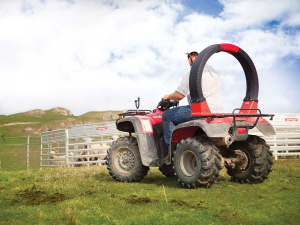
When Northland leather worker Vernon Suckling started making horse saddles 50 years ago, quad bikes and side-by-side vehicles were unheard of.
Alliance Group has confirmed that eligible farmer-shareholders who supply and continue to back the business will receive up to $20 million later this year, following the strategic investment partnership with Dawn Meats.
With a general election under five weeks away, Rural News is asking major political parties about their policies and positions on key issues facing the primary sector. We will run their responses to each question over the next four weeks. The ACT Party and the Greens didn't respond in time.
The red meat sector is in great heart.
Dr Scott Champion, Foundation for Arable Research chief executive, says that everyone in the supply chain had a role to play in driving the sector's long-term success.
Entries opened on Monday, 5 October 2026 for the 2027 New Zealand Dairy Industry Awards (NZDIA), which organisers describe as the nation's biggest celebration of excellence in the dairy sector.
OPINION: It seems Canterbury processor Synlait is still in the doldrums.
OPINION: Get offside with New Zealand First leader Winston Peters at your own peril.