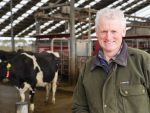
Inside the Southland Dairy Farm Where Robots and Pasture Work Together
In Dacre, near Invercargill in New Zealand’s South Island, Bruce Dinnington is running a dairy operation unlike any other.




 increase font size
 Malcolm Wood received a two-year jail term and his wife was fined $30,000.
A Palmerston North man has been jailed and his wife fined $30,000 after pleading guilty to a total of 20 charges relating to the abuse of cows and calves in their care.
Malcolm and Cheryl Wood pleaded guilty earlier this year to multiple charges under the Animal Welfare Act which included wilful ill-treatment and reckless ill-treatment of cows and calves that were part of a dairy herd they were in charge of.
They were both sentenced yesterday at the Palmerston North District Court.
Wood received a two-year jail term and his wife was fined $30,000. They were disqualified from owning animals for five years and ordered to pay court costs of $11,700 between them.
The Ministry for Primary Industries (MPI) took the prosecution after receiving a complaint about the poor condition of a large number of cows and calves in the 500-plus herd.
MPI’s director of compliance Gary Orr says animal welfare inspectors found significant animal welfare issues after they visited the 280 hectare property in Opiki.
“There were multiple incidents of severe neglect. Some of the calves that were found were in such poor condition that they had to be euthanised. These calves were in a state of physiological stress resulting from severe malnourishment and should have been euthanised much earlier in order to end their suffering.
“Many of the milking herd that comprised approximately 167 cows were in extremely poor condition.
“The herd had been subjected to prolonged under-feeding leading to physiological stress and concurrent disease, such as mastitis.
“Neither Mr or Mrs Wood took any steps to address the malnourishment of the herd. Instead, they continued to walk these cows to the milking shed twice a day in spite of their poor condition and low quantities of milk.
Other examples of abuse included 87 calves that were found in a rearing shed. All were dull, depressed, dehydrated, malnourished or emaciated to varying degrees.
It was found that calf-rearing basics were not being done and the calves were effectively being starved through receiving only a quarter of their daily needs.
Milk was being fed cold to them meaning that half of the milk energy was consumed just to achieve body temperature. Calves in need of veterinary treatment were not receiving it.
Orr says inspectors also found several injured cows on the property. Despite being aware of the injuries, the Woods did not seek veterinary advice or treatment.”
A veterinarian found that multiple management issues had contributed to the farm’s animal welfare issues, including insufficient feed and pasture on the farm and insufficient labour to satisfactorily run the farm.
“This is a very sad case that could have been avoided if farm practices were optimal. We are urging farmers who find themselves in difficulty to reach out to their local Rural Support Trust who are there to provide support and assistance when times are tough. The Rural Support Trust can be contacted on 0800 RURAL HELP.”
In Dacre, near Invercargill in New Zealand’s South Island, Bruce Dinnington is running a dairy operation unlike any other.

Rural leader Mark Hooper has been appointed as an independent director to the NZPork board, bringing extensive farming, governance and advocacy experience to the role.
Climate, nature and animal wellbeing make up Fonterra's refreshed sustainability roadmap released last week.
B+LNZ's Wormwise veterinarian Mary Bowron has won the Best Sheep and Beef Vet of the Year Award in recognition of her outstanding contribution to New Zealand’s sheep and beef sector.
With lambing underway in many regions, Beef + Lamb New Zealand is encouraging farmers to put together a wellequipped lambing kit to help minimise lamb losses, particularly in bad weather.


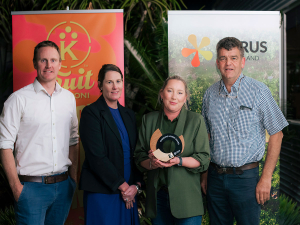
New Zealand's citrus growers were challenged to build their future on the value embedded in their fruit rather than the volume they produce, at Citrus New Zealand's annual gathering in Gisborne on 17 September.
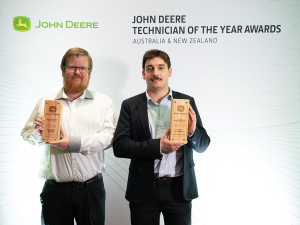
Leading John Deere technicians and apprentices from New Zealand and Australians were recognised at the recent sixth annual JD Technician of the Year Awards, held in Brisbane.
In Dacre, near Invercargill in New Zealand’s South Island, Bruce Dinnington is running a dairy operation unlike any other.
A free online platform aggregating governance vacancies across rural and regional New Zealand has been launched.
Environment Minister Nicola Grigg has announced details of a new rural plastics recycling scheme.
Agricultural drone operators say that a government decision to allow lower-risk drone work without certification won’t lower standards but drive innovation and efficiency.



OPINION: It seems Canterbury processor Synlait is still in the doldrums.
OPINION: Get offside with New Zealand First leader Winston Peters at your own peril.