An appeal to the High Court is looking likely as Mid Canterbury irrigators BCI digest the implications of the Environment Canterbury Plan Change 2 announcement two weeks ago.
BCI general manager John Wright met with Environment Canterbury (ECan) staff a week ago to try to clarify the decision.
BCI is a joint venture between the Barrhill Chertsey Irrigation Board and Electricity Ashburton; it supplies water to farms in the Hinds/Hekeao Plains south and west of Ashburton.
The area is over-allocated for water use and ECan is trying to bring nutrient leaching under control in this productive area.
One of the Plan Change 2 decisions by ECan commissioners Peter Skelton and David Caygill was to prevent BCI from being granted a replacement scheme discharge permit when its current permit expires in 2018 for any land in the Hinds/Hekeao area not irrigated before February 15 2016.
However farmers are still able to develop irrigation under the Rangitata Diversion Race Management Ltd (RDR) discharge permit.
The Hinds/Hekeao area is one of few places in the country where farmers can choose between competing irrigation schemes.
Wright said following the meeting that BCI and ECan were trying to understand the commissioners' decision. At face value it appears a massively unfair and an anti-competitive move by the commissioners.
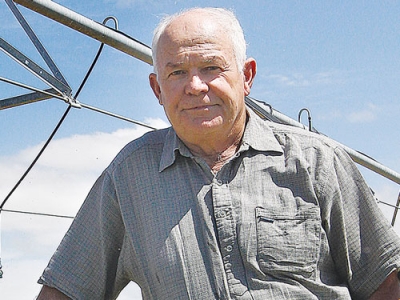
A 50% shareholder, Barrhill Chertsey Irrigation Board chairman Rab McDowell, said under the decision their expansion into the Hinds/Hekeao area would be impossible. "Why would a farmer sign up with BCI when he would face extra costs of trying to obtain discharge consents from ECan, whereas if he signed up with the RDR he could operate under the RDR consent?"
An irrigation scheme like RDR is able to average its nutrient discharge across the whole of the scheme whereas individual farmers would not have that luxury. Under the plan, applying for new water is prohibited once the plan change becomes operative, and all farming is required to be using good management practice by 2017.
BCI has spent hundreds of thousands of dollars improving its infrastructure in the area with the goal of expanding but that excess capacity will go unused if the decision is allowed to stand.
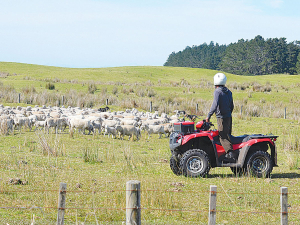
About 40% of the farms in the area are dairy farmers, and cropping and sheep farmers make up most of the remaining agricultural activity.
At the decision announcement Commissioner Skelton was unsure if there would be any appeals but it appears obvious that BCI would have no option but to look at appealing.
Appeals are limited to points of law and Wright said that unfortunately being unfair is not a point of law but they are examining the decision in detail and looking for a strong point of law to appeal on.
But Wright said it was BCI's job to stick up for the shareholders' rights and that's what they would be doing.