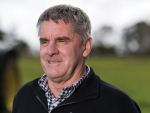
Federated Farmers Welcomes ACT’s New Farming Policies
Federated Farmers has welcomed new rural policies released by ACT, saying they align closely with its own election priorities.




 increase font size
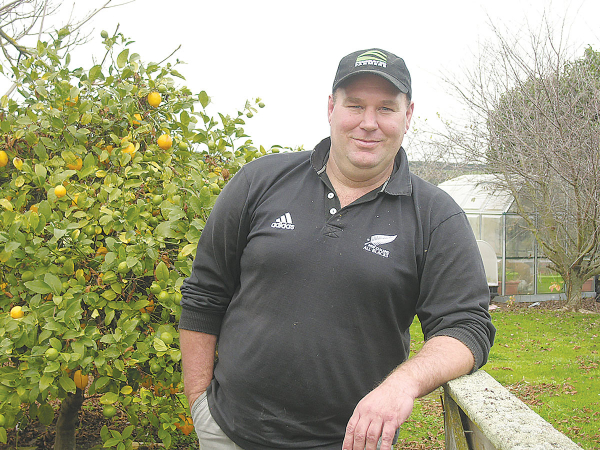 Feds president Andrew Hoggard says in the past they have agreed to words and it's all got watered down.
Federated Farmers have refused to be a part of the industry-led He Waka Eke Noa (HWEN) submission to government on agricultural emissions.
Feds President Andrew Hoggard told Dairy News that while they agree with some of the narrative in the overall HWEN submission, they decided to go their own way for fear their message around targets might be construed as being diluted in some way.
"In the past we have agreed to words and it's all got watered down," he says.
"We wanted to make it clear that we would not agree to anything unless there was a review of the targets. Feds didn't want them to say you have agreed to this in the joint submission so we will go with that," he says.
In the past Hoggard had made it clear that Feds wanted to "go hard" in its submission, but acknowledges that some industry organisations have also gone quite hard in their individual submissions.
"At this point in time, my feeling and the feeling of others is that we needed to be crystal clear in what we are saying," he says.
It should be pointed out that DairyNZ and B+LNZ have also made separate submissions in addition to signing the HWEN submission.
In the joint submission, the remaining ten partners are calling on the Government to change key aspects of its proposal on agricultural emissions pricing.
They say they want an emissions pricing system that creates incentives and opportunities to reduce agricultural emissions, while maintaining the viability of the primary sector.
This would include changes to price setting, governance and transitional arrangements that would see decision-making on emissions pricing balance the socio-economic impacts on the primary sector and wider economy with emissions reductions.
The group says that the Government proposals as they stand are not acceptable to the partners or the farmers and growers they represent.
They say they remain committed to working in good faith with government and Māori to design a practical cost-effective, farm-level system for enabling the agricultural sector to play its part in responding to climate change.
Independent chair Sarah Paterson says partners have worked hard to develop a shared view on issues raised by the Government proposals and it is disappointing Federated Farmers has chosen not to sign the joint submission.
"The partnership came together because partners could see that by working together they could achieve a better outcome for the primary sector as a whole than they could have done separately. We are much stronger as a sector when we all work together," she says.
Paterson says the partners will continue to work constructively and collectively in the spirit of partnership to explore common ground and solutions.
Federated Farmers has welcomed new rural policies released by ACT, saying they align closely with its own election priorities.
Federated Farmers is backing Feilding High School’s call to keep Agriculture and Horticultural Science as a standalone subject in Year 11.
As part of its Election 2026 coverage, Rural News asked political parties how they would help pull the arable sector out of the doldrums. Here's what they said:
National’s pledge to introduce 19 new national standards shows the party is serious about getting Wellington out of farming, Federated Farmers says.
OPINION: Rivers never sit still. They start as snowmelt and rain in the high country, pick up a creek here and a stream there, and carry all of it down to where it's needed.


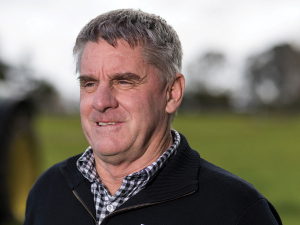
Federated Farmers has welcomed new rural policies released by ACT, saying they align closely with its own election priorities.

Rural Contractors NZ says proposed changes to land transport rules for agricultural vehicles are a welcome response by the Government to out of date regulations which have seen members hit with huge fines.
Alliance is calling for final applications for its 2027 Graduate Programme, with applications closing on Sunday 25 October.
Decades piloting planes has ensured vet and farmer David Hayes is focused on safety. So, after a serious accident while welding on farm, he is sharing his experience so others can learn from it.
Canterbury milk processor, Synlait Milk has confirmed Leon Fung as its chief executive officer.
OPINION: Making it easier to collect rainwater and use it to grow crops and livestock is a no brainer.

OPINION: It seems Canterbury processor Synlait is still in the doldrums.
OPINION: Get offside with New Zealand First leader Winston Peters at your own peril.




