Patterson: Rural NZ Faces a "Massive" Infrastructure Deficit
The Minister for Rural Communities, Mark Patterson, says there's a massive infrastructure deficit in rural areas.




 increase font size
 Digital Economy and Communications Minister David Clark says the Rural Capacity Upgrade programme is on track to provide 30,000 rural homes and communities with faster, improved connectivity.
The Rural Capacity Upgrade programme, established in 2017, is on track to provide 30,000 rural homes and communities with faster, improved connectivity.
That’s according to Digital Economy and Communications Minister David Clark who announced 21 new contracts with Crown Infrastructure partners at Fieldays earlier this month.
As announced in the 2022 Budget back in May, $47 million will go towards the first phase of a rural infrastructure upgrade programme and a further $43 million has been allocated to the second phase. Work is scheduled to be performed between now and 2024.
The announcement came at the same time as the Government’s statement of intent ‘Lifting Connectivity in Aotearoa New Zealand’ was released.
In the statement, Clark says the Government is on track with its goal to ensure 99.8% of New Zealand’s population has access to improved broadband by the end of next year.
However, the statement also notes that remote and rural New Zealanders do not always have easy access to the connectivity they require.
This, it claims, is the reason the Government has created a $15 million Remote Users Scheme, designed to extend coverage, and support the use of innovative connectivity options.
It says there is still room for improvement on the quality of connectivity for many New Zealanders.
“There still remain large areas of New Zealand’s land mass where options for connectivity are limited, because of remoteness and very low population density such as over a large far property or in a national park. In such cases, satellite coverage may be the only option for digital connectivity,” the report states.
Clark says the new round of the Rural Capacity Upgrade will see many existing towers upgraded and new connections established in rural areas currently experiencing poor performance.
Meanwhile, Federated Farmers national board member and telecommunications spokesman Richard McIntyre says the Government’s goal to have 99.8% of New Zealand connected is an ambitious but admirable one.
He says the Lifting Connectivity in Aotearoa report moves the discussion around connectivity away from justifying that something needs to be done and toward getting on and doing it.
“While it’s going to take a lot more investment on top of the money already announced, we applaud the commitments made to longer-term rural connectivity solutions,” McIntyre says.
He adds that it appears the government has considered the findings of recent Federated Farmers Rural Connectivity Surveys.
The Minister for Rural Communities, Mark Patterson, says there's a massive infrastructure deficit in rural areas.
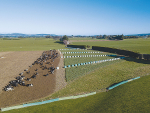
Central Otago District Council (CODC) has voted against a plan to spread treated sewage sludge from Cromwell and Alexandra on farmland near Lauder, a decision Federated Farmers says reflects strong opposition from rural residents.
Federated Farmers has called on Central Otago District Council (CODC) to drop or vote down a plan to truck sludge from Alexandra and Cromwell to farmland near Lauder, warning it would compound an "outrageous" situation created by a separate council's decision weeks earlier.
Federated Farmers says new legislation replacing the Resource Management Act will cut red tape, unlock investment and help grow New Zealand's export-led economy, after the Planning Bill and Natural Environment Bill passed their third reading in Parliament yesterday.
Leading figures from the major political parties will be questioned on their primary sector policies at the Rural Issues Debate at Mystery Creek Events Centre, Hamilton, on 30 September.

Farmer-owned fertiliser company, Ballance Agri Nutrients is welcoming National’s plan to negotiate security agreements with key supplier countries to protect New Zealand-bound products from export restrictions and greater supply chain certainty.

Carrfields has announced the appointment of Stu Hall to the newly created role of chief operating officer, Carrfields Ltd, reflecting the continued growth of their agribusinesses and the need to ensure the company has the leadership capacity and support in place as it pursues the emerging opportunities ahead.
New Zealand's role is not to compete with Indian growers, according to NZ Apples and Pears.
The potato industry is celebrating the success of two rising stars - James Blair, the 2026 Young Grower of the Year and runner-up and innovation award winner, Amber Davy.
Twenty-eight emerging leaders from across the horticulture sector spent two days last month learning valuable skills and connecting with industry experts.
There are five entrants in this year’s Young Horticulturist of the Year, competing in a series of technical, practical, business and leadership challenges.
OPINION: It seems Canterbury processor Synlait is still in the doldrums.
OPINION: Get offside with New Zealand First leader Winston Peters at your own peril.