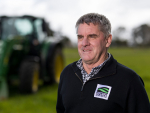
Feds Back National’s 19 Farming National Standards
National’s pledge to introduce 19 new national standards shows the party is serious about getting Wellington out of farming, Federated Farmers says.




 increase font size
 Federated Farmers Manawatu/Rangitikei president James Stewart.
Dairy farmers in most North Island regions are hard hit by rain which is hindering pasture utilisation and causing milk production to drop.
DairyNZ’s general manager for extension, Andrew Reid, says the problems with the wet extend from Northland to Waikato, Manawatu, Taranaki and Bay of Plenty. He says even the pumice country in the central North Island has been challenged by the wet.
Reid says few regions in the North Island haven’t received much higher rainfall than normal for the last two-three months.
But in contrast, the South Island has had a reasonable start to the season, except for Canterbury which is still affected by drought.
In the North Island, damage to paddocks is hindering pasture utilisation: farmers are unable to get enough pasture into cows.
“North Island pasture residuals have been higher than ideal because they can’t physically graze low enough to get feed into the stock, and supplement use has been justified even though we have passed balance date on most farms.
“Milk production is down for that reason and because many farmers have reduced cow numbers based on what the milk price was doing last season, so it is a combination of both,” Reid says.
The higher forecast milk price has given farmers confidence to use supplementary feed as an option.
But despite the optimism in the market the sector is not out of the woods yet.
“Mating is the focus of attention now, to ensure cows’ energy levels are good; at the moment these are ok but not startling.
“DairyNZ has been focusing on a pasture-first message and encouraging farmers to utilise pasture as best they can. That has been challenging given the mud lying around paddocks; then of course there is the need to watch the cost of production. When you are forced to buy supplement it doesn’t help, but hopefully this is just a short term issue.”
National’s pledge to introduce 19 new national standards shows the party is serious about getting Wellington out of farming, Federated Farmers says.
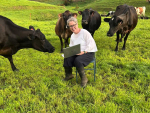
Today, 15 October, is the International Day of Rural Women, which recognises rural women’s contribution to farming, communities and the environment.
Mobile phone coverage and reliability are deteriorating in rural areas, and farming families are bearing the cost, according to a Federated Farmers survey.
Central Otago District Council (CODC) has voted against a plan to spread treated sewage sludge from Cromwell and Alexandra on farmland near Lauder, a decision Federated Farmers says reflects strong opposition from rural residents.
Federated Farmers has called on Central Otago District Council (CODC) to drop or vote down a plan to truck sludge from Alexandra and Cromwell to farmland near Lauder, warning it would compound an "outrageous" situation created by a separate council's decision weeks earlier.


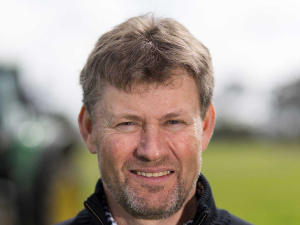
Mark Hooper has been appointed the new chair of NZPork, the industry organisation representing New Zealand pig farmers.
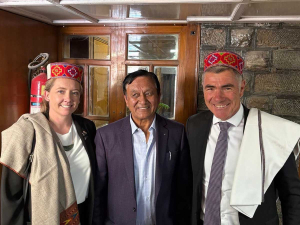
As the India-New Zealand free trade agreement enters into force, New Zealand’s apple industry has reaffirmed its commitment to the long-term development of India’s apple sector.
Fonterra shareholders can begin voting on Tuesday 20 October in the 2026 Board of Directors’ election, a Co-operative Council election in one Ward, and seven Annual Meeting resolutions.
National’s pledge to introduce 19 new national standards shows the party is serious about getting Wellington out of farming, Federated Farmers says.
The National Party’s policies to make it easier to grow fresh vegetables, secure reliable water and energy and simplify farm planning are practical changes that will give growers the confidence to invest, according to Horticulture New Zealand (HortNZ).
Fonterra Co-operative Group chief financial officer Andrew Murray has resigned to take up a role outside the dairy giant.

OPINION: It seems Canterbury processor Synlait is still in the doldrums.
OPINION: Get offside with New Zealand First leader Winston Peters at your own peril.




