DairyNZ Strategy Review: Farmer Feedback Closes 15 Nov
Farmers have until the end of this week to help shape DairyNZ’s future focus.




 increase font size
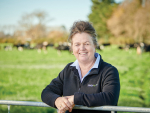
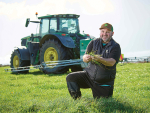
 Rex Corlett.
Civil engineer Rex Corlett has won a prestigious engineering award for his work on effluent pond design and construction, reports IPENZ–Engineers New Zealand.
Corlett’s work has influenced regional council rules on dairy farm effluent storage, IPENZ says. It won him the Angus Award which recognises engineering excellence in waste, water and amenities.
A chance visit to a dairy farm 10 years ago sparked his interest in effluent ponds.
“I was horrified,” he says. “There were damp patches around the outside of the pond and its downstream slope was leaking into a nearby creek.”
Given the farmer had used his own excavator for the works and only track-rolled the surface, Corlett says the leakage wasn’t surprising. But he was surprised to discover this kind of practice was commonplace.
The key to improving farm systems, he says, is talking to farmers, building respect and trust, and convincing them that good design isn’t overkill but sound, sensible practice.
“Farmers naturally want to do as much work onfarm as they can and choosing to employ an engineering consultant often doesn’t come easily.”
But producing a low-maintenance, long-term solution makes their lives easier, he says.
Doing it once and doing it right means no costly fix-ups of mistakes, or replacement two years down the track.
“It’s actually just good asset management principles.”
Currently principal engineer (rural) in Opus’ Christchurch office, Corlett is drafting the third revision of IPENZ Practice Note 21, and continues to work with DairyNZ and regional councils.
He has recently been seconded to the North Canterbury transport infrastructure recovery team to manage reconstruction and upgrading of the Picton-Christchurch rural highway following the Kaikoura earthquakes.
The Angus Award was one of two supreme technical awards presented at the IPENZ Fellows and Achievers Awards on April 7 in Wellington.
Farmers have until the end of this week to help shape DairyNZ’s future focus.
The New Zealand dairy sector set a record in the 2025/26 season, producing more than two billion kilograms of milksolids for the first time.
Students will be able to study Agriculture and Horticultural Science from Year 11, creating a clear pathway into Years 12 and 13 and future careers in New Zealand’s primary industries, Education Minister Erica Stanford says.
OPINION: New Zealand dairy is delivering. In the year to June, dairy exports earned a record $28.8 billion for New Zealand. They were part of a record $65.2 billion earned by our wider food and fibre sector.
Today, 15 October, is the International Day of Rural Women, which recognises rural women’s contribution to farming, communities and the environment.



During the nesting season, from September to December, industrious starlings can quickly build nests in the darker areas behind tractor and vehicle, usually close to hot engines, typically resulting in localised damage or in some cases complete write-offs.
The meat processing industry is much more collegial than it was in the past and is now more focused on common goals.
With the last couple of months having seen some potential tractor purchases put on hold with the impending election and continued input cost rises, year-to-date figures, ending September, has seen deliveries up around 5% over the same period in 2025, with a total of 2026 units.
Beef+Lamb New Zealand is calling for nominations for director roles in the Northern South Island and Northern North Island electoral districts.
Fonterra chief executive, Richard Allen says being resilient has helped the dairy industry overcome extreme volatility in recent years.
The head of the Ministry for Primary Industries (MPI) trade and international relations group says New Zealand is well-positioned to secure trade access and compete internationally as the world becomes more complicated, demanding and uncertain.


OPINION: It seems Canterbury processor Synlait is still in the doldrums.
OPINION: Get offside with New Zealand First leader Winston Peters at your own peril.