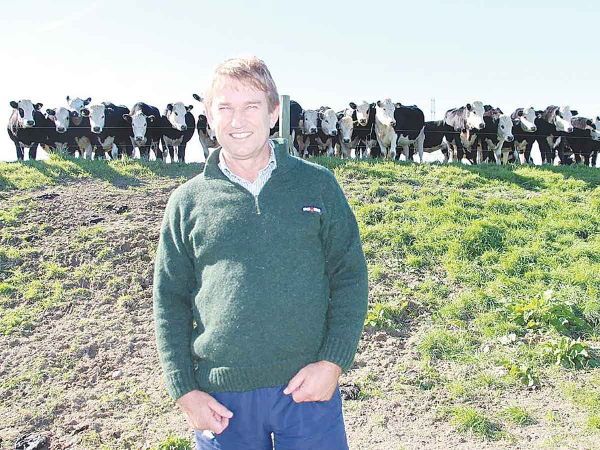
Dairy Companies Association of NZ (DCANZ) chairman Malcolm Bailey told Dairy News he’s concerned about remarks by certain politicians; they have been quoted as thinking along these lines, he adds.
Bailey says at some stage COVID-19 will transition from being a health problem to an economic problem. Any rise in protectionism will be bad for us.
He says as an economy NZ has done very well “because we have a trading mentality and we have to encourage that and tell other nations that we are able to sell products to them and they can do the same to us”.
“There is a huge lesson to be learned from way back in the 1930’s during the Great Depression when governments started retrenching and trying to balance the books and shutting down imports,” says Bailey.
“It just spiralled out of control and what was already a bad situation escalated and unemployment went to massive levels,” he says.
Bailey says putting up the shutters in terms of trade barriers would be bad for everyone.
He points to Singapore as an example. NZ has an excellent trading relationship with the tiny island nation.
Bailey says under a protectionist regime Singaporeans would virtually starve to death because they are not a food producer and in turn New Zealanders would be deprived of quality, cost effective consumer products.
“Anyone advocating protectionist policies is just plain dumb,” he says.
Commenting on the dairy industry and COVID-19’s impact on processors, he says the market for dairy products has held up pretty well so far.
There have been challenges in terms of getting product to market, but exporters have found innovative and pragmatic ways of sorting these out.
He says the dairy sector is mindful that it is in the midst of a global recession and the challenges that this brings.
“At this stage we are bucking the trend, but there are warning signs,” he says.
He notes that it may be possible to divert product from a market which closes down to one that opens up, providing that there are no trade barriers. Some of the tariffs can be prohibitive and there is a risk of disruption.
“In the US, milk being spilled down the drain from factories is mainly for the food service sector, which is almost non-existent at present with restaurants closed.
“That sort of disruption could have significant consequences if those companies rejig their plants and start producing milk powder which could end up depressing milk powder prices,” he says.
Bailey says to some degree this has happened in Europe with forward prices there much weaker. He says the GDT has held up reasonably well so far, but there are predictions floating around that would suggest a lower farm gate milk price in NZ than hoped for.
“Having said that, NZ does have its own special chunk of the dairy market and hopefully it can remain in better shape than some other countries,” he says.