Post-quake study reveals hort potential
Large areas of North Canterbury and South Marlborough – affected by the 2016 Kaikoura Earthquakes – offer wide potential for horticulture.




 increase font size
 Donalda Galletly with his family and damaged concrete platform.
Dairy farmers in the Emu Plain area near the epicentre of today's large earthquake are helping each other out, with many of them unable to milk because of shattered milking platforms.
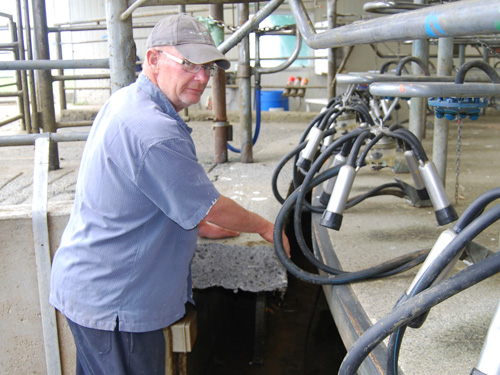
Mark Williamson, who manages 950 cows on 330ha, has no power or water, the water heating tanks in his shed have toppled, and the 60-bale rotary platform has jumped off its bearings to sit about 15cm out of place.
“Even if there was power you couldn’t move it,” he says.
Williamson said he was lucky he was able to walk his herd for milking at 3 or 4am about 9km to a neighbour’s shed which was still operable on generator power.
 However, without power he couldn’t feed and water them. Although it was “politically incorrect,” he had had no choice but to put them by a creek.
Further along River Road, a small circle of camp chairs stood on a gravel and concrete forecourt of the milking shed of Don and Donalda Galletly’s farm – where the Galletlys, their manager and family, and other farm workers had sat out the aftershocks together in the early hours of this morning.
There was safety and security in numbers, said Donalda Galletly.
“We’ve been looking after the people. That’s the main thing,” she said.
Their shed was also unusable, the rotary platform having jumped off its mountings. The concrete pad was crossed with wide cracks and a nearby feed silo had moved about 15cm.
With milking impossible on the property, manager Mark Galbraith had arranged to move half the herd to a nearby farm, but the other half would stay and would have to be dried off, he said.
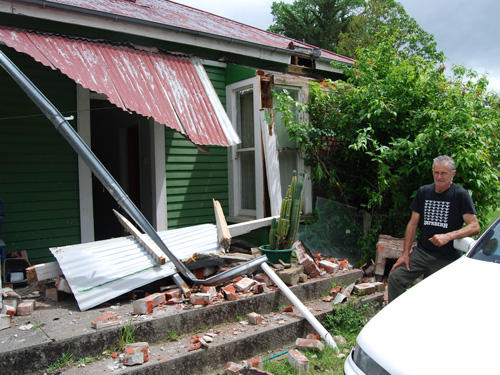
Also close to the epicentre was farm forestry worker Chris Costigan, who said he was asleep upstairs in his rented 1894-vintage cottage when the quake hit and was convinced the roof was about to fall on him.
He had no power, no water after his concrete tank toppled from its stand and shattered across the back yard, and was working single-handed this afternoon to try to weatherproof the gaping hole in his living room left by a falling brick chimney.
Costigan said he had been living only 2km from the epicentre of the first of the Canterbury quakes in September 2010, and had been in Cathedral Square, Christchurch, only half an hour before the big fatal quake of February 2011.
“That why I left down there, to get away from them,” he said.
Large areas of North Canterbury and South Marlborough – affected by the 2016 Kaikoura Earthquakes – offer wide potential for horticulture.
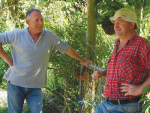
Two years on from the devastating November 2016 Kaikoura earthquake, Kaikoura dairy farmer Graham Collins says he is getting used to “the new normal”.
A New Zealand Winegrowers’ research project, funded by MPI, is hoping to take the lessons from the 7.8 Kaikoura earthquake to build a more resilient industry for the future.
Three months on from the huge November 2016 earthquake the badly damaged land on one farm near Waiau is still settling and moving – but the house isn’t.
Port Nelson has been a key infrastructure asset for the top of the south for decades but its importance to Marlborough is becoming even more significant, following last year’s 7.8 earthquake.

Farmer-owned fertiliser company, Ballance Agri Nutrients is welcoming National’s plan to negotiate security agreements with key supplier countries to protect New Zealand-bound products from export restrictions and greater supply chain certainty.

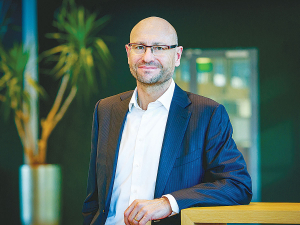
Carrfields has announced the appointment of Stu Hall to the newly created role of chief operating officer, Carrfields Ltd, reflecting the continued growth of their agribusinesses and the need to ensure the company has the leadership capacity and support in place as it pursues the emerging opportunities ahead.
New Zealand's role is not to compete with Indian growers, according to NZ Apples and Pears.
The potato industry is celebrating the success of two rising stars - James Blair, the 2026 Young Grower of the Year and runner-up and innovation award winner, Amber Davy.
Twenty-eight emerging leaders from across the horticulture sector spent two days last month learning valuable skills and connecting with industry experts.
There are five entrants in this year’s Young Horticulturist of the Year, competing in a series of technical, practical, business and leadership challenges.
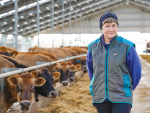
OPINION: It seems Canterbury processor Synlait is still in the doldrums.
OPINION: Get offside with New Zealand First leader Winston Peters at your own peril.