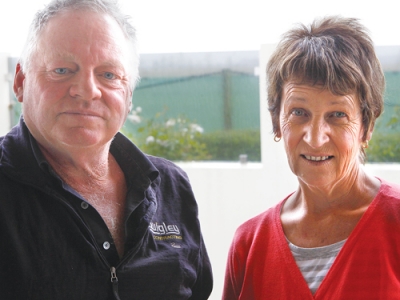
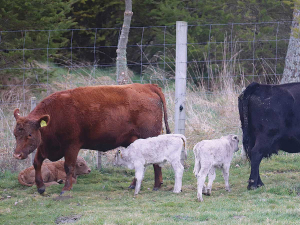
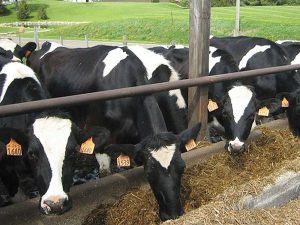
'Farmers stealing from farmers' is how dairy farmer David Quigley describes thieves stealing 36 of his premier milking cows in night-time raids in December.
When farm workers noticed that 36 cows weren't milking they initially thought the Protrack system wasn't working properly. But after three milkings they noticed it was the same 36 cows and quickly did a head count and uncovered the theft.
The Quigley's have 700 cows on their Mayfield farm so the theft means a 5% loss in milk production for the business.
With that number of cows miking on their 54-bale rotary shed, each cow is only in there for seven to eight minutes, meaning that staff only had minimal time to spot missing cows. That helped the theft go unnoticed initially.
David and his wife Jill thought the cows would have been killed and used as meat. But when they heard of more thefts throughout the district they realised it is more likely someone is setting themselves up as a dairy operation.
And they hope the cows are being milked somewhere because it at least means they are still alive.
With more than 100 cattle stolen in the last six weeks from across Canterbury, police are asking rural communities to be vigilant and report any suspicious activity as soon as possible.
These reports enable the police to track patterns of offending and then through the police's district command centres they will devote staff to areas in targeted operations in a push to catch offenders.
With all the thefts and the logistics involved it's obvious that the thieves are well organised and operating in cahoots with a farmer.
Jill took to Facebook to enlist help in trying to track down their stolen animals and to alert other farmers to the thefts.
Friends and family joined them as they walked the roadways of the district but no trace was found.
Facebook trolls attacked the Quigley's saying they were doing it as an insurance job, ignorant of the fact that you can't claim insurance for missing or stolen animals. The Quigley's also found you can't claim lost production insurance on stolen animals either.
Jill says "it's time the rural sector got more savvy and starts protecting property like people protect houses".
The Quigley's farming operation is now more security conscious. Security cameras worth $7000 have been installed across the farm. All road gates are padlocked now and staff are more vigilant.
They never thought that they would have to use the Protrack system as a security system, but now staff use it to do a daily log of cows.
After the publicity about the theft, David's brother realised that stock had been stolen from his farm as well.
This has prompted the Quigley's to look at freeze branding to identify stock. The system is used in the United Kingdom to stop rustling. But at $300-400 per cow it is an expensive option.
The police want to remind farmers to keep NAIT tags secure and locked away, as a black market trade in these tags enables stolen livestock to be traded to unsuspecting farmers.
The Quigleys described the theft as horrible not only because of the financial cost, the stolen animals and the lost production but more that everyone became a suspect in police eyes.
The actions of David, Jill and all their staff had to be verified before they were eliminated from the police inquiry
The stolen stock has not been replaced yet, as agents have told the Quigley's there isn't the similar quality of cows around at the moment with the drought.
With an average cost of $2200 the theft represents a significant cost to the business and one that the Quigleys rightly think they shouldn't have to be spending on but will have to eventually.
While all sectors of the farming industry are struggling at the moment David is angered by the theft saying "someone thinks that they can shortcut making a living".
But the Quigley's main aim is to make sure that other farmers use their experiences as a warning, become more security conscious and more vigilant so that the criminals no longer look at the rural sector as an easy target.