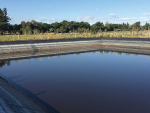
Dairy Effluent Management: Right Amount at the Right Time
Good effluent management on a dairy farm combines a well-designed system with proper processes to ensure the right amount of effluent gets applied to pasture at the right time.




 increase font size

A new "good clean dairying" promotion will feature at this month's Effluent Expo at Mystery Creek, being organised by Waikato Regional Council and sponsored by DairyNZ.
The expo on February 28 is aimed at providing farm effluent management information to farmers so that both the environment and their profitability are supported.
"Dairy farming can often be labeled with a 'dirty dairying' tag," says council agriculture advisor Kate Ody.
"But, in our experience, there are many Waikato farmers doing a great job of protecting the environment already and many others are lifting their game to do better. The huge turn-out at last year's inaugural expo, attended by about one in 10 of the region's dairy farmers, is one example of the industry's efforts to improve effluent management.
"Our new 'good clean dairying' promotion, to feature at the council's stand at the expo, will aim to model and promote the many examples of good clean dairying that exist in our region. Initially we will focus on having effective effluent storage.
"At the same time the council will also naturally continue to monitor compliance with its farm effluent management rules and take regulatory action where appropriate."
Ody says the 'good clean dairying' promotion is in the development phase but the council plans to announce more details around the time of the expo.
The number of exhibitors at this month's expo sits at more than 40 compared to 25 last year. The expo will run from 9am to 3.30pm.
Farmer attendance this year could be further boosted this year as Bay of Plenty Regional Council has let dairy farmers in its area know about it, and the Auckland Council has publicised it with farmers south of Auckland.
The expo comes at a time when the Waikato Regional Council is looking to do more to protect water quality and water resources in the region from the impacts of intensive agriculture, especially nutrients and bacteria from dairying and other livestock farming.
"There will be an opportunity at the expo to see how the effluent pond storage calculator applies to individual farms using Waikato data," says Ody. (The calculator was originally developed by Massey University and Horizons Regional Council.)
"And besides what the exhibitors have to offer, there will be a number of optional seminars and demonstrations to take in, which will be repeated throughout the day."
Seminar topics include:
• DairyNZ sponsored - Design and construction of dairy effluent storage ponds (Theresa Wilson, DairyNZ and Rex Corlett, Opus)
• Financial implications of system upgrades - paying to perform (Geoff Cotton, National Bank)
• Smart water use for effluent management (Gord Stewart and Wayne Berry, DairyNZ)
• Optimising effluent management using storage (David Houlbrooke, AgResearch)
• Consented discharges of treated effluent to waterways - the next steps (Natasha Hayward, Waikato Regional Council)
• Making the most of pig effluent and staying compliant (Jaye Hill, NZ Pork and Kate Ody Waikato Regional Council)
• Biogas opportunities from stored pig effluent (Stephan Huebeck, NIWA)
Regional Council staff will be on hand to answer questions about complying with council rules on effluent management.
Outside the venue visitors will be able to see demonstrations of a range of effluent irrigators.
More information about the expo can be found at www.waikatoregion.govt.nz/forfarmers
Good effluent management on a dairy farm combines a well-designed system with proper processes to ensure the right amount of effluent gets applied to pasture at the right time.
For years, IrrigationNZ has called for a coordinated national approach to water security, backed by enabling regulation, strategic infrastructure investment and sound technical practice. As the 2026 general election approaches, many of these priorities are now reflected in political commitments and legislative reforms. That represents significant progress, but the real measure of success will be turning policy into practical outcomes, says IrrigationNZ principal technical officer Stephen McNally.
Tararua district farmer Jamie Harris milks around 400 cows using a split calving system on his farm, Crossdale Dairies.
Water management is an integral component of sustainable farming practices, according to Watermetrics.
Two farmers and two farming companies were recently convicted and fined a total of $108,000 for environmental offending.



During the nesting season, from September to December, industrious starlings can quickly build nests in the darker areas behind tractor and vehicle, usually close to hot engines, typically resulting in localised damage or in some cases complete write-offs.
The meat processing industry is much more collegial than it was in the past and is now more focused on common goals.
With the last couple of months having seen some potential tractor purchases put on hold with the impending election and continued input cost rises, year-to-date figures, ending September, has seen deliveries up around 5% over the same period in 2025, with a total of 2026 units.
Beef+Lamb New Zealand is calling for nominations for director roles in the Northern South Island and Northern North Island electoral districts.
Fonterra chief executive, Richard Allen says being resilient has helped the dairy industry overcome extreme volatility in recent years.
The head of the Ministry for Primary Industries (MPI) trade and international relations group says New Zealand is well-positioned to secure trade access and compete internationally as the world becomes more complicated, demanding and uncertain.

OPINION: It seems Canterbury processor Synlait is still in the doldrums.
OPINION: Get offside with New Zealand First leader Winston Peters at your own peril.




