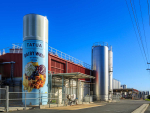
Ah Tatua, You've Done It Again!
Waikato milk processor Tatua has again declared a record milk payout to farmer shareholders, leaving other processors in the dust.




 increase font size
 Fonterra chief executive Miles Hurrell says the co-op is facing inflationary pressures right across the business.
Demand for protein and cheese has helped Fonterra overcome inflationary pressures to post a solid half-year result.
For the six months ending January 31, the co-operative's reported profit after tax rose 50% to $546 million.
This is despite a challenging global operating environment with market volatility, inflationary pressures and higher interest rates.
Like its farmer shareholders, Fonterra is also facing a sharp rise in operating costs. Total operating costs rose 30% over last year to $1.3 billion.
Chief executive Miles Hurrell says while it was hard to put a number on inflation, it was felt across the supply chain. He gave an example of fuel costs for the co-op. Rolling contracts meant the co-op was signing contracts with higher prices.
"Inflationary pressure have been felt across the business in the majority of the operating expense categories," he says.
Operating expenses weren't helped either by consumer brand impairments, with write-downs totalling $162 million: $92 million in Fonterra Brands New Zealand consumer business and $70m in Asia brands Annum, Anlene and Chesdale.
Chief financial officer Neil Beaumont says a weaker currency and a declining economic environment in some Southeast Asian markets forced the write-down.
In NZ, Fonterra Brands is also struggling with higher costs and a depressed consumer market.
Hurrell says the solid result reflected favourable margins in its Ingredients channel driven mainly by demand for protein and cheese products across multiple markets at a time of constrained supply.
"Our Foodservice channel earnings have also improved as our in-market product prices adjust to reflect the higher cost of milk.
"However, our Consumer channel earnings are down due to challenging market conditions and recognising impairments of our New Zealand consumer business and our Asia brands."
He says the global operating environment remains challenging with heightened market volatility, inflationary pressures, higher interest rates, as well as weather events impacting the global supply chain.
But Fonterra's cash free cashflow for the first six months is more favourable relative to the same time last year, reflecting increased earnings and the sell down of additional inventory held at the end of the 2022 financial year.
"Our increased earnings combined with the strength of our balance sheet has enabled us to pay an interim dividend of 10 cents per share," says Hurrell.
Fonterra retained a forecast farmgate milk price range of $8.20-$8.80/kgMS.
Hurrell says the co-op will continue to watch changes in the market closely.
"The outlook for dairy remains positive with high demand for New Zealand's quality, sustainable dairy nutrition, and global milk supply likely to continue to be constrained."
Fonterra wil release its opening forecast for the next season in May.
"There are a number of risks we continue to watch, including the impact of recent weather events in New Zealand on supply chain and milk production.
"Our co-op's scale, diversity and strong balance sheet positions us well to manage these challenges and we will continue to prioritise higher value products and channels to deliver sustainable returns for farmer owners and unit holders."
Waikato milk processor Tatua has again declared a record milk payout to farmer shareholders, leaving other processors in the dust.
Fonterra has unveiled its annual results for the 2026 financial year, posting $27 billion in revenue and close to $20 billion returned to New Zealand farmer owners and unit holders.
Fonterra Co-operative Group has confirmed the independently assessed candidates standing for election to its board in 2026.
Fonterra has revised its Farmgate Milk Price forecast for the 2026/27 season, lifting the midpoint and narrowing the range on the back of improving global dairy commodity prices.
Outgoing Fonterra Co-operative Council chair John Stevenson says that it has been a privilege to represent the co-op's farmer shareholders.


Farmer-owned fertiliser company, Ballance Agri Nutrients is welcoming National’s plan to negotiate security agreements with key supplier countries to protect New Zealand-bound products from export restrictions and greater supply chain certainty.

Carrfields has announced the appointment of Stu Hall to the newly created role of chief operating officer, Carrfields Ltd, reflecting the continued growth of their agribusinesses and the need to ensure the company has the leadership capacity and support in place as it pursues the emerging opportunities ahead.
New Zealand's role is not to compete with Indian growers, according to NZ Apples and Pears.
The potato industry is celebrating the success of two rising stars - James Blair, the 2026 Young Grower of the Year and runner-up and innovation award winner, Amber Davy.
Twenty-eight emerging leaders from across the horticulture sector spent two days last month learning valuable skills and connecting with industry experts.
There are five entrants in this year’s Young Horticulturist of the Year, competing in a series of technical, practical, business and leadership challenges.
OPINION: It seems Canterbury processor Synlait is still in the doldrums.
OPINION: Get offside with New Zealand First leader Winston Peters at your own peril.




