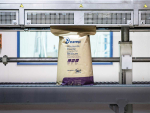
Milk Powder Prices Prop Up Farmgate Milk Price
Milk powder prices are keeping farmgate prices up, helping processors offset the dip in milk fat prices.




 increase font size
 ANZ agriculture economist Susan Kilsby says slightly better news from China is keeping dairy prices up.
An improvement in global markets and a weak New Zealand dollar are behind the ANZ Bank's optimistic prediction of a $7.70/kgMS farmgate milk price for this season.
The ANZ forecast is near the top end of Fonterra's forecast range of $6.50 to $8/kgMS and a mid-point of $7.25/kgMS.
But ANZ agriculture economist Susan Kilsby told Dairy News that slightly better news from China is a factor, although she is quick to add that the economic situation there is still mixed, and that economic growth is weaker than normal.
"I think the biggest challenge in China now in terms of demand is that consumer confidence is low. The middle class have been hit quite hard by those extende Covid lockdowns and also the partial collapse of their housing market, which has left people less secure than they would normally be," she says.
As a result, Kilsby says these people who probably own a home, have a car and educate their children well, are being more cautious about their spending, but interestingly their savings rates are very high. She says they are saving rather than spending, which is having some effect on demand for products in that market.
Another factor in play is that there is said to be a rise in local Chinese dairy production, although no one is certain about the accuracy of figures being made available.
She says Chinese dairy farmers, like their counterparts worldwide, are facing challenges such as lower prices and poor profitability. As a result of all of this, Kilsby believes that China will continue to import milk powder at the current prices because this is cheaper than producing the same product locally.
"The Chinese government is constantly trying to put measures in place to improve confidence and economic growth and that will help.
"So, we are thinking in terms of that demand side there will be some improvement by next season, but not a significant improvement through the rest of our current milk production season. We expect to see some improvement but not back to those strong 10% plus growth in GDP that they were achieving."
Kilsby says ANZ doesn't expect the growth to come back to the high levels seen in China in the last decade or so because they have some structural changes which will take time to sort out. There is also the problem in China of a decreasing population - a hangover from the 'one child policy' some years ago.
The China Effect Spreads
The slowdown in China is mirrored in many other Southeast Asian countries. Some have been building up stocks of milk powder and are effectively following the Chinese buying pattern. But with prices stabilising, many are coming back into the market.
Globally and locally milk production is down or certainly not on a fast upward trajectory. Kilsby says this trend is helping to balance out supply and demand and put some strength back into the market.
In NZ, Kilsby says there is more confidence in the dairy sector due to the election of the new government with its promises to reform the rules and regulations affecting farmers. She says there is a hope that the promises of more pragmatic and practical regulation will materialise.
"Most people are hoping for a pause to get things such as freshwater plans sorted and that is providing a bit of confidence at the moment," she says.
But at the same time Kilsby says farmers understand the direction of travel will see new regulations over time.
Milk powder prices are keeping farmgate prices up, helping processors offset the dip in milk fat prices.

Case IH has unveiled its redesigned next generation Puma Series tractors, said to offer improvements in connectivity, operator comfort, fuel efficiency and drivability.
Cameron Reed lives between two worlds.
A milk glut around the world shows no sign of easing, putting downward pressure on farmgate milk prices for the next few months.
The new dairy season is kicking off with plenty of risks to the forecast farmgate price, both upside and downside, says ANZ agricultural economist Matt Dilly.



Federated Farmers has welcomed new rural policies released by ACT, saying they align closely with its own election priorities.

Rural Contractors NZ says proposed changes to land transport rules for agricultural vehicles are a welcome response by the Government to out of date regulations which have seen members hit with huge fines.
Alliance is calling for final applications for its 2027 Graduate Programme, with applications closing on Sunday 25 October.
Decades piloting planes has ensured vet and farmer David Hayes is focused on safety. So, after a serious accident while welding on farm, he is sharing his experience so others can learn from it.
Canterbury milk processor, Synlait Milk has confirmed Leon Fung as its chief executive officer.
OPINION: Making it easier to collect rainwater and use it to grow crops and livestock is a no brainer.




OPINION: It seems Canterbury processor Synlait is still in the doldrums.
OPINION: Get offside with New Zealand First leader Winston Peters at your own peril.




