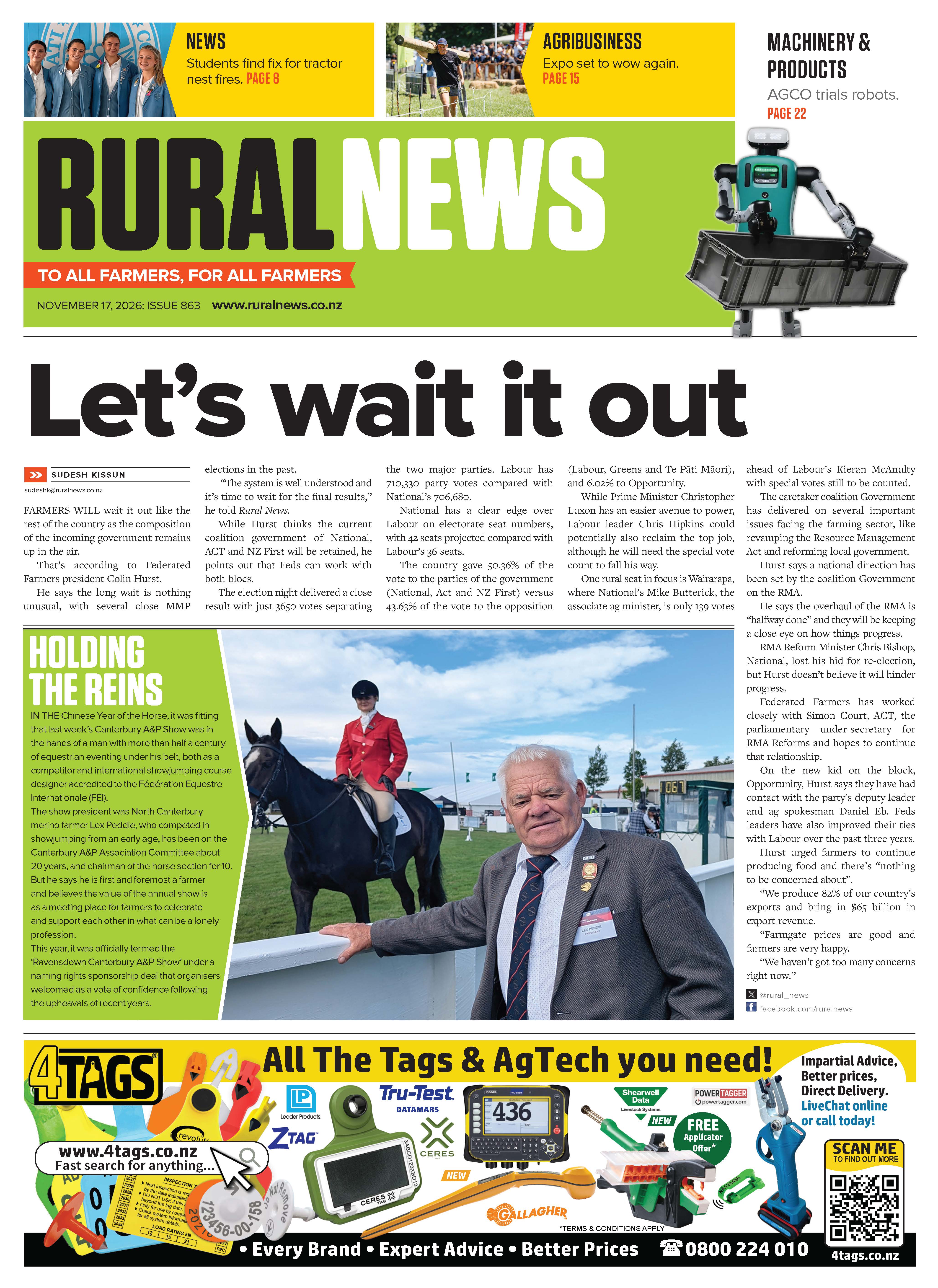
Farmers Wait Out Close Election, Says Federated Farmers
Farmers will wait it out like the rest of the country as the composition of the incoming government remains up in the air.




 increase font size
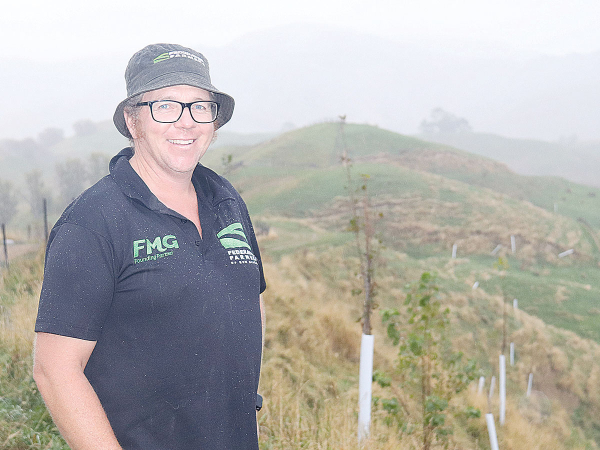 Toby Williams says the debate to withdraw from Paris Agreement was a healthy one to have.
Auckland Federated Farmers want a national conference debate on whether New Zealand should withdraw from the Paris Agreement on Climate Change.
At the province's annual conference earlier this month, committee member Deborah Alexander moved a remit to this effect, seconded by immediate past president, Wendy Clark. The remit was passed and will be tabled at Feds' annual conference in Christchurch next month.
Alexander said withdrawing from the agreement would solve farmers' present problems with forests being planted on grazing land to gain carbon credits.
"We're not targeting the source," she said.
"We should be getting out of the Paris Agreement. It would cause people to flock to become members of the federation."
She also questioned whether New Zealand's commitments under the agreement, which came into effect in 2020, were legally enforceable.
Former Auckland dairy chair, John Sexton, said he believed the federation had got sidetracked on the issue.
"We've forgotten about the basics," he said.
"Agricultural emissions are supposed to be causing warming but that's nonsense."
He claimed that ruminant methane emissions made up only one part in four million of the gases causing global warming.
"We are wasting billions of dollars around the world."
Both Alexander and Sexton are founder members of the Methane Science Accord between Groundswell, 50 Shades of Green, Rural Advocacy Network and Facts about Ruminant Methane (FARM) which wants a zero tax on ruminant methane.
Meat and Wool national chair, Toby Williams, who attended the conference, said the debate was a healthy one to have at the federation's national conference in a few weeks' time and he would be comfortable with the policy the federation's national board put forward.
"We have tried to ask Government and Treasury what the cost would be of withdrawing but they wouldn't engage," he said.
Pressed on what his personal view was he said he didn't know enough about the consequences of withdrawing - "but if we did, I wouldn't be boohooing".
Auckland Meat and Wool chair, Peter Anich, said his view was that what New Zealand did wouldn't make any difference globally.
"The world's biggest populations and industrial polluters are not signed up to it," he said.
"Having to pump billions into the European Union for them to decide what third world countries they want to assist in climate change mitigation is wrong, wrong, wrong."
Climate change was being caused by population growth, not farming, but if more New Zealand farmland went into forestry, earning carbon credits which were often going to overseas countries, this country would not have the critical mass to keep exporting agricultural products.
"We're on a hiding to nothing."
Former Auckland policy manager, Richard Gardner, sounded a note of caution, saying it would be a mistake for the federation to take too strong a position on the Paris Agreement.
"It certainly needs to be looked at," he said.
"No one is meeting their targets, and it looks as if it's going to fall over anyway. But if we take an extreme position, we could be targeted. We don't want to force the Government to do something that's not in New Zealand's best interests."
Farmers will wait it out like the rest of the country as the composition of the incoming government remains up in the air.

OPINION: The Government's decision to reinstate agriculture and horticultural science as a standalone subject from Year 11 is the right one.
With less than a week to go before voters choose the next government, Federated Farmers has a simple message to its members - get out and vote.
Federated Farmers has welcomed new rural policies released by ACT, saying they align closely with its own election priorities.
A farmgate milk price of $10/kgMS this season is firming up as milk powder prices soar and the New Zealand dollar weakens.

Halter has launched Mav, an AI farming assistant that lets dairy farmers ask questions about their herd and pasture and get answers drawn from the data the company’s collars already collect.
OPINION: At first glance it appears that Father Christmas has delivered the rural sector good tidings, with most pundits predicting the return of the centre-right coalition.
For 15 years, Glenda Rees has travelled from Gore to Awarua, often several times a week, to keep watch over one of the country’s rarest birds.
With some farmers opposing a government-industry partnership set up to develop methane reducing products, one NZ company claims that it already has a product on the market.
During the nesting season, from September to December, industrious starlings can quickly build nests in the darker areas behind tractor and vehicle, usually close to hot engines, typically resulting in localised damage or in some cases complete write-offs.
The meat processing industry is much more collegial than it was in the past and is now more focused on common goals.
OPINION: It seems Canterbury processor Synlait is still in the doldrums.
OPINION: Get offside with New Zealand First leader Winston Peters at your own peril.