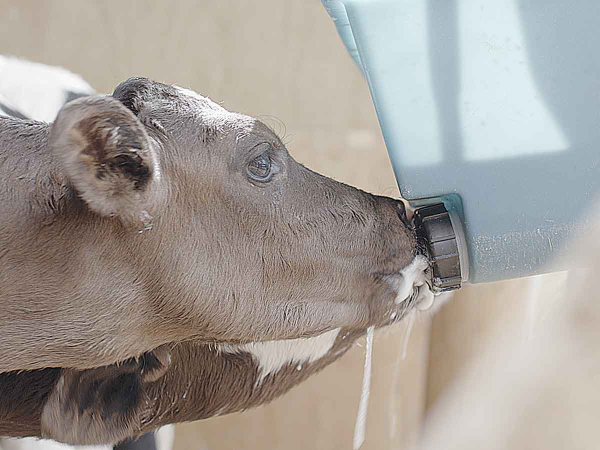
Leaky teats and poor feeder fit are now a thing of the past for calf rearers - thanks to the Thriver range of calf teats from Skellerup.
Thriver teats, designed and developed in New Zealand by Skellerup engineers and in-field specialists, take calf comfort during feeding to the next level. Thriver Screw-In Calf Teat was the first product released in September last year, followed by the Thriver Pull-Through Calf Teat in November 2024.
Sam Purdy, Skellerup Product Development Engineer says the team looked at common pain points for calf rearers - teats leaking, poor fit onto feeders requiring multiple teats during a calf’s feed cycle and calf comfort during feeding.
“We were inspired by the natural feeding experience between a calf and a cow and improved it with engineering,” he says. To avoid leaking the team employed a concave tip design which allows the slit to seal itself. Using ozone, UV and tensile testing they were able to develop a compound which is soft and strong.
Purdy explains that this balance is crucial - “Younger calves need a soft teat to feed comfortably, but it still has to withstand the strength of older calves as they grow.” To attract calves to the teat, Thriver teats come with a vanilla scent.
“Calves have a strong sense of smell, so we’ve added vanillin to encourage the calves to find the teat and latch.”
Thriver teats also feature a leak-resistant design and dual-material valve. The geometry is inspired from the natural feeding experience between a cow and a calf.
Purdy says a semi plastic retainer adds rigidity to the valve and the valve allows a one-way milk flow.
“The valve creates second milk chamber – this mimics an udder which encourages the natural feeding of a calf.”
Thriver’s naturally antibacterial rubber material helps reduce cross-contamination, supporting healthier feeding.
Skellerup key account manager dairy, Rebecca White says the Thriver development process included extensive on-farm trials with calf rearers globally.
“Skellerup has a long history of manufacturing high-quality rubberware since 1910, Thriver is our latest innovation focused on animal rearing,” says White.
White says there has been a positive response from calf rearers and retailers who have seen great results using Thriver. “Anecdotally we’re getting feedback on the softness of Thriver Calf Teats with the added vanilla scent aiding to easy latch making the younger calves easier to train and most importantly no leaking so tidier pens. We’re looking forward to supporting rearers over the coming season and helping others transition to Thriver.”
Skellerup’s team will be at the Fieldays - site PC29, where they “look forward to seeing calf rearers and talking all things Thriver”.