Early Weaning Lambs: What the Massey Trials Found
Farmers with high-quality feed available in late spring could consider weaning at least a proportion of their lamb crop early to benefit both lambs and ewes.




 increase font size
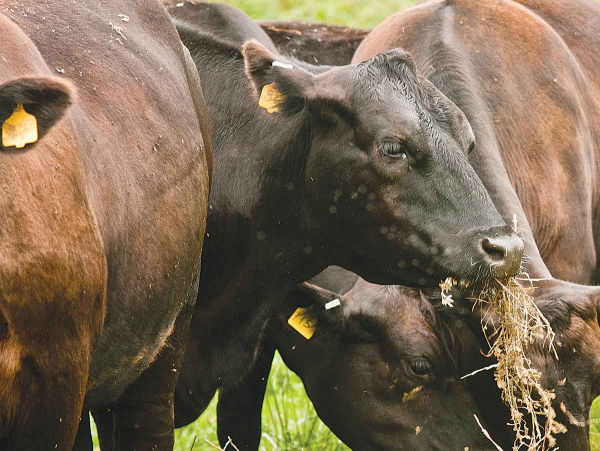
Greg Jarratt, vet and director of Matamata Veterinary Services, on why farmers shouldn't reduce feed without also destocking.
The main goal of any dairy producer is to successfully convert low quality feeds to high-value dairy products.
Success in achieving this goal can be assessed by looking at a single metric known as ‘Feed Conversion Efficiency’ (FCE).
FCE is a simple calculation that defines the amount of feed (grown and purchased) required to produce 1kgMS.
Here in NZ there is a large range in this metric. Top operators successfully convert approximately 10kg DM to 1kgMS while at the other end of the spectrum some farmers struggle, needing twice the amount of feed for the same result.
Because in many systems feed purchased is a significant cost, FCE is a very important driver of profitability, regardless of which farming system you run.
This is where stocking rate becomes really important. Overstocked farms will have higher maintenance costs relative to the same farm with fewer cows. Because of this, FCE on overstocked farms will be lower as more feed is partitioned towards the greater maintenance cost required in overstocked farms, leaving less feed available for milk production.
Making things more challenging this season is the large moving target of milk payout. Farmers will need to be on their toes when making calls around farm operating expenses including feed.
Who knows where this year may end up and there will certainly be winners and losers depending on the ‘gearing’ of farm systems in the current volatile environment. Many farmers will have to ask themselves throughout this coming season if additional feed purchases will make or break the budget.
The important point here is, if you are considering pulling back on inputs, make sure you keep a close eye on stocking rates. Failure to address cow numbers as inputs are reduced will inadvertently reduce FCE, which may well expose the business to greater risk.
Thankfully, there is a lot of very sound information available to farmers around stocking rates.
The most relevant of this information is on the topic of Comparative Stocking Rate (CSR) which is measured in kg live weight per tonne feed supplied.
Because of today’s large variation of farm systems CSR helps compare apples with apples.
Higher CSR’s indicate the farm is overstocked and a greater proportion of feed supplied to animals is partitioned towards maintenance of more animals, and therefore less partitioning towards production.
Lower CSR’s also pose an issue as there is a limit to the amount of feed any cow can ingest.
Generally a CSR of approximately 85kg DM/tonne feed appears to be the sweet spot on most NZ farms.
So, the take home message is pretty simple – if you’re pulling feed, don’t forget to destock. Often we see farmers pull feed and think the cows are going to miraculously harvest the deficit from pastures.
While hungry cows tend to harvest more, in just about all cases they cannot replace feed removed from diet leading to an increase in CSR and a decrease in FCE.
This coming season it will be important to have a few options at the ready. Now is the time to start putting these options together and talking these through with your farm advisor. Adaptability will be king!
• Greg Jarratt is a vet and director of Matamata Veterinary Services.
Farmers with high-quality feed available in late spring could consider weaning at least a proportion of their lamb crop early to benefit both lambs and ewes.
If growing more feed at home adds up to $428 profit per tonne of dry matter to your bottom line, wouldn’t it be good to have a ryegrass that gets you there quicker?
When buying supplementary feeds, farmers need to consider the entire package on offer – service, freight and all the components in a feed mix – not just focus on the price of the cheapest component – palm kernel meal, according to J. Swap Stockfoods sales manager Joe Hardman.
Two high producing Canterbury dairy farmers are moving to blended stockfeed supplements fed in-shed for a number of reasons, not the least of which is to boost protein levels, which they can’t achieve through pasture under the region’s nitrogen limit of 190kg/ha.
OPINION: Few things are more stressful for dairy farmers than running out of feed when cows need it most.



Federated Farmers has welcomed new rural policies released by ACT, saying they align closely with its own election priorities.

Rural Contractors NZ says proposed changes to land transport rules for agricultural vehicles are a welcome response by the Government to out of date regulations which have seen members hit with huge fines.
Alliance is calling for final applications for its 2027 Graduate Programme, with applications closing on Sunday 25 October.
Decades piloting planes has ensured vet and farmer David Hayes is focused on safety. So, after a serious accident while welding on farm, he is sharing his experience so others can learn from it.
Canterbury milk processor, Synlait Milk has confirmed Leon Fung as its chief executive officer.
OPINION: Making it easier to collect rainwater and use it to grow crops and livestock is a no brainer.


OPINION: It seems Canterbury processor Synlait is still in the doldrums.
OPINION: Get offside with New Zealand First leader Winston Peters at your own peril.




