Breeding the Ultimate Robot-Ready Jersey Herd
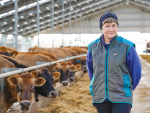
In the beautiful, scenic expanse of Invercargill, Joanne (Jo) Crack of Southern Star Farms is redefining what it means to run a modern, self-sufficient dairy operation.




 increase font size
 Alexander van der Lely.
Seventy years since inception, dairy automation company Lely remains a big influence on farming worldwide.
After selling its forage harvesting equipment business to AGCO Corporation last year, Lely is now focused on automation inside the dairy shed.
At Future Farm Days coinciding last month with the company’s 70th birthday celebration at its headquarters in Maassluis, The Netherlands, Lely launched the latest version of its robotic milker- the A5.
Chief executive Alexander van der Lely told visitors, including journalists from many countries, that farmers are part of the company’s DNA. “To this day we remain an innovative family-run company with farming running through our veins,” he says.
“I’m proud that we are working every day on the fields my family once farmed in.
“Our history tells us much about who we are and what we stand for; we call ourselves farming innovators for a reason.”
Lely was founded 70 years ago by van der Lely’s father and uncle, both farmers, at Maassluis; both men aimed to change agricultural traditions and make farmers’ lives better. Van der Lely noted that innovation was at the forefront of the founders’ minds.
The Lely journey started in 1948 with the invention of the finger wheel rake, pulled by horses and tested onfarm.
Ten years later Lely’s single disc spreader was introduced, a product available today.
In 1965, the Lely Lotus hook tine made its debut, a uniquely designed tedder tine which turns crop faster and evenly; it was produced by Lely until recently.
However, the development of the Lelyterra power harrow in 1968 marked the real breakthrough and internationalisation of Lely.
Van der Lely says sales grew and the company expanded by opening factories in UK, France and the US; sales offices were set up in Australia, Canada, Brazil, Italy, South Africa and Germany.
With the successes also came not-so-successful inventions.
Van der Lely says his father’s goal was always to invent a new plough or tractor.
“Many don’t know that in the 1970s we introduced our own tractor, with fully hydraulic drive – way ahead of its time. It was known as Lely Hydro but it never turned into a commercial success,” he says.
A string of inventions followed in the 1970s and 1980s: the Hibiscus rake and the Splendimo disc mower. The company grew, buying German baler and wrapper manufacturer Welger.
In 1992, Lely earned world renown in launching its robotic milking machine Astronaut A1.
This invention “is still called after all those years ‘the invention of the 20th century’,” says van der Lely.
“It resulted in better working hours for dairy farmers, higher milk yield and increased health for cows.”
Lely has installed 30,000 robots worldwide.
Van der Lely, who took over as chief executive in 2004 from brother Olaf, says robotics became an increasing focus for the company.
“Our increasing focus on robotics allowed us to further reduce repetitive work by farmers and created more freedom for the cow.”
In the beautiful, scenic expanse of Invercargill, Joanne (Jo) Crack of Southern Star Farms is redefining what it means to run a modern, self-sufficient dairy operation.
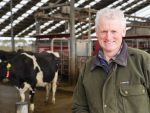
In Dacre, near Invercargill in New Zealand’s South Island, Bruce Dinnington is running a dairy operation unlike any other.
Getting calves away to a strong start means attention to detail from day one, so the Lely Calm, an automatic drinking system for calves, prepares and feeds rations at the right temperature and is designed to ensure calves receive smaller, more frequent portions throughout the day.
The first weeks of a calf's life quietly shape the future of the entire herd.
Since its decision to concentrate on milk harvesting and animal husbandry, resulting in the selling of its agricultural machinery brands and factories, Lely’s focus seems to be paying off with a growing business.


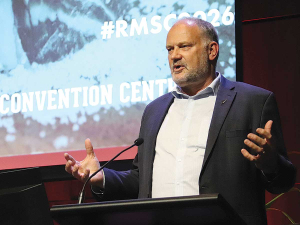
Good medium to long term prospects for NZ beef, especially in the US, has heighted the focus on various initiatives to capitalise on this situation.
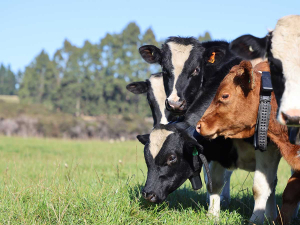
High country stations, mixed sheep and beef farms, Māori-owned farms, corporates and family operations are among the nine commercial farms taking part in the Livestock Innovation Farming Transformation programme, known as LIFT.
OPINION: New health and safety guidance unveiled by the Government recently provides farmers greater certainty about what is expected of them when managing risks on farm.
The National Animal Welfare Advisory Committee (NAWAC) is seeking public feedback on proposed changes to the Code of Welfare for Rodeos.
A New Zealand initiative supporting farmers to restore the health of grazing landscapes has received international backing through the Regenerative Fund for Nature, a global collaborative fund supporting regenerative agriculture and the communities that produce natural fibres for the fashion industry.
Combine premium New Zealand products, blend in a family ritual and what do you get? A world-class functional drink.
OPINION: It seems Canterbury processor Synlait is still in the doldrums.
OPINION: Get offside with New Zealand First leader Winston Peters at your own peril.