Ospri Urges Farmers To Prepare NAIT Records Before Moving Day
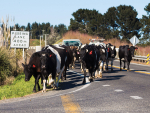
Moving Day (June 1) is just around the corner and farmers who are moving farms with the herd are being urged by Ospri to start preparations now.




 increase font size
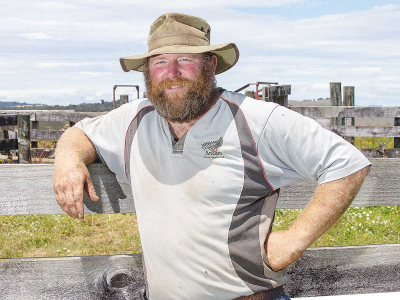 Chris Irons.
This past year for OSPRI has seen rebuilding.
The year begun with new chief executive Steve Stuart coming on board to lead the future vision of world class disease management and traceability for farmers and industry.
OSPRI has 12 regional committees representing farmers from different industry groups, ensuring the farmgate voice is heard in Wellington, and farmers are more aware of OSPRI activities and can influence decisionmaking.
Since Stuart took over, the importance and value OSPRI committees provide has been acknowledged and utilised during a challenging period.
The recent TB outbreak in northern Hawke’s Bay is very disappointing, however, this reminds everyone there is still risk of TB from wildlife in the North Island.
OSPRI is throwing numerous resources in its response and investigating what happened. They are also reviewing their vector control programme across the country, so they can reduce the risk of a similar occurence elsewhere.
While TB infected herd numbers are relatively low in the North Island compared to a decade ago, we still have some way to go with an estimated 1.6 million hectares to be freed of TB in wildlife.
Let’s not rest on our laurels and forget the past generation of farmers who worked tirelessly to fight TB with less resources. Don’t be complacent, stay on top of your TB testing.
In autumn, OSPRI undertook the biggest change to the NAIT online system since it was introduced in 2012. This required about 85,000 farmers and lifestylers to re-register their farms and animals.
The roll-out caught farmers off-guard and resulted in plenty of confusion, frustration, and anger.
OSPRI has acknowledged this could have been better planned and managed. The contact centre did not have enough staff or resources to handle the volume of callers.
It also coincided with winter grazing and the moving day period with operators handling, at its peak, over 4,000 calls a week and a backlog of emails, which temporarily affected their ability to respond.
I believe it should never have been called NAIT re-registration. This was misleading, and in hindsight it might have been more helpful to ask farmers to update their NAIT accounts -- not re-register. The perception was that they had to start all over again.
I’m curious to see what the next NAIT system upgrade will bring: a refurbishment is long overdue. Farmers have been involved in the redesign with a prototype trialled at this year’s Fieldays where it was well received.
It’s crucial we get this right and fit for purpose. The OSPRI committees will be watching closely and holding those involved to account. We all want a system that’s easier to use and navigate and it can’t come quick enough.
The introduction of new NAIT standards are welcome and should provide more value and reassurance for farmers who use third party providers or stock agents to manage their NAIT accounts.
Farmers are frustrated with having to record their stock movements twice in different systems; this is time-consuming and a nuisance. OSPRI is working with third party providers to fix these technical issues.
Finally, MPI is increasing its NAIT compliance activities. For farmers doing their NAIT, they’ll say ‘bring it on’.
There has been no significant punishment for farmers ignoring their NAIT obligations, which is infuriating for farmers who are doing their NAIT.
If you are one of those farmers ignoring OSPRI letters (over a 1000 have been sent) and not attempting to sort your account, beware, MPI’s NAIT officers will be calling on you.
There’s been nearly 700 infringements issued this year, with a prosecution case against a farmer not meeting his NAIT obligations recently filed in court.
Don’t let your industry or neighbour down; keep on top of your NAIT account. OSPRI is focused on helping farmers meet their NAIT obligations; don’t hesitate, call the contact centre and do something about it.
Moving Day (June 1) is just around the corner and farmers who are moving farms with the herd are being urged by Ospri to start preparations now.

Ospri is reducing TB testing frequencies and movement control measures as the disease risk subsidies in parts of the country.
From 1 October, new livestock movement restrictions will be introduced in parts of Central Otago dealing with infected possums spreading bovine TB to livestock.
The move to bring bovine TB testing in-house at Ospri officially started this month, as a team of 37 skilled and experienced technicians begin work with the disease eradication agency.
OSPRI will carry out on-farm TB testing, following AsureQuality's decision not to renew their contract.



A major move is about to get underway to improve the quality and viability of dairy beef and cattle in NZ.
Veterinarians say changes to the code of welfare for dairy cattle provides a positive foundation for improved cattle welfare across the country.
Today, 15 October, is the International Day of Rural Women, which recognises rural women’s contribution to farming, communities and the environment.
Global dairy giant Lactalis has integrated its Australian operations with the Mainland Dairy consumer business it acquired from Fonterra earlier this year.
After almost two decades of sharemilking, saving and building equity, Aaron and Marcia Flay this year realised their long-held dream of settling on their first dairy farm.
Good medium to long term prospects for NZ beef, especially in the US, has heighted the focus on various initiatives to capitalise on this situation.



OPINION: It seems Canterbury processor Synlait is still in the doldrums.
OPINION: Get offside with New Zealand First leader Winston Peters at your own peril.




