
Lanaco and Blueair Launch World-First NZ Wool Air Filter
New Zealand wool is reaching new heights as air filtration companies move away from synthetic products to biodegradable alternatives.



 increase font size

Continued shipping pressure for China kept finer crossbreds firm at the latest wool auction however coarse wools eased as volumes available increased, says Paul Steel of NZWSI.
The weighted indicator remained unchanged compared to the last sale on May 21. Of the 8,900 bales on offer, 94% sold.
Steel says that fine crossbred longer shears remained firm with shorter types lifting between 2% and 6%. Good colour coarse fleece were firm to 1.5% easier, average style firm and poor colour 2.5% to 5.5% dearer.
Long coarse shears were firm to 3.5% cheaper with shorter types down 4% to 6%.
Long lambs fleece were 3.5% dearer, 2 to 4 inches up 1% to 2% with shorter types firm to 4% cheaper. Long oddments were 4% to 7% dearer with good colour short oddments 4% dearer and poor colour 3% to 6% easier.
Good competition with China continues to dominate, supported by Australasia, India, Middle East and Western Europe.
The next sale on June 4 comprises about 7,100 bales from the South Island.
New Zealand wool is reaching new heights as air filtration companies move away from synthetic products to biodegradable alternatives.
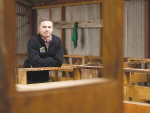
Will a stronger, more coordinated voice help rebuild confidence and improve returns in the wool sector?
OPINION: Confidence in the wool sector is rebounding as prices hit levels not seen in more than 15 years.
The recently signed free trade agreement with India is an invitation to strengthen relationships between the New Zealand and Indian strong wool industries, says Wool Impact chief executive Andy Caughey.
Strong competition and tightening supply have seen wool reach its highest prices paid at auction since 2011.



During the nesting season, from September to December, industrious starlings can quickly build nests in the darker areas behind tractor and vehicle, usually close to hot engines, typically resulting in localised damage or in some cases complete write-offs.
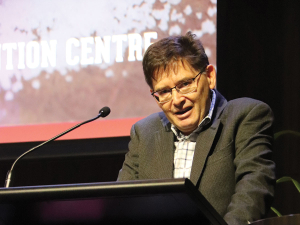
The meat processing industry is much more collegial than it was in the past and is now more focused on common goals.
With the last couple of months having seen some potential tractor purchases put on hold with the impending election and continued input cost rises, year-to-date figures, ending September, has seen deliveries up around 5% over the same period in 2025, with a total of 2026 units.
Beef+Lamb New Zealand is calling for nominations for director roles in the Northern South Island and Northern North Island electoral districts.
Fonterra chief executive, Richard Allen says being resilient has helped the dairy industry overcome extreme volatility in recent years.
The head of the Ministry for Primary Industries (MPI) trade and international relations group says New Zealand is well-positioned to secure trade access and compete internationally as the world becomes more complicated, demanding and uncertain.

OPINION: The same mainstream media muppets that brought you Jacindamania in 2017 have been flat out pimping for the Opportunities…
OPINION: Your old mate reckons the atrocious way farmers in the UK are treated by their lords and masters in…




