OPINION: It’s time for all hands to the pump because improvement in rural landscapes and municipal areas is worth chasing together.
Freshwater quality has been in the news for some time and with the range of views on offer you could be excused for being confused about the subject.
It’s immersed in a sea of words – ‘swimmable, wadeable, National Policy Statement for Freshwater Management, the National Objectives Framework, riparian management, consent to farm, farm environment management plans and lag effects’ – to name but a few. It is clear the subject, like a waterway after a storm, is murky at best.
This all started 200-odd years ago, when man first decided to get rid of the vegetation that was constraining the means of growing food to feed the family and eventually a growing export trade back to the British Isles. Over the generations it has been burnt, cut, rolled, sprayed and root raked off our young, fragile New Zealand hills and the effects of this are coming home to roost now.
Sediment mobilised at a greater rate once the hills were deforested and the impacts of contaminants such as sediment in our waterways are detrimental to natural ecosystems that thrive there. In fact, the term ‘lag effect’ means some of the realities of this development are just surfacing this decade.
Like it or not, this generation must now start a reversal of the trend. We also, in our wisdom, decided to build towns, then cities next to rivers or coasts to house the growing population of our young country. The concentration of humans next to fragile natural ecosystems has also had a detrimental effect, but the regulators can be slow out of the blocks when dealing with the bigger towns.
This is due in part to the fact that some urban infrastructure is approaching end-of-life and needs big financial injections to fix it, which compounds the issue. There is also the reality that designs of the 1950s are not fit-for-purpose today and to change system design is expensive and problematic. Some communities cannot afford to pay, including Auckland.
In times of rainstorms, excess runoff is combined with overflow sewerage and all this pours into the Auckland bays. This was the design of the time as it was deemed ok to let excess volume go. The old adage was ‘the solution to pollution is dilution’, but in anyone’s language that is not acceptable today.
After any large rainstorm the Auckland bays are generally not swimmable and that’s a fact. It’s a big job to fix our towns nationwide. But we are just getting started and it’s hard to get real traction because the costs are constraining progress.
You may wonder why the green, non-governmental organisations (e.g. Greenpeace) are not thrashing Auckland about water quality. But then you quickly realise that’s where most of their funding comes from. The good old cocky is a far easier target and dairy is the easiest target of all. Confusion about the complex realities of national water quality reigns supreme.
I reckon the water quality discussion needs all parties to get into some sort of agreement on what we want. Most of our waterways are swimmable most of the time, certainly when people want to swim (and that is in summer and not when there are storm events). During high flows, and generally three days following, the water quality drops due to sediment overload and E.coli surges.
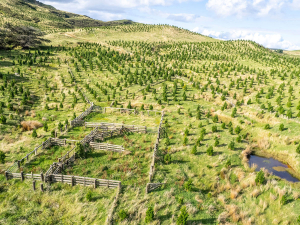
But ask yourself, who wants to swim then anyway? Testing continues regardless of the weather and results do not differentiate between summer storms or winter high flows. It’s not perfect and precise, but planting in high risk areas will certainly help. However, we are better today than when the big scrub cutting gangs were working in the 1970s and 80s. They stopped years ago.
The challenge is huge and solutions not obvious, but we need good science from our regional councils, sensible regulation from central Government and buy-in from all our community.
It’s time for all hands to the pump because improvement in rural landscapes and municipal areas is worth chasing together.
NOTE: Water quality trends in your area can be accessed at the LAWA website.
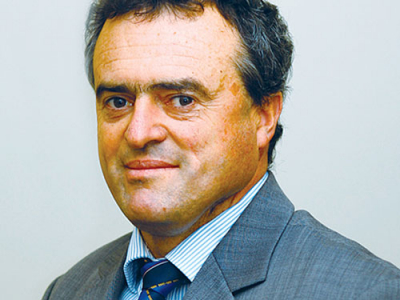
• Fenton Wilson is a Hawkes Bay farmer and regional councillor and was a Kellogg scholar.