Dairy Effluent Management: Right Amount at the Right Time
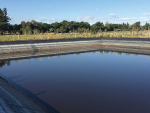
Good effluent management on a dairy farm combines a well-designed system with proper processes to ensure the right amount of effluent gets applied to pasture at the right time.




 increase font size
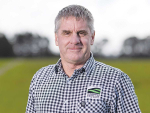
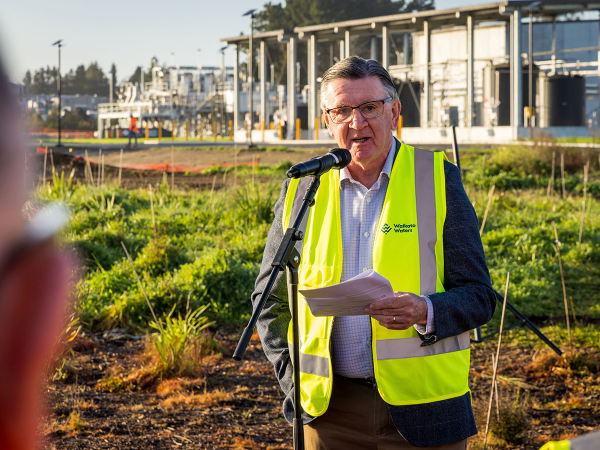 Waikato Waters interim chief executive Neil Brennan speaks at an event in June to celebrate the transition from establishment to operations.
Today marks the first day of operations for Waikato Waters, a new council-controlled organisation established by six district councils to deliver water and wastewater services for their communities.
Neil Brennan, interim chief executive of Waikato Waters, says the launch represents a significant step for water services in the Waikato.
“At the beginning of this journey our councils and local iwi recognised they could deliver more for their communities’ water services by working together than they could alone – and that’s what we’re here to do," says Brennan.
“We face the same challenges seen across New Zealand – ageing infrastructure, growing populations, rising costs and changing expectations for our water services," he adds.
"Our organisation has been set up to tackle these challenges in a practical, sustainable way that puts people and the environment first."
Brennan says that with shared expertise and economies of scale, Waikato Waters will be able to invest more in critical infrastructure and deliver services more efficiently, helping keep costs lower for customers over the long term.
“One of our priorities in year one will be to build and strengthen meaningful relationships with the iwi and hapū who hold mana whenua and mana moana responsibilities across our area of operation," he says.
Councils are transitioning in stages.
Today, Waitomo, South Waikato and Waipā district councils transferred water and wastewater services to Waikato Waters.
Matamata-Piako District Council will follow on 1 October, and Hauraki and Ōtorohanga district councils will transition on 1 July 2027.
Hauraki District Mayor Toby Adams, speaking on behalf of the councils, says Waikato Waters was built because the councils knew together they could deliver better water services for communities than they could alone.
"That's what today represents – the start of something our communities can count on. Hauraki is looking forward to joining next year," Adams says.
Brennan says every effort has been made to provide a smooth transition for both staff and customers.
“For our customers the experience will largely stay the same in year one. People will continue to pay for water services through their councils, and contact them if there’s an issue to report," he says.
Over time, Waikato Waters will develop its own customer services and direct billing system.
Many of the staff members joining the company today have transferred from one of the three transitioning councils.
“For our operational staff there are little changes to their day-to-day work – they’re doing the same critical jobs at our treatment plants and out in the streets, but they’re wearing different uniforms and have our branding on their vehicles,” Brennan says.
“Our people know their communities, their networks and their assets inside out. That local knowledge stays with us – it’s one of our greatest strengths as we move forward.”
Waikato Waters inherits 24 active infrastructure projects on day one and will start another 18 in its first year.
Brennan says the company’s initial capital investment programme is largely based on councils’ current Long-Term Plans and Water Services Delivery Plans.
“This gives us a solid starting point. Much of our first year will be spent taking stock – understanding how our treatment plants, networks and other assets are performing, and then working out what takes priority. It’s crucial that we build this knowledge before we act.”
Brennan says getting to the start line is a proud moment for everyone involved.
“It was less than a year ago that our councils came together to sign the Shareholders’ Agreement that formally established Waikato Waters as a joint council-controlled organisation.
“That gave us the mandate to get on and build a new company – and it’s remarkable what our team has achieved in that time.
“We’ve built new systems, transferred an enormous amount of data, recruited our people, onboarded critical suppliers and rigorously tested our processes. It’s been about laying the solid foundations we need to operate confidently from day one.
“This has been a massive collective effort between our team, staff from our shareholder councils and our suppliers. I’d like to thank everyone wholeheartedly for their commitment to this organisation and to our vision: Te mana o te wai, te mana o te tangata – healthy water, healthy people.”
Good effluent management on a dairy farm combines a well-designed system with proper processes to ensure the right amount of effluent gets applied to pasture at the right time.
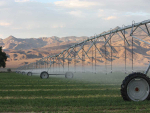
For years, IrrigationNZ has called for a coordinated national approach to water security, backed by enabling regulation, strategic infrastructure investment and sound technical practice. As the 2026 general election approaches, many of these priorities are now reflected in political commitments and legislative reforms. That represents significant progress, but the real measure of success will be turning policy into practical outcomes, says IrrigationNZ principal technical officer Stephen McNally.
There's been widespread support from the primary sector for the Government's announcement on changes to freshwater farm plans that come under the Natural Environment Bill, which is now set to replace the existing RMA.
OPINION: New economic modelling confirms what many of us in Hawke's Bay have long understood - getting water security right for this region is one of the most important decisions we face as a community. Not just for farmers, but for everyone who lives, works and builds a future here.
A drain is sometimes considered a negative word associated with depletion, exhaustion and loss of resources.

Halter has launched Mav, an AI farming assistant that lets dairy farmers ask questions about their herd and pasture and get answers drawn from the data the company’s collars already collect.

OPINION: At first glance it appears that Father Christmas has delivered the rural sector good tidings, with most pundits predicting the return of the centre-right coalition.
For 15 years, Glenda Rees has travelled from Gore to Awarua, often several times a week, to keep watch over one of the country’s rarest birds.
With some farmers opposing a government-industry partnership set up to develop methane reducing products, one NZ company claims that it already has a product on the market.
During the nesting season, from September to December, industrious starlings can quickly build nests in the darker areas behind tractor and vehicle, usually close to hot engines, typically resulting in localised damage or in some cases complete write-offs.
The meat processing industry is much more collegial than it was in the past and is now more focused on common goals.




OPINION: The same mainstream media muppets that brought you Jacindamania in 2017 have been flat out pimping for the Opportunities…
OPINION: Your old mate reckons the atrocious way farmers in the UK are treated by their lords and masters in…