Sheep and beef farmers are facing testing times and many of the challenges are outside their control.
For many of us, our resilience will be tested and our ability to support each other and communicate with the wider industry will be paramount.
My message to farmers is not to waste time and emotion worrying about issues they can’t influence - adverse events, regulations, currency volatility, global trade and market access. What they should do is seize every opportunity they can to tell the positive stories of rural life to whoever will listen.
The red meat and wool sector was worth $8.2 billion to New Zealand last season – as much as many would like to think, we are not the poor cousin of dairy.
However, our farming practices are constantly being portrayed in a negative manner, so often by totally uninformed people. The frustrating thing is when invited to view the realities of the practice they are passing judgement on, most decline.
We must continue to engage with them, share our experiences and invite them on farm.
Encouraging, promoting, highlighting and educating best practice is a very positive means of improving on-farm uptake and, carried out well, can have the spin-off of enlightening the wider public.
The annual Bay of Plenty Federated Farmers Farm Day reminds me how far removed many children and some adults have got from practices on the land. Likewise, the lack of rural content in the school curriculum is not helping spread positive stories of rural life.
In recent times, the Red Meat Profit Partnership and NZ Young Farmers have picked up the baton in this area and are working with schools to further the agricultural content in the curriculum.
Once we have visitors on farm and can gain their confidence, the absorption of knowledge is immense. You can often witness the excitement and transformation from a position of little knowledge, often fear, to wanting to know more and understand.
Greater understanding will have spin-offs as agriculture and agri-businesses look for skilled people for their future workforce. That grounding needs to begin during school years.
The focus of agricultural training is being refined to assist schools to offer agricultural options and create the links to post school tertiary study and practical training.
At the same time, we as farmers need to clearly understand our role as a good employer, an efficient trainer and a provider of good pastoral care.
Farmers face other challenges around consumption, synthetic alternative proteins, ever-increasing compliance, the anti-farming brigade and how to grow markets.
Beef + Lamb NZ, processing companies the Meat Industry Association and other agencies are working on these issues and farmers will have ideas also.
But are we co-ordinating our efforts to get best bang for our buck through all these organisations, avoiding duplication and having a common strategy of where we are heading and how we approach these challenges?
Farmers face pressures on how they used the land.
“As one Canterbury farmer said to me recently, ‘I own my farm but it has got to the point where I am losing all say in what I do on it’.
The problem is that so much money is being used for the processes of remedying the problem and lengthy legal challenges rather than being used on the ground for future mitigation measures.
I hope councils will share best practice on what works so we are all learning from each other’s mistakes and successes.
The words I intends hammering in 2017 are: “engage, communicate, unite and support”.
We need a movement led by rural people, built on hope instead of fear; science instead of emotion; education instead of litigation; resolution instead of conflict; employing rather than destroying human resources.
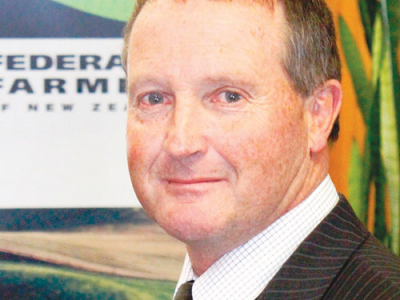
• This is an edited version of a speech given by Federated Farmers Meat & Fibre Council chair Rick Powdrell to the Feds’ meat and fibre council meeting held in Wellington last week.