OPINION: Well, the silly season is upon us and all us politicians are running around shaking babies and kissing hands, or maybe the other way around.
One of the things I have heard from the opposition in the debates so far is this picturesque view that our farms “should be a mosaic of land use types”, that we will all be doing multiple things on our farms, and that somehow just being a sheep and beef farmer, or just being a dairy farmer, is a bad thing.
This idea of doing many things on your farm may sound great as a plot for an episode of Country Calendar, but it does ignore human history. Go back to that point in evolution where we learned as a species to start making tools and using them. Those tribes soon found that some of their number were best placed to make the tool, some to use it and others to carry it. That was the beginning of specialisation.
In economic terms we call it comparative advantage. New Zealand’s comparative advantage is in pastoral agriculture. We have a temperate climate with good rainfall over most of the country, and certain regions favour certain things. Bay of Plenty for kiwifruit, Hawke’s Bay for apples, Cromwell for cherries, Pukekohe for vegetables. It just makes economic sense to do the farming or growing that will deliver the best return for your land. If your land is suited to dairy farming, why not specialise in it.
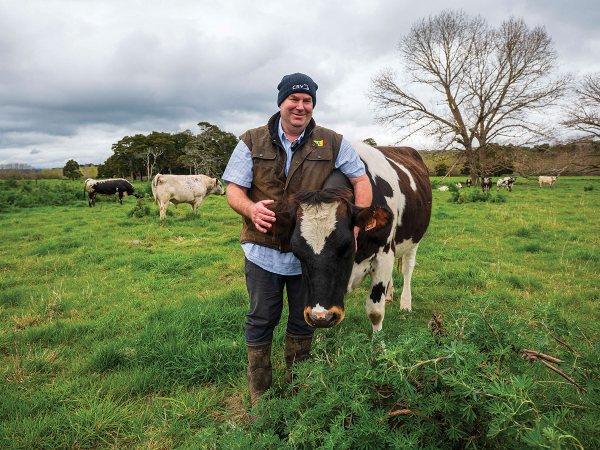
Now, you may have a farm with a variety of land types where having a mix does make economic sense. But for most of us, we stick to what we are good at and what our farm is best suited for. My own farm could well do a multitude of different farming types. It has class 1 soil.
But if I were to try and become a jack of all trades, that requires either a whole lot of extra specialised machinery or a truckload of extra people. All of it increases the cost of production. It probably also means I am not running new and modern gear but second or third hand stuff, which means I would spend more time fixing machinery than farming.
If I had three times the land I do, then maybe that would provide the scale where it makes sense. But I don’t. So, I focus on dairy, because that makes the most sense for my farm, for me and for my family.
So, when other politicians try to paint some kind of future where they think I will be doing all these other things on my farm, I must ask. Is that because they will force me to? Will they be deciding what alternative crops I grow? Will I be expected to sell to the new “Pak n’ Soviet” national supermarket, at cost?
From the ACT Party viewpoint, farmers are the best placed people to decide what their own farm should do. They are the ones who take the risk, who live and breathe the job. The Government’s job is to manage any impact farming might have on other landowners or the wider community and then get out of the way.
My view? The most critical thing that needs to happen next term for rural New Zealand is ensuring that the National Policy Direction and the National Standards that will sit underneath the new Natural Environment Act and Spatial Planning Act deliver certainty for our regional economy.
When you are making decisions on whether to build a new cowshed or an irrigation system, or any large investment on farm, you need certainty.
More to the point, your bank needs certainty that you will be able to farm and utilise that asset for longer than the loan period.
You need confidence that entering into a regulatory process won’t result in huge uncertainty for multiple years and the potential to spend hundreds of thousands on lawyers and consultants. Otherwise, you sit on your hands. Investments are not made, jobs are not created, and productivity is not lifted.
That’s what I see as my must-do for the next term of government. Others think we can tax our way to prosperity, but to quote the other Winston, Churchill: “For a nation to try to tax itself into prosperity is like a man standing in a bucket and trying to lift himself up by the handle.”
- Andrew Hoggard is an ACT MP