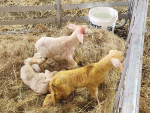
Beef + Lamb NZ's Lambing Kit Checklist for a Tough Season
With lambing underway in many regions, Beef + Lamb New Zealand is encouraging farmers to put together a wellequipped lambing kit to help minimise lamb losses, particularly in bad weather.




 increase font size
 One of 14 year-old Rosa Macaulay’s favourite places is her poppa’s sheep yards.
When 14-year-old Lincoln High School student Rosa Macaulay was asked to write story about her favourite room, instead of choosing her bedroom like most 14-year-old girls, she chose her grandfather’s sheep yards.
Poppa's sheep yards: my ‘room’ of sorts.
Rain hail or shine, this is where it all comes together. Dust clouds the atmosphere during the warm summer months. Mud, frost and debris cling to every roughened surface greeting the wholesome chill of South Canterbury’s harshest winters.
Outside the covered yards, the rest of the farm-scape can be seen from miles away. The gentle roll of the hills, the shelter belts and imposing deer fencing framing them; remaining from the farm’s previous inhabitants. Down the bank further is the woolshed, the beating heart of the operations – a rustic but homely place of pride and memories embedded deep in the past.
A beautiful combination of Poppa and Dad’s ribbons line the walls, holding the strength and detail within these weather-beaten walls. Many sounds create a chorus within these wooden walls. Sounds of the normal to us: dogs barking, muffled shouts of elation and disappointment coming from Dad and Poppa, the rustle and bustle of the sheep. Often a riot of choice words forms, lost on the fleeting minds of the livestock as they stumble through the yards out into the peace of the openness outside.
Come spring, the pleasure and pain of lambing will overwhelm us. The grass blushed a rich shade of green signalling the warmth of what is to come. The landscape evolving from winter’s sighing bleakness into a land tied together with new-found freshness and beauty.
Our beloved sheep-yards become a sanctuary, where new life is born and nursed through its first steps of the lamb life.
Come summer, the once young and frightful have grown into themselves, spending their joyous days bounding over the land as they gain their independence. The landscape growing into itself also, the lush of spring’s openness fading, replacing itself with a glassed shade of brownness tanned by the harsh sun and constant slow blowing of the wind.
As the heat of the summer gathers itself, so does the pressure within the beloved sheep-yards, the milestone of weaning brings stress but new confidence to the lambs as they find themselves.
Come autumn, some will have gone, some will remain ruling the land they grew up on. This timeless season sweeps the landscape effortlessly, tainting it a warm shade of beautiful colours and light. The sky a darker hue of colour signalling the arrival of harsher weather soon.
Our beloved sheep-yards will stay as they are, ever evolving and shaping the environment around them as they always have.
Come winter, a new darker shade takes hold of the landscape, bringing with it more extreme weather, occasionally dusting the farm in white. The dampness and wet is long awaited though, even if the mud and ruggedness of the stubborn landscape is the catch. Our beloved sheep-yards await these harsh days when the animals long to take shelter from the elements that drive them in.
Soon the cycle will repeat itself, but our beloved sheep-yards will always be the timeless constant, the beating heart of our efforts to tie everything together, year after year.
With lambing underway in many regions, Beef + Lamb New Zealand is encouraging farmers to put together a wellequipped lambing kit to help minimise lamb losses, particularly in bad weather.
Will a stronger, more coordinated voice help rebuild confidence and improve returns in the wool sector?
The vineyards at Pyramid Farm in Marlborough’s Avon Valley have never been run of the mill, with plantings that follow the natural contours of the land, 250 metres above sea level.
Sheep and cattle numbers continue to decline, and this year's drought hasn't helped, according to Beef + Lamb New Zealand (B+LNZ).
High quality feed, reduced stocking rates and shelter will all help enhance triplet lamb survival and ultimately benefit the bottom line.


Farmer-owned fertiliser company, Ballance Agri Nutrients is welcoming National’s plan to negotiate security agreements with key supplier countries to protect New Zealand-bound products from export restrictions and greater supply chain certainty.

Carrfields has announced the appointment of Stu Hall to the newly created role of chief operating officer, Carrfields Ltd, reflecting the continued growth of their agribusinesses and the need to ensure the company has the leadership capacity and support in place as it pursues the emerging opportunities ahead.
New Zealand's role is not to compete with Indian growers, according to NZ Apples and Pears.
The potato industry is celebrating the success of two rising stars - James Blair, the 2026 Young Grower of the Year and runner-up and innovation award winner, Amber Davy.
Twenty-eight emerging leaders from across the horticulture sector spent two days last month learning valuable skills and connecting with industry experts.
There are five entrants in this year’s Young Horticulturist of the Year, competing in a series of technical, practical, business and leadership challenges.





OPINION: The same mainstream media muppets that brought you Jacindamania in 2017 have been flat out pimping for the Opportunities…
OPINION: Your old mate reckons the atrocious way farmers in the UK are treated by their lords and masters in…




