
Fonterra CFO Andrew Murray Resigns
Fonterra Co-operative Group chief financial officer Andrew Murray has resigned to take up a role outside the dairy giant.




 increase font size
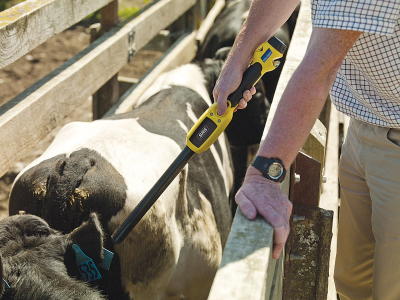 Currently NAIT data is owned by Ospri.
The Government's proposal to take ownership of all animal traceability core data is being rejected by key primary sector organisations, including Fonterra.
A common theme in submissions to the primary production select committee this month on the National Animal and Traceability (NAIT) Amendment Bill show farmers and processors oppose Government taking ownership of data.
The Government, through amendment 23A, is proposing that all core data become the property of the Crown and a copy of the core data must be provided at the written request of the Minister for Agriculture.
Currently NAIT data is owned by Ospri, a partnership between the primary industries sector and the Government.
Fonterra’s submission, signed by general manager veterinary and risk management Caroline Murray, questions the amendment.
“We question the purpose of this section. The Crown can already access NAIT information at no cost under the Biosecurity Act, and therefore this appears to be an unnecessary addition,” the co-op said.
Farmer-owned co-op LIC also opposes Crown ownership. It submits that Crown ownership is not necessary to meet the stated objective of securing access to and control over the NAIT database in the future.
“It is not in the public interest to grant property ownership rights. Crown ownership could cause significant issues that outweigh any perceived benefits, and the new section 23A is contrary to the purpose of the NAIT Act to encourage farmer participation and compliance.”
Deer farmers, represented by Deer Industry NZ, believe NAIT data belongs to the data submitters (principally farmers, saleyards and slaughterhouses) and that the NAIT database belongs to the NAIT organisation.
“It has long been the NAIT organisation’s and its stakeholders’ position that even though disclosure of data to the NAIT organisation is a legal requirement, ownership remains vested in the disclosing parties.
“There is no obvious reason why the Crown would be the data owner. We note that the Crown has declined to take up a shareholding in the NAIT organisation, although its available share is no greater than that of DairyNZ and Beef + Lamb NZ.
“That the NAIT organisation is a creature of statute and persons are required to disclose data to it does not mean that the data is necessarily Crown-owned.”
DairyNZ says it supports other proposed changes to NAIT but has “serious concerns” about data security.
“We want to send a clear message that we are firmly opposed to any attempt to take ownership of farmers’ NAIT data. The Crown does not need to ‘own’ the data to manage the risk,” said DairyNZ biosecurity manager, Dr Liz Shackleton.
“DairyNZ supports the minister and appropriate Government agencies such as MPI having access to data for the purposes of the Act but believes that anything further would constitute a significant privacy breach.”
Federated Farmers meat and wool chairman Miles Anderson says his members “vehemently disagree” with the Government proposal.
“This proposal raises a red flag as to why the Crown would want ownership when current legislation allows access to NAIT information in a transparent manner.”
Biosecurity Minister Damien O’Connor told Rural News the purpose of the select committee process is “to thrash things out and give the New Zealand public the chance to be involved in the development of legislation”.
“The select committee process still has some way to go. The committee will consider all evidence and inputs it receives,” he said.
“I would encourage anyone with concerns or ideas to engage with the select committee process and have their say.”
Fonterra Co-operative Group chief financial officer Andrew Murray has resigned to take up a role outside the dairy giant.

Four candidates have been confirmed for two director positions on Fonterra’s board.
A record farmgate milk price and strong global demand is laying the foundation for continued growth of organic dairy farming in New Zealand.
Waikato milk processor Tatua has again declared a record milk payout to farmer shareholders, leaving other processors in the dust.
Fonterra has unveiled its annual results for the 2026 financial year, posting $27 billion in revenue and close to $20 billion returned to New Zealand farmer owners and unit holders.



Fonterra Co-operative Group chief financial officer Andrew Murray has resigned to take up a role outside the dairy giant.
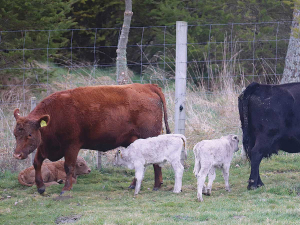
A major move is about to get underway to improve the quality and viability of dairy beef and cattle in NZ.
Veterinarians say changes to the code of welfare for dairy cattle provides a positive foundation for improved cattle welfare across the country.
Today, 15 October, is the International Day of Rural Women, which recognises rural women’s contribution to farming, communities and the environment.
Global dairy giant Lactalis has integrated its Australian operations with the Mainland Dairy consumer business it acquired from Fonterra earlier this year.
After almost two decades of sharemilking, saving and building equity, Aaron and Marcia Flay this year realised their long-held dream of settling on their first dairy farm.



OPINION: The same mainstream media muppets that brought you Jacindamania in 2017 have been flat out pimping for the Opportunities…
OPINION: Your old mate reckons the atrocious way farmers in the UK are treated by their lords and masters in…




