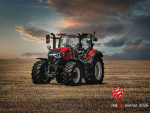
Case IH Unveils Next Generation Puma Series Tractors
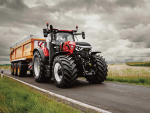
Case IH has unveiled its redesigned next generation Puma Series tractors, said to offer improvements in connectivity, operator comfort, fuel efficiency and drivability.




 increase font size
 TAMA president John Tulloch.
Tractor importers and distributors have a healthy 2018 report card from the Tractor and Machinery Association (TAMA).
Retail sales in all categories were 4640 units sold during 2018 – up 14% on 2017 (4079). (In the dairy boom year -- 2014 -- sales were 4062.)
A breakdown of the figures shows the sub-60hp category had 1227 sales (+23% on 2017), the key 60-120hp sector had 1505 (+4.5%) and 120-250hp had 1753 (+14.5%). The high horsepower (250hp+) prime movers moved the most -- 156 units (+50%) eclipsing 104 sales in 2017.
TAMA president John Tulloch says the trend is likely to continue into 2019 provided there is no sudden global impact or bad weather.
UK new tractor registrations were 12,102, about 1% higher than in 2017. But December 2018 saw a 38% decrease on the same month in 2017. December 2017 many pre-registrations to beat new regulations imposed by the European Union.
Sales in Ireland were largely static, reports the Farm Tractor & Machinery Trade Association: 1762 units were registered in 2018 versus 1796 in 2017 (-2%).
In a larger view, the Agrievolution Alliance released numbers for 2017 showing sales of 2.1 million tractors -- 13% higher than the 1.9m sold the previous year. China and India combined sold one million units -- 490,000 and 600,00 tractors respectively.
US tractor sales were up 4% at 220,00 units. Europe sales were up 13% at 190,000 tractors, with major increases in the key markets of France and Germany.
Case IH has unveiled its redesigned next generation Puma Series tractors, said to offer improvements in connectivity, operator comfort, fuel efficiency and drivability.
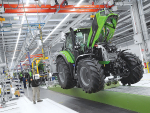
As we move into the second half of 2026, the Tractor and Machinery Association (TAMA) reports that Year-to-Date figures ending June 30 saw new tractor deliveries hitting 1,386 units or 10.7% ahead of the same period in 2025.
For the first three months of 2026, new tractor deliveries saw an increase over the previous two months, resulting in year-to-date deliveries climbing to 649 units - around 5% ahead of the same period in 2025.
Coming in at a year-end total at 3088 units, a rise of around 10% over the 2806 total for 2024, the signs are that the New Zealand farm machinery industry is turning the corner after a difficult couple of years.
New tractor deliveries for 2025 jumped 10% compared to the previous year, a reflection of the positive primary sector outlook, according to the Tractor and Machinery Association (TAMA).


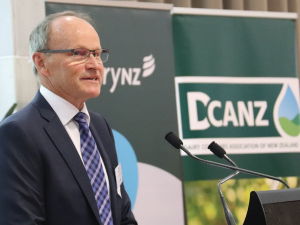
Dairy processors are ready to further boost New Zealand’s export earnings but want the incoming government to match their ambition with good policy.

Massey University is best placed to solve the “problems” facing the dairy industry, says vice chancellor, Pierre Venter.
Synlait's longest serving employee – a man who joined the Canterbury-based milk processor even before it began processing milk – is now its newest executive.
A dairy industry leader believes eradicating the common and costly disease, Bovine Viral Diarrhoea (BVD) is within reach.
A farmgate milk price of $10/kgMS this season is firming up as milk powder prices soar and the New Zealand dollar weakens.
Federated Farmers has welcomed new rural policies released by ACT, saying they align closely with its own election priorities.



OPINION: The same mainstream media muppets that brought you Jacindamania in 2017 have been flat out pimping for the Opportunities…
OPINION: Your old mate reckons the atrocious way farmers in the UK are treated by their lords and masters in…




