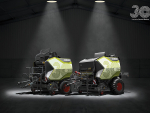
Claas Balers Turn 30
Claas built its first variable chamber round baler - the Variant 100 - in 1996, so 2026 marks 30 years and the fifth generation of the Variant name, recently complemented by the new Cerex Series introduced in 2025.




 increase font size
 The Claas Lexion 700 combine harvester.
The Claas Lexion 700 combine harvester has won 2016 Machine of the Year at the biennial European trade fair Agritechnica.
The title is awarded each year by a panel of 19 technical journalists from eight European countries, alternately at the German event and SIMA in France.
The jury made special mention of the many technical innovations in the Lexion 700 series, such as the 4D cleaning and automatic crop flow monitoring, both recognised with a DLG Silver Medal.
4D cleaning enables efficient harvesting on uneven terrain, providing a continuous airstream over the return pans, preparation floors and sieve – consisting of slope-dependent rotor cover plates and an automatic blower. A third pair of rotor cover plates automatically open or close depending on the lateral and longitudinal angle of the machine, while the blower speed is automatically adjusted to operating conditions.
Claas has also introduced an automatic crop flow control that monitors the rotation speeds of the engine, the APS threshing mechanism and the Roto Plus residual grain separation system. The feeder, threshing, separation and grain tank discharge systems are automatically shut down if critical load peaks are detected.
Other improvements include the company's award-winning Cemos system which automatically optimises harvesting operations for maximum throughout, grain quality or fuel efficiency to suit prevailing conditions.
Initially available for wheat, barley and canola, the system can now be used in maize and soybeans and controlled directly via the CEBIS operating system rather than a separate terminal.
Claas built its first variable chamber round baler - the Variant 100 - in 1996, so 2026 marks 30 years and the fifth generation of the Variant name, recently complemented by the new Cerex Series introduced in 2025.
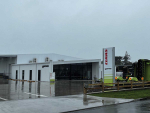
At a time when many businesses are taking a cautious investment approach, Landpower continues to back its customers, having officially opened the doors to its new CLAAS Harvest Centre dealership in Feilding, marking a significant investment in the future of agriculture across the lower North Island.
Twin rotor swathers have become the ‘go-to’ for forming swaths to feed hungry harvesters and balers, however, the design layout often means that crop located between the two rotors is not picked up, turned over or incorporated into the swath formed for subsequent harvesting.
Fifty Eight years ago, on the 16th of August 1968, August Claas, the founder of the harvesting company and father of Helmut Claas, personally presented a Claas Senator combine harvester to Scottish farmer John Steven.
Scheduled to replace its Axion 800 series, Claas has released details of the new, three model, Axion 8 CMATIC range.

Halter has launched Mav, an AI farming assistant that lets dairy farmers ask questions about their herd and pasture and get answers drawn from the data the company’s collars already collect.

OPINION: At first glance it appears that Father Christmas has delivered the rural sector good tidings, with most pundits predicting the return of the centre-right coalition.
For 15 years, Glenda Rees has travelled from Gore to Awarua, often several times a week, to keep watch over one of the country’s rarest birds.
With some farmers opposing a government-industry partnership set up to develop methane reducing products, one NZ company claims that it already has a product on the market.
During the nesting season, from September to December, industrious starlings can quickly build nests in the darker areas behind tractor and vehicle, usually close to hot engines, typically resulting in localised damage or in some cases complete write-offs.
The meat processing industry is much more collegial than it was in the past and is now more focused on common goals.



OPINION: The same mainstream media muppets that brought you Jacindamania in 2017 have been flat out pimping for the Opportunities…
OPINION: Your old mate reckons the atrocious way farmers in the UK are treated by their lords and masters in…