However, the prudent companies will make adjustments to production and staff in the short term, and sit it out until the market sorts itself out.
Perhaps it's a good time to look back on what benefits mechanisation has brought the world in the last century or so – not least in agriculture – and where we need to be heading in the next 30 years.
In 1870 one horse could plough one acre a day. By the turn of the century, four horses could plough around seven acres in the same time, and by 1930 a tractor and plough could turn a green acre brown in about 30 minutes.
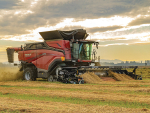
Once a grain crop was grown a similar pattern emerged, with pre-mechanisation harvesting taking around 300 hours to harvest 100 bushels (around 2.75 tonnes) of wheat. In 1840 Cyrus Hall McCormick gave us the reaper/binder that brought the task back to about 50 hours. Today, modern headers will harvest 100 bushels in around three minutes.
Look at the statistics from another angle – the ability of farmers to feed a nation: at the start of the 20th century one farmer could feed around 2.5 people and by 1960 mechanisation had pushed that to 25, whereas today's mechanised farmer has the capacity to feed 145 individuals.
So the future appears bright when you take into account the need for farmers in the next 30 years or so. Statistics show that by 2050 the earth will carry nine billion people and food production will need to increase by 100% over today's output. To put this in another context, food production between the year 2000 and 2050 will need to be greater than the total food production in the last 10,000 years.
The need for ongoing and intelligent mechanisation is also confirmed by the reduction in land area and labour as communities move to urban environments.
The United Nations recently commented that countries that have addressed hunger and malnutrition – by encouraging farmers to increase production – have been twice as successful as those that have encouraged growth by non-agricultural means.
So, with regional field days just around the corner, get along and see what the latest mechanisation has to offer your business. But remember to buy benefits, not features, and ensure you are working smarter not harder.