
Naki unveils the world’s most expensive manuka honey
Naki Honey, a New Zealand manuka apiary company, has crafted what is believed to be the world's most expensive honey.




 increase font size
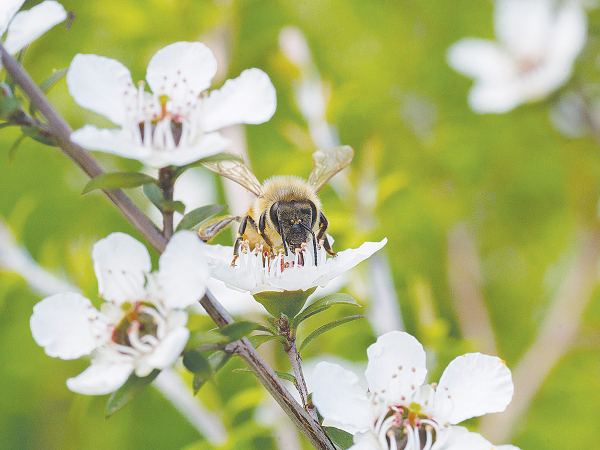 New Zealand has a flourishing population of honey bees cared for 8,190 registered beekeepers.
The message for the 2025 World Bee Day is a call to action for sustainable practices that support bees, improve food security, and protect biosecurity in the face of mounting climate pressures.
New Zealand has a flourishing population of honey bees cared for 8,190 registered beekeepers who manage 520,000 hives across the country.
At this time of year, with the hard work of producing honey done, honey bees are focused on storing up food to keep their hives fed and healthy through the winter.
While some countries have struggled with dramatic colony losses during winter, colony loss rates in New Zealand over the cold winter months have been declining.
Results from the New Zealand Colony Loss Survey 2024 showed loss rates to varroa mites, the number one threat to bees during winter for 2021-23, fell to 4.6% during winter 2024 compared to 6.4% in winter 2023.
This continues a general downward trajectory since the 2021-2022 surveys.
“The story of the 2024 NZ Colony Loss Survey is about varroa. And it’s a good story because losses to varroa showed a national decline for the first time since we started systematically measuring them,” says survey director Pike Stahlmann-Brown.
Stahlmann-Brown reports that beekeepers are doing more monitoring for varroa, and this is useful in determining when and how to treat the pest.
Good things to plant for bees this month include herbs such as lavender, salvia, rosemary and oregano, and shrubs such as michelia yunnanensis and the native koromiko. Those with larger properties might like to consider yellow gum trees, lacebark or puriri.
Naki Honey, a New Zealand manuka apiary company, has crafted what is believed to be the world's most expensive honey.
The agency charged with controlling the serious bee disease American Foul Brood (AFB) has defended itself against criticism from a North Canterbury beekeeper who was recently ordered to destroy equipment following a find of AFB spores in his storage shed.
Apiculture NZ is seeking assurances from authorities that the country’s beekeepers won’t be faced with the same problems that their Auckland colleagues did when that region went into lockdown.
New Zealand's apiculture industry is still growing, according to a new report.
Myrtle rust, the Government’s mānuka honey science definition, and international trends in honeybee research, are just some of the hot topics at this year’s Apiculture New Zealand National Conference, held in Rotorua July 9-11.



National’s pledge to introduce 19 new national standards shows the party is serious about getting Wellington out of farming, Federated Farmers says.
The National Party’s policies to make it easier to grow fresh vegetables, secure reliable water and energy and simplify farm planning are practical changes that will give growers the confidence to invest, according to Horticulture New Zealand (HortNZ).
Fonterra Co-operative Group chief financial officer Andrew Murray has resigned to take up a role outside the dairy giant.
A major move is about to get underway to improve the quality and viability of dairy beef and cattle in NZ.
Veterinarians say changes to the code of welfare for dairy cattle provides a positive foundation for improved cattle welfare across the country.
Today, 15 October, is the International Day of Rural Women, which recognises rural women’s contribution to farming, communities and the environment.




OPINION: The same mainstream media muppets that brought you Jacindamania in 2017 have been flat out pimping for the Opportunities…
OPINION: Your old mate reckons the atrocious way farmers in the UK are treated by their lords and masters in…




