
Red Meat Farmers Welcome Labour's Emissions Pricing Pledge
Red meat farmers are welcoming Labour’s plan to review the Emissions Trading Scheme and not to campaign on pricing agricultural emissions.




 increase font size
 New Zealand Trade and Export Minister Damien O'Connor with then-UK Secretary of State for International Trade Anne-Marie Trevelyan at the signing of the free trade deal in 2022.
The Government says that, from today, New Zealand businesses will start reaping the benefits of the country's free trade agreement with the United Kingdom.
The deal signed in 2022 and approved by the New Zealand Government last year and the UK Government earlier this month, on the eve of the coronation of King Charles III, comes into effect today.
This means that from today, tariffs and duties will be eliminated on numerous products, including dairy, honey, and wine.
Prime Minister Chris Hipkins says the FTA will provide a sizeable boost to the New Zealand economy, bringing up to a $1 billion increase in the annual GDP.
“Our earlier-than-expected implementation means that from today New Zealand businesses will immediately save around $37 million, with the instant elimination of tariffs and new duty-free quotas covering 99.5% of current exports,” Hipkins says.
Trade and Export Minister Damien O’Connor says that while trade agreements can at times appear more academic than tangible, but that changes when they come into effect and the benefits can be seen.
“Our wine industry is New Zealand’s biggest export to the UK – and will see at least $25 million in tariffs disappear overnight,” O’Connor says. “Honey producers will no longer face a 16% duty and our dairy and red meat sectors will transition to duty and quota-free access for the first time in 50 years.”
“This is a major delivery milestone and sits alongside the seven new or upgraded FTAs secured since 2017, which is helping to contribute to record earnings for our exporters,” O’Connor says.
He says the proportion of New Zealand export goods covered by a FTA have expanded from 52.5% to 73.5% since 2017, something O’Connor says proves the importance of the agreements to growing exports.
“In a cost of living crisis, the UK FTA cuts costs for exporters, boosts opportunities for small businesses, and will protect and create more jobs for New Zealanders,” he says. “One in four jobs depend on trade – showing the importance of trade to our nation’s growing economy.”
“As the first FTA launched and concluded under New Zealand’s Trade for All agenda, this agreement sets high ambition commitments in inclusive and sustainable trade with outcomes on environment, gender, and a dedicated chapter on Māori Trade and Economic Cooperation,” O’Connor says.
Red meat farmers are welcoming Labour’s plan to review the Emissions Trading Scheme and not to campaign on pricing agricultural emissions.

A miserable budget that didn’t deliver much for anyone.
National's decision to ‘dribble’ information about the NZ/India to Labour contributed to the delay in it deciding to supported the FTA.
The Labour Party has announced it will support New Zealand's free trade agreement (FTA) with India.
Labour Party Leader Chris Hipkins has announced a reshuffle of the party's caucus portfolios.


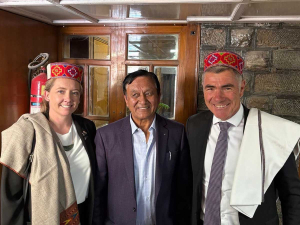
As the India-New Zealand free trade agreement enters into force, New Zealand’s apple industry has reaffirmed its commitment to the long-term development of India’s apple sector.
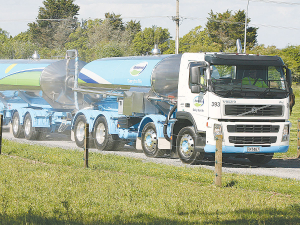
Fonterra shareholders can begin voting on Tuesday 20 October in the 2026 Board of Directors’ election, a Co-operative Council election in one Ward, and seven Annual Meeting resolutions.
National’s pledge to introduce 19 new national standards shows the party is serious about getting Wellington out of farming, Federated Farmers says.
The National Party’s policies to make it easier to grow fresh vegetables, secure reliable water and energy and simplify farm planning are practical changes that will give growers the confidence to invest, according to Horticulture New Zealand (HortNZ).
Fonterra Co-operative Group chief financial officer Andrew Murray has resigned to take up a role outside the dairy giant.
A major move is about to get underway to improve the quality and viability of dairy beef and cattle in NZ.




OPINION: The same mainstream media muppets that brought you Jacindamania in 2017 have been flat out pimping for the Opportunities…
OPINION: Your old mate reckons the atrocious way farmers in the UK are treated by their lords and masters in…




