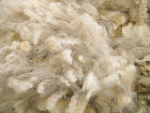
New Zealand Merino Company expands TextileGenesis traceability
The New Zealand Merino Company (NZM) is expanding its collaboration with TextileGenesis to deliver full traceability for 100% of ZQ certified wool and ZQRX regenerative wool.




 increase font size
 Matt Hand, NZ Merino Company.
The strong wool market has improved in the past six months, despite drops in production over recent years.
That’s according to Matt Hand, general manager of global supply at the New Zealand Merino Company (NZM).
Last year, the company reported an upswing in wool sold through contracts and direct partnerships – 93.6% in 2025 compared to 73.1% in 2024.
Hand told Rural News that in recent years the market has been “relatively flat, but it’s certainly improved over the last six months, which is way overdue”.
He says that what is being seen now is recognition of the fact that growers have left the space because it has proven to be a “loss-making enterprise”.
“Now we’re seeing that lower level of suppliers start to gain some attention and some of the demand generation work that’s been done by companies like ourselves is starting to take advantage and we’ve seen growers return to profitability,” Hand says.
NZM works on a contract and partnership driven model.
This means that the standard practice of selling, in which the producer is seen as a price taker by selling on the auction market, is effectively reversed.
Hand says that in the standard auction model, producers sell to the market and the market will then give the producer what it is willing to pay on any given day.
“We reverse it in the sense that we work really closely with brands, ignore the insights from consumers and brands and work out what it is those brands need from us,” he says.
From there, Hand says NZM provides certifications to those brands so that they have the verifiable data they require and then the company goes back through the supply chain and offers a converted price back to the growers.
What this means is that NZM becomes the price setter and because the growers have a “premiumised contract” in place, the growers then have surety of the outcome in terms of price. Consequently, the brands have supplier continuity instead of being exposed to a fluctuating market.
Hand says in recent years, strong wool production has dropped by approximately 20% each year.
However, he says that consumers across the globe have become increasingly conscious of the type of fibre they are buying and are looking to more natural fibre.
“We’ve been aware… for a long time that people are starting to get a bit suspicious around synthetics, microplastics in the ocean and so on and they’re looking to natural fibre solutions, but it’s been more of a thought process and a conversation than an action, but I think what we’re looking at now is we’re actually seeing brands around the world who haven’t had natural fibre product ranges and they need that, they need someone to guide them through the right supply chain… and that’s where we step in,” he says.
Right Direction
Matt Hand says that the New Zealand Merino Company (NZM) is confident in the direction the New Zealand strong wool is headed.
“From our perspective, we feel confident that we can give New Zealand strong wool growers a reason to continue in that space.
“They deserve, and they’ve certainly earned, a profitable wool enterprise. We’ve expected that to return and it’s returning now so we’re quite confident that the momentum that we’re seeing in the space is sustainable,” he says.
The New Zealand Merino Company (NZM) is expanding its collaboration with TextileGenesis to deliver full traceability for 100% of ZQ certified wool and ZQRX regenerative wool.
The first phase of a Ministry for Primary Industries (MPI) investigation into allegations of mistreatment of sheep connected to shearing practices has been completed.
Animal rights protest group PETA is calling for Agriculture Minister Todd McClay to introduce legislation which would make it mandatory to have live-streaming web cameras in all New Zealand shearing shed.
The New Zealand Merino Company (NZM) says it will investigate claims of animal cruelty made by animal rights group PETA.
OPINION: It seems wokeness is now well and truly infecting the brains trust at The New Zealand Merino Company, which now wants farmers to give lambs pain relief during tail docking.


Dairy processors are ready to further boost New Zealand’s export earnings but want the incoming government to match their ambition with good policy.
Massey University is best placed to solve the “problems” facing the dairy industry, says vice chancellor, Pierre Venter.
Synlait's longest serving employee – a man who joined the Canterbury-based milk processor even before it began processing milk – is now its newest executive.
A dairy industry leader believes eradicating the common and costly disease, Bovine Viral Diarrhoea (BVD) is within reach.
A farmgate milk price of $10/kgMS this season is firming up as milk powder prices soar and the New Zealand dollar weakens.
Federated Farmers has welcomed new rural policies released by ACT, saying they align closely with its own election priorities.





OPINION: The same mainstream media muppets that brought you Jacindamania in 2017 have been flat out pimping for the Opportunities…
OPINION: Your old mate reckons the atrocious way farmers in the UK are treated by their lords and masters in…




