
Federated Farmers Backs Year 11 Agricultural Science
Federated Farmers is backing Feilding High School’s call to keep Agriculture and Horticultural Science as a standalone subject in Year 11.




 increase font size
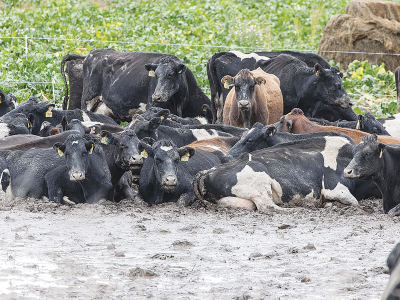 Images like this of cattle in mud has sparked the winter grazing campaign.
Farmers are being assured that any spying on grazing practices on farm this winter won’t upset stock.
Waikato businessman Angus Robson, the activist spearheading a campaign against dodgy winter grazing and its effect on animal welfare, says they will not breach Civil Aviation Authority (CAA) rules on flight.
“We will not do any activity which may upset stock. That would go completely against the intent of trying to improve animal welfare,” he says.
Federated Farmers says Southland farmers have reported seeing aircraft flying low over their stock recently. Farmers are bracing for an aerial campaign by activists this winter.
CAA says the minimum flying height anywhere is 152m (500ft) except for low flight training areas, aerial spreading and emergencies. But Robson says his group has no intention of flying low over stock.
“If farmers see an aircraft flying below the CAA legal minimum of 500 feet it will not be us, and they should report [it] to CAA,” he told Rural News.
“This height limit was set by CAA as sufficient to avoid upsetting stock and avoid ground obstacles.”
DairyNZ warned farmers at the recent South Island Dairy Event conference in Invercargill that they should brace for an aerial campaign perhaps using drones.
Robson isn’t ruling out using drones but says they “don’t think there is a need for drone footage and are not soliciting it”.
“But if a member of the public gives us [drone footage] we may use it. We would not use any footage which indicated stock distressed by how the images were taken, for example scared by a drone.”
Robson has also allayed Federated Farmers’ concerns that footage could be “doctored”.
“We will certainly not ‘doctor’ any footage. There is no need to risk our credibility. The pictures will speak for themselves as is and we will only use this year’s footage.
“I have agreed with Federated Farmers that we will also run footage of best-practice winter cropping, because it’s important to understand that the campaign is about getting the laggards into line, not harming people over minimal environmental and animal welfare effects.”
Three flights planned
Environment Southland has confirmed that monitoring flights were planned for this month – three flights followed with farm visits.
Environment Southland says it hopes to see a good uptake of good management practices in intensive winter grazing by farmers this year.
Rules require farmers to keep stock away from waterways during winter, and a range of good management practices are available for grazing paddocks to mitigate harm to water quality.
Environment Southland compliance manager Simon Mapp said flights would be monitored during the next few weeks.
“We are hoping to cover as much of Southland as we can in three flights, and staff will follow up with ground inspections if any issues are seen from the air,” he says.
Vets are also calling for better winter grazing practices.
The New Zealand Veterinary Association says there is no place in modern farming for winter grazing that compromises animal health and welfare.
“The time has come to transition away from winter grazing practices that result in poor animal welfare for livestock,” says NZVA chief veterinary officer Dr Helen Beattie.
Federated Farmers is backing Feilding High School’s call to keep Agriculture and Horticultural Science as a standalone subject in Year 11.

National’s pledge to introduce 19 new national standards shows the party is serious about getting Wellington out of farming, Federated Farmers says.
Mobile phone coverage and reliability are deteriorating in rural areas, and farming families are bearing the cost, according to a Federated Farmers survey.
Central Otago District Council (CODC) has voted against a plan to spread treated sewage sludge from Cromwell and Alexandra on farmland near Lauder, a decision Federated Farmers says reflects strong opposition from rural residents.
Federated Farmers has called on Central Otago District Council (CODC) to drop or vote down a plan to truck sludge from Alexandra and Cromwell to farmland near Lauder, warning it would compound an "outrageous" situation created by a separate council's decision weeks earlier.



Alliance is calling for final applications for its 2027 Graduate Programme, with applications closing on Sunday 25 October.
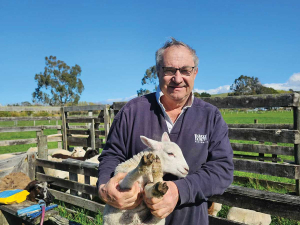
Decades piloting planes has ensured vet and farmer David Hayes is focused on safety. So, after a serious accident while welding on farm, he is sharing his experience so others can learn from it.
Canterbury milk processor, Synlait Milk has confirmed Leon Fung as its chief executive officer.
OPINION: Making it easier to collect rainwater and use it to grow crops and livestock is a no brainer.
As part of its Election 2026 coverage, Rural News asked political parties how they would help pull the arable sector out of the doldrums. Here's what they said:
Farmers are being encouraged to rethink how they manage waste on farm with the launch of ruralwastesorted.co.nz, a new website bringing together practical tips, real farmer experiences and resources.



OPINION: The same mainstream media muppets that brought you Jacindamania in 2017 have been flat out pimping for the Opportunities…
OPINION: Your old mate reckons the atrocious way farmers in the UK are treated by their lords and masters in…




