
Lanaco and Blueair Launch World-First NZ Wool Air Filter
New Zealand wool is reaching new heights as air filtration companies move away from synthetic products to biodegradable alternatives.




 increase font size

A slightly weaker NZ dollar, restricted wool supply and recent dearer wool markets in other countries aided the lift for most types at this weeks' South Island auction, says WSI's marketing executive, Paul Steel.
Of the 8,340 bales on offer, 83% sold. The weighted currency indicator was 0.46%t down on last sale of May 2 but started the day below this level, strengthening as the sale progressed.
Steel advises although Mid Micron Fleece was up to 4% dearer compared to a nominal offering at the last South Island sale the indicator is down significantly due to consistently weakening prices for these types in other markets over previous weeks.
Fine Crossbred Fleece and Shears 3 to 4 inches and longer were 3 to 5% dearer with shorter types making a significant recovery of 5 to 8% after last weeks' weakness in this area.
Coarse Crossbred Fleece and Shears were 2.5 to 5.5% stronger.
Finer First Lambs and longer Coarse Lambs Fleece were 2% dearer with Coarser Short Lambs 2 percent easier.
Long Oddments remained fully firm with Short Oddments 3 to 6% dearer.
Well spread competition with China, Western Europe and United Kingdom principals supported by India, Middle East and Australasia.
The rostered North Island sale on May 16 has been cancelled due to insufficient wool. The next sale is in the South Island on May 23 comprising about 7,300 bales.
New Zealand wool is reaching new heights as air filtration companies move away from synthetic products to biodegradable alternatives.

Will a stronger, more coordinated voice help rebuild confidence and improve returns in the wool sector?
OPINION: Confidence in the wool sector is rebounding as prices hit levels not seen in more than 15 years.
The recently signed free trade agreement with India is an invitation to strengthen relationships between the New Zealand and Indian strong wool industries, says Wool Impact chief executive Andy Caughey.
Strong competition and tightening supply have seen wool reach its highest prices paid at auction since 2011.


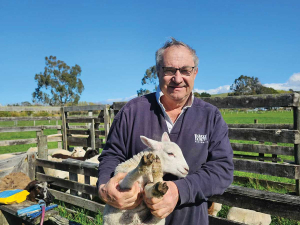
Decades piloting planes has ensured vet and farmer David Hayes is focused on safety. So, after a serious accident while welding on farm, he is sharing his experience so others can learn from it.

Canterbury milk processor, Synlait Milk has confirmed Leon Fung as its chief executive officer.
OPINION: Making it easier to collect rainwater and use it to grow crops and livestock is a no brainer.
As part of its Election 2026 coverage, Rural News asked political parties how they would help pull the arable sector out of the doldrums. Here's what they said:
Farmers are being encouraged to rethink how they manage waste on farm with the launch of ruralwastesorted.co.nz, a new website bringing together practical tips, real farmer experiences and resources.
New Zealand Winegrowers (NZW) is celebrating the India-New Zealand Free Trade Agreement (FTA) coming into force today, bringing New Zealand wine improved access to one of the world’s fastest-growing economies.




OPINION: The same mainstream media muppets that brought you Jacindamania in 2017 have been flat out pimping for the Opportunities…
OPINION: Your old mate reckons the atrocious way farmers in the UK are treated by their lords and masters in…




