Low orders, strong dollar soften wool market
The strong dollar, restricted off-shore interest and high volumes of one wool category on offer this week saw local prices ease.




 increase font size
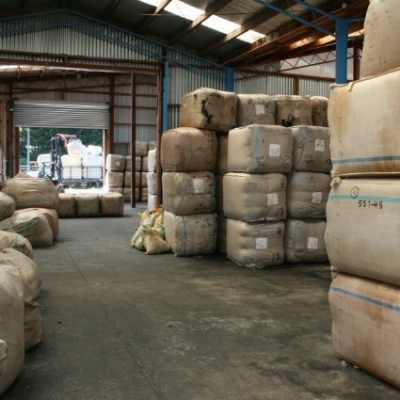
The rapid rise in the New Zealand dollar just prior to auction saw a lowering of local wool prices in many areas says New Zealand Wool Services International (NZWSI).
Marketing executive, Paul Steel says that of the 18,200 bales on offer 88.4% sold.
The weighted indicator for the main trading currencies was up 1.78% compared to the last sale on 12th March.
Steel says that Fine Crossbred Fleece and Shears ranged from firm to 5% dearer.
Coarse Crossbred Full Fleece were generally firm. Coarse Shears were firm to 2% cheaper.
First Lambs were firm to 1.5% cheaper overall.
Long Oddments were 2 to 7% easier with short types firm to 3% down.
There remains strong interest from China and Australasia with support from the Middle East, Western Europe, India, and the United Kingdom.
Next sale on 26th March comprises approximately 9,500 bales from the South Island.
The strong dollar, restricted off-shore interest and high volumes of one wool category on offer this week saw local prices ease.
Cavalier Wool Holdings (CWH) is 'disappointed but not surprised'.
The Commerce Commission has approved Cavalier Wool Holdings' (Cavalier) application to acquire NZ Wool Services International's (NZWSI) wool scouring business and assets.
John Dawson, CEO of NZWSI, reports that the South Island sale this week saw a strong market with steady support.
John Dawson, CEO of NZWSI, reports that the South Island sale this week saw a strong market with steady support.



LIC shareholders have elected a new North Island representative to the co-operative's Board, along with five representatives to its Shareholder Reference Group (SRG), following the company's Annual Meeting held in Invercargill.
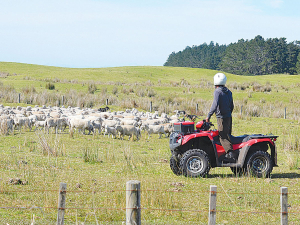
Farmers across parts of Southland and South Otago are continuing to deal with difficult conditions after a prolonged run of wet weather, with pressure building around feed supply, stock management, pasture damage, farm infrastructure and everyday workloads.
Federated Farmers says it welcomes Labour's commitment to reviewing the Sharemilking Agreements Act, calling on other major parties to do the same.
For Canterbury dairy farmers Sian Meijer and Rick Wobben, wearable technology has become one of their most valuable on-farm tools - helping manage 1850 cows across an expansive, high-performing dairy operation while improving efficiency, mating outcomes and day-to-day decision making.
Fonterra has unveiled its annual results for the 2026 financial year, posting $27 billion in revenue and close to $20 billion returned to New Zealand farmer owners and unit holders.
The first major update to the Dairy Cattle Code of Welfare in more than a decade has been released, marking what DairyNZ describes as an important step in ensuring animal welfare standards continue to evolve alongside scientific evidence and on-farm realities.



OPINION: The same mainstream media muppets that brought you Jacindamania in 2017 have been flat out pimping for the Opportunities…
OPINION: Your old mate reckons the atrocious way farmers in the UK are treated by their lords and masters in…