
Farmer Confidence Wavers Despite Decade-High Profits – Feds Survey
Will the good times last? That's one of the key issues to come out of the latest Federated Farmers confidence survey.




 increase font size
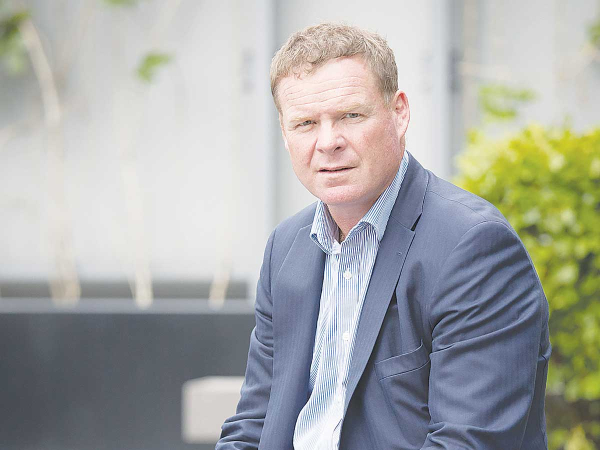 Rabobank chief executive Todd Charteris.
According to the most recent Rabobank Rural Confidence Survey, farmer confidence has inched higher, reaching its second highest reading in the last decade.
Following net readings of +44% in the last two quarters, farmer confidence in the broader agricultural economy crept higher to a net reading of 46%.
The latest net confidence reading has only been bettered once across the last 10 years in the second quarter of 2017.
It has also marked the fourth successive quarter of elevated farmer sentiment.
The latest survey — completed early this month — found 51% of New Zealand farmers were now expecting the performance of the broader agri economy to improve in the year ahead (up from 48% in the previous quarter), while the number expecting conditions to worsen had also risen to 5% (from 4% previously). The remaining 43% of farmers expected conditions to stay the same (44% previously).
Rabobank chief executive Todd Charteris says it is fantastic to see strong farmer confidence extending into a fourth successive quarter.
“The cyclical nature of farming means it’s rare for farmer sentiment to stay elevated for such an extended period. And if we look back across the history of the survey, we have to go all the way back to the 2013/14 season for the last time we had four consecutive quarters where confidence was at such lofty heights,” Charteris says.
He says that, as was the case in 2013/14, a record milk price has proven to be the catalyst for the latest extended spell of strong farmer sentiment.
“Since our last survey in June, we’ve seen Fonterra maintain its milk price forecast of $10.00/kgMS for the 2025/26 season, and we’ve also seen them raise their forecast for 2024/25 season to $10.15/kgMS,” Charteris adds.
“On top of this, the co-operative recently announced they’ve agreed to sell their consumer and associated businesses to Lactilis and, if approved, this could bring a tax-free capital return of $2.00 per share for their farmer shareholders.
“All this news has been warmly welcomed by sector participants and has helped keep dairy farmer sentiment high.”
Charteris says red meat sector confidence is also rising off the back of an ongoing wave of high commodity prices for beef and sheepmeat.
“Led by the US, global demand for New Zealand beef remains strong and this has flowed through to record-breaking prices for cattle over recent months,” he says.
“Farmgate lamb prices are also at historical highs and a combination of tight domestic supply and strong overseas demand is expected to ensure pricing stays elevated over the remainder of 2025.”
The survey found farmers with an optimistic view on the broader agri economy cited ‘rising commodity prices’ (67%) as the main reason for their optimism. ‘Increasing demand’ (20%) and ‘falling interest rates’ (17%) were the next most-frequently cited reasons for positive sentiment.
Among the 5% of farmers expecting conditions in the agri economy to deteriorate, ‘government policy/ intervention’ (43%) ‘rising input prices’ (30%) and overseas markets/ economies (29%) were the major reasons given for pessimism.
Will the good times last? That's one of the key issues to come out of the latest Federated Farmers confidence survey.

Despite near universal optimism in the rural sector, a panel of New Zealand’s leading food and agri minds caution that the sector must be intentional about its future path.
Farmer confidence has taken a slight dip according to the final Rabobank rural confidence survey for the year.
Sheep and beef farmers are cautiously optimistic as farmgate prices continue to firm.
Farmer perceptions of current economic conditions have risen to their highest level in almost a decade.


Federated Farmers has welcomed new rural policies released by ACT, saying they align closely with its own election priorities.

Rural Contractors NZ says proposed changes to land transport rules for agricultural vehicles are a welcome response by the Government to out of date regulations which have seen members hit with huge fines.
Alliance is calling for final applications for its 2027 Graduate Programme, with applications closing on Sunday 25 October.
Decades piloting planes has ensured vet and farmer David Hayes is focused on safety. So, after a serious accident while welding on farm, he is sharing his experience so others can learn from it.
Canterbury milk processor, Synlait Milk has confirmed Leon Fung as its chief executive officer.
OPINION: Making it easier to collect rainwater and use it to grow crops and livestock is a no brainer.




OPINION: The same mainstream media muppets that brought you Jacindamania in 2017 have been flat out pimping for the Opportunities…
OPINION: Your old mate reckons the atrocious way farmers in the UK are treated by their lords and masters in…




