Patterson: Rural NZ Faces a "Massive" Infrastructure Deficit
The Minister for Rural Communities, Mark Patterson, says there's a massive infrastructure deficit in rural areas.




 increase font size
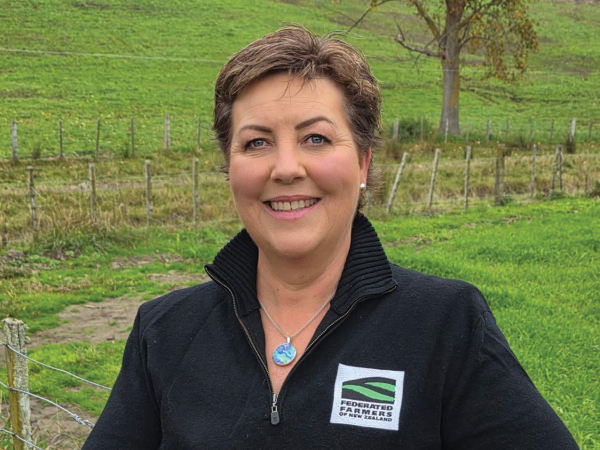 Federated Farmers vice president Sandra Faulkner
Federated Farmers' new vice president Sandra Faulkner says the issue of adverse events emergency management and infrastructure needs to be taken out of the three-year political cycle.
She says there needs to be cross party support that stretches out over thirty years to get an idea of the spend and bring some certainty.
"Hopefully the emergency management legislation which is now before parliament will not suffer from political interference," she told Rural News.
"Those rural people who live at the end of the shingle road, across a bridge or up in the ranges need to feel connected to our society and supported like those of us who live close to towns," she says.
Faulkner says while there is fierce competition for road funding and other forms of infrastructure such as telecommunications, she believes that decision makers should think about where the export dollars come from - namely the folks that live in rural communities.
"In terms of connectivity, farmers run multimillion dollar businesses up in these areas and are required to do much of the so-called 'paperwork' electronically. For example, animal declarations, traceability for our animals and most of our accounting systems are cloud-based," she says.
But Faulkner says most important of all is having reliable connectivity when there is an adverse weather event such as recent floods in Wairarapa.
She says it's most important that families are able to reach out at critical times to those individuals or organisations that can offer assistance.
"That human connection is something that I cannot emphasise enough. You will see from Fed Farmers a real focus on making sure that those channels of communication are operating well and they cope with whatever mother nature throws them," she says.
Faulkner says certainty and a clear understanding of the particular needs of rural communities is a critical outcome in the series of government reforms that are taking place at present.
She says the massive reforms now going through parliament will see the abolition of regional councils, RMA reform and changes to the rules around fresh water.
She says Federated Farmers is working through the implications of the local government changes to ensure that rural issues such as pest management and flood control are properly met in the changes.
"These are generational legislative changes and will determine how our children and grandchildren farm in the future. I cannot overstate how important it is to get this right now," she says.
The Minister for Rural Communities, Mark Patterson, says there's a massive infrastructure deficit in rural areas.
Central Otago District Council (CODC) has voted against a plan to spread treated sewage sludge from Cromwell and Alexandra on farmland near Lauder, a decision Federated Farmers says reflects strong opposition from rural residents.
Federated Farmers has called on Central Otago District Council (CODC) to drop or vote down a plan to truck sludge from Alexandra and Cromwell to farmland near Lauder, warning it would compound an "outrageous" situation created by a separate council's decision weeks earlier.
Federated Farmers says new legislation replacing the Resource Management Act will cut red tape, unlock investment and help grow New Zealand's export-led economy, after the Planning Bill and Natural Environment Bill passed their third reading in Parliament yesterday.
Leading figures from the major political parties will be questioned on their primary sector policies at the Rural Issues Debate at Mystery Creek Events Centre, Hamilton, on 30 September.


Beef + Lamb New Zealand Incorporated (BLNZ Inc) is marking 40 years of promoting red meat to New Zealand consumers, citing its taste, family meals and nutritional benefits.

Pāmu has welcomed Taranaki student Paige Burston as its newest First Foundation Scholar, supporting her journey towards a career in agriculture and animal science.
Farmer-owned fertiliser company, Ballance Agri Nutrients is welcoming National’s plan to negotiate security agreements with key supplier countries to protect New Zealand-bound products from export restrictions and greater supply chain certainty.
Carrfields has announced the appointment of Stu Hall to the newly created role of chief operating officer, Carrfields Ltd, reflecting the continued growth of their agribusinesses and the need to ensure the company has the leadership capacity and support in place as it pursues the emerging opportunities ahead.
New Zealand's role is not to compete with Indian growers, according to NZ Apples and Pears.
The potato industry is celebrating the success of two rising stars - James Blair, the 2026 Young Grower of the Year and runner-up and innovation award winner, Amber Davy.




OPINION: The same mainstream media muppets that brought you Jacindamania in 2017 have been flat out pimping for the Opportunities…
OPINION: Your old mate reckons the atrocious way farmers in the UK are treated by their lords and masters in…