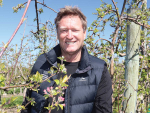
Cyclone Gabrielle: Hawke's Bay Orchardists Still Recovering
Three and a half years on from when Cyclone Gabrielle hit Hawke's Bay, some orchardists in the region are still receiving counselling to help them deal with the trauma they suffered.




 increase font size
 Over a month on from Cyclone Gabrielle, NZ Police says there is still a huge amount of work to be done.
Eastern District Police will attend community meetings in cyclone-affected areas next week.
Four meetings, organised by the community and the local council, are scheduled for the coming week.
Police will have a presence at each of the meetings to ensure those attending have an opportunity to raise concerns and ask questions.
Eastern District Commander Superintendent Jeanette Park says that over a month on from Cyclone Gabrielle, many continue to struggle with the loss of loved ones, property and livelihoods.
“The impact of Cyclone Gabrielle will be felt for years to come,” Park says.
She says that while we are no longer in the immediate response phase, there is still a huge amount of work to be done.
“We want the residents of Hawke’s Bay and Tairawhiti to know we’re here to support them and their needs are front of mind.”
Since the cyclone, staff, including those from out of district have been on the ground carrying out thousands of prevention activities, including reassurance patrols and proactive engagement with storm-hit communities.
Mobile Police Bases remain in the district, ensuring officers are visible in the places they are most needed.
“Our mobile bases have been invaluable for connecting directly with our communities and providing a sense of reassurance,” Park says.
“The feedback has been really positive and, operationally, it’s also given us a really clear picture of what’s happening on the ground.
“We know that people may have heightened concerns about crime, and we want to connect either in person, or via the dedicated 105 line.
“Our community is hugely resilient and we continue to work with them to provide support.”
Park says that in many cases, NZ Police staff have gone “above and beyond”.
She says that while staff from across New Zealand continue to support the region, that will be scaled back as it moves into the recovery phase.
Three and a half years on from when Cyclone Gabrielle hit Hawke's Bay, some orchardists in the region are still receiving counselling to help them deal with the trauma they suffered.
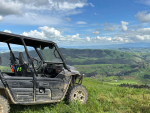
The terrible floods that hit the Wairarapa may have subsided, but the danger to farmers still exists, according to local Federated Farmers president Rob Hickson.
The chief executive of Apples and Pears New Zealand, Danielle Adsett, says fruit quality this year is phenomenal and the sector is hitting crop estimates, which is great for growers.
OPINION: New economic modelling confirms what many of us in Hawke's Bay have long understood - getting water security right for this region is one of the most important decisions we face as a community. Not just for farmers, but for everyone who lives, works and builds a future here.
Perrin Ag has appointed Vicky Ferris as its new Hawke's Bay consultant.


During the nesting season, from September to December, industrious starlings can quickly build nests in the darker areas behind tractor and vehicle, usually close to hot engines, typically resulting in localised damage or in some cases complete write-offs.
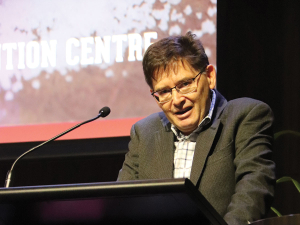
The meat processing industry is much more collegial than it was in the past and is now more focused on common goals.
With the last couple of months having seen some potential tractor purchases put on hold with the impending election and continued input cost rises, year-to-date figures, ending September, has seen deliveries up around 5% over the same period in 2025, with a total of 2026 units.
Beef+Lamb New Zealand is calling for nominations for director roles in the Northern South Island and Northern North Island electoral districts.
Fonterra chief executive, Richard Allen says being resilient has helped the dairy industry overcome extreme volatility in recent years.
The head of the Ministry for Primary Industries (MPI) trade and international relations group says New Zealand is well-positioned to secure trade access and compete internationally as the world becomes more complicated, demanding and uncertain.



OPINION: The same mainstream media muppets that brought you Jacindamania in 2017 have been flat out pimping for the Opportunities…
OPINION: Your old mate reckons the atrocious way farmers in the UK are treated by their lords and masters in…




