PC1 Pause Looms as Coalition Targets Waikato Farm Rules
A pause on Waikato Regional Council's (WRC) plan change that sets new freshwater rules for farming could be announced in the coming weeks.




 increase font size

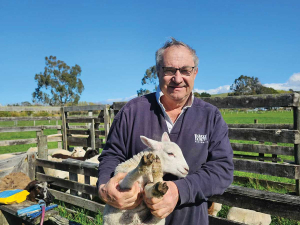
A planting partnership between an award-winning Waikato farmer and children from his local school is bearing environmental fruit on many levels.
Children from Tauwhare School between Hamilton and Cambridge recently visited dairy farmer Frank Portegys' Scotsman Valley Rd farm for the fourth year on the trot to plant trees designed to protect waterways.
The visits to Frank's farm have been part of Tauwhare's participation in the Enviroschools programme, which is supported by the Waikato Regional Council.
The council has also provided some $1500 in financial support to Frank under the Piako catchment's new works programme aimed at protecting waterways from the effects of farming.
Over the years, more than 1000 trees have been planted with school and council assistance on the property's wetlands and besides its waterways.
Tauwhare's Enviroschools lead teacher Linda Cook – who praises Frank's assistance for the schools' programme - says the children get a lot out of visiting the farm.
"The benefit for the children is it's embedding understanding around the importance of clean waterways. And, also, they're getting to do work of direct benefit in their local area, and they can see the plants growing over time," says Cook.
Frank says he's very keen to protect waterways in the area and enhance the environment generally, and is grateful for the pupils' help.
"If you ask everyone they always want clean water. If you don't do it properly, dairying is going to have effect on water," says Frank, whose property has won awards in the Waikato section of the Ballance Farm Environment Awards.
Council catchment management officer Warren Coffey says farmers can apply for up to 35% of the costs of fencing and planting to protect and enhance waterways and wetlands, as well as soil conservation work such as preventing steep hillside erosion.
"It's our way of supporting famers to make changes on their property that help provide environmental benefits for the wider community."
Ruairi Kelly, the council's schools programmes coordinator, said the visits have enabled the Tauwhare children to learn about both the environment and farming.
"Tauwhare has done really well under Enviroschools – they're a high-ranking Green-Gold school." Kelly says.
"Enviroschools in the Waikato Region is supported by a team of facilitators who work with schools to engage on a long-term journey of learning and action over environmental issues.
"The work of Frank's farm has been a great partnership between a proactive and caring farmer, and a school that's been working really well on the environmental protection front."
A pause on Waikato Regional Council's (WRC) plan change that sets new freshwater rules for farming could be announced in the coming weeks.

OPINION: Staying on Plan Change 1, NZ First deputy leader Shane Jones took to social media to gain some political points.
OPINION: All eyes are on the Government as Waikato farmers seek urgent help to fend off the controversial Plan Change 1 (PC1), designed to manage nutrient discharges into waterways in the region.
Waikato farmers have been told that the Government’s new planning system legislation and the region’s Plan Change 1 (PC1) “won’t mesh together very well”.
The Government is looking at intervening on behalf of Waikato farmers who face new regulations around agricultural land use while Resource Management Act (RMA) reforms are underway.



Alliance is calling for final applications for its 2027 Graduate Programme, with applications closing on Sunday 25 October.
Decades piloting planes has ensured vet and farmer David Hayes is focused on safety. So, after a serious accident while welding on farm, he is sharing his experience so others can learn from it.
Canterbury milk processor, Synlait Milk has confirmed Leon Fung as its chief executive officer.
OPINION: Making it easier to collect rainwater and use it to grow crops and livestock is a no brainer.
As part of its Election 2026 coverage, Rural News asked political parties how they would help pull the arable sector out of the doldrums. Here's what they said:
Farmers are being encouraged to rethink how they manage waste on farm with the launch of ruralwastesorted.co.nz, a new website bringing together practical tips, real farmer experiences and resources.



OPINION: The same mainstream media muppets that brought you Jacindamania in 2017 have been flat out pimping for the Opportunities…
OPINION: Your old mate reckons the atrocious way farmers in the UK are treated by their lords and masters in…




