
NZ ETS Settings Hold Steady Amid Shortfall Warning
The Climate Change Commission has recommended maintaining the current New Zealand Emissions Trading System (NZ ETS) settings but warns of a potential unit shortfall as early as 2028.




 increase font size
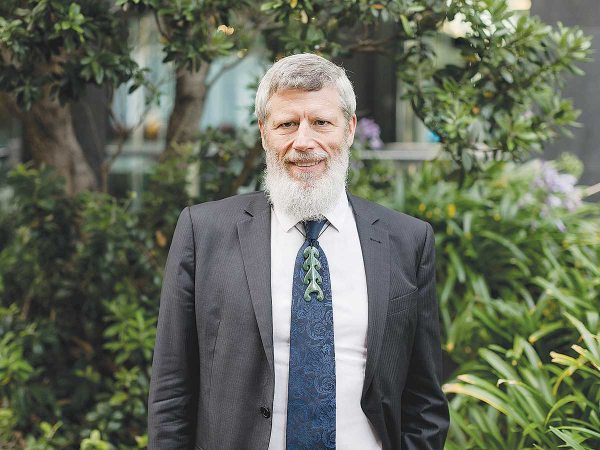 Climate Change Commission chair Rod Carr says all New Zealanders have a responsibility to begin reducing emissions.
The head of the Climate Change Commission, Dr Rod Carr says all New Zealanders have a responsibility to begin reducing emissions if we are to rise to the climate challenge.
He told about 40 representatives of the Dairy Environment Leaders (DEL) Forum meeting in Wellington recently that human beings have a carbon footprint, no matter what they do, and says it’s about containing it and how we contain it.
Carr says the climate waits for no one and as a nation we can choose what we do, but we can’t choose not to reduce emissions.
“So, it’s about our share of the responsibility. The science is now so clear that we have to act because greenhouse gases are causing the climate to change,” Carr says.
“The needle on the dial is moving toward doing what we can; when we can. There is technical feasibility, economic effects and social acceptance we need to address. I think the journey is underway, we just have to configure how we do it. Long-term, we will need a technological break-through.”
As part of its meeting, the participants attended at parliament to recognise their work at both a national and local level. At the function, DairyNZ chairman Jim van der Poel praised the work of the DEL and says by coming to Wellington to meet politicians and other leaders in the agri-sector they now need to take these messages back to their communities and farms and put them into practice.
The DEL was formed by DairyNZ in 2013 to ‘empower leadership’ and help farmers support other farmers making change to reduce environmental footprint. In the initial stages, members were hand-picked by the sector. However, van der Poel claims the organisation now has a life of its own and runs its own affairs, but is still funded by DairyNZ.
He says while the sector can make policy and propose change, ultimately this has to be led by farmers themselves.
Van der Poel says DEL members are selected because they are passionate about the environment and are keen to do the right thing on their farms and in the community.
“They come together in these forums to share information and understand the issues and then go back to their communities and down on farms and promote good environmental practices both on their own farms and in their communities,” he says. “These are people who live the good values and are proud of what they are doing in respect of the environment such as looking after the waterways, fencing them and carrying out riparian planting.”
Van der Poel says many New Zealanders don’t understand what is being done on farms.
“But that message is always more powerful when it’s coming directly from farmers who are doing the hard yards rather than information put out by sector groups,” he says.
Van der Poel admits the dairy sector still suffers from rogue farmers who engage in poor animal welfare or environmental practices. But he says there are bad people in every facet of society and says the majority of dairy farmers do not condone actions which ultimately damage the industry and their business.
Rules Need To Be Practical
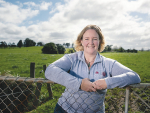
The chair of the DEL is north Waikato dairy Farmer Melissa Slattery.
She and her husband Justin own and operate a 300 cow, 106ha dairy farm near Te Aroha. She’s an associate with a local chartered accountant firm and is a former regional leader for both the Canterbury/North Otago Dairy Industry Awards and the North Canterbury Rural Business Network.
Slattery says farmers are committed to playing their part to solve environmental challenges and have a lot of great work underway already. But she adds that regulations need to be practical behind the farm gate and have pragmatic timeframes.
“Dairy Environment Leaders Forum is an opportunity for environmentally-minded farmers to get together and discuss the opportunities we see, the challenges we face, and the support that we will need to succeed.”
She says DEL members are showing leadership either on their own farms or in the community as part of catchment groups or other collective groups and then on up to regional or national policy level. Slattery says at a local level they participate in farm discussion groups and share their insights with other farmers.
“This is part of farmers’ culture and the culture of Dairy Environment Leaders,” Slattery says.
The Climate Change Commission has recommended maintaining the current New Zealand Emissions Trading System (NZ ETS) settings but warns of a potential unit shortfall as early as 2028.
The Climate Change Commission’s 2025 emissions reduction monitoring report reveals steady progress on the reduction of New Zealand’s climate pollution.
Former Governor-General Dame Patsy Reddy will be the new chair of the Climate Change Commission.
The dairy industry is well placed to front the cost of new technologies to deal with methane emissions, but the sheep industry isn't.
There is an urgent need for the Government to put a limit on the sale of farms for forestry - particularly for carbon farming.


Federated Farmers has welcomed new rural policies released by ACT, saying they align closely with its own election priorities.
Rural Contractors NZ says proposed changes to land transport rules for agricultural vehicles are a welcome response by the Government to out of date regulations which have seen members hit with huge fines.
Alliance is calling for final applications for its 2027 Graduate Programme, with applications closing on Sunday 25 October.
Decades piloting planes has ensured vet and farmer David Hayes is focused on safety. So, after a serious accident while welding on farm, he is sharing his experience so others can learn from it.
Canterbury milk processor, Synlait Milk has confirmed Leon Fung as its chief executive officer.
OPINION: Making it easier to collect rainwater and use it to grow crops and livestock is a no brainer.

OPINION: The same mainstream media muppets that brought you Jacindamania in 2017 have been flat out pimping for the Opportunities…
OPINION: Your old mate reckons the atrocious way farmers in the UK are treated by their lords and masters in…




